When I meet people I like, I feel obligated to tell them I’m an immortalist, because otherwise, how would they know? As one, a writer friend of some repute, told me: ‘You look normal.’
People want to know what it means to be an immortalist, and I usually say something like: an immortalist is someone who thinks you should live forever. Or: An immortalist is someone who thinks you should be able to live as long as you want to. But that doesn’t really tell enough.
Of course, immortalists think we should make our health a priority and eat and exercise accordingly. Some of us, including me, take a lot of supplements. But you don’t have to be an immortalist to do that. There’s a whole category of consumers called biohackers who take lots of supplements, eat and exercise with clear and often strict intention, but express little interest in doing so forever.
Like most people whom my writer friend would probably describe as normal, they are labouring to optimise the extremely narrow slice of time into which their lifespan nestles like a little hot dog in a bun. During that ever-so-brief existence, let’s call it 90 years, they want to have great abs.
For the record, immortalists are not opposed to abs. On occasion, when the light is just right, and the food intake is ideal, and I happen to flex, but not really flex, just sort of suck/bend inward as I casually pass the mirror shirtless, I sometimes see the cubic flash of abs too. If you question the quality and even reality of my abs because they don’t last, be careful—you’re thinking like an immortalist.
In one sense, we are all immortalists. Our world is built on stories of how we don’t end, sometimes told with such fervour that the telling itself takes on the sheen of eternity. We might call these imaginary immortalities—the immortalities of afterlives, of bloodlines, of legacies left. But they are real to the people imagining them. And the line between imagined real and real real is an uncertain one. After all, creation comes from imagination.
Consequently, we have lived by many kinds of forevers, forevers of stone, of spirit, and especially of story. But never the forever of the flesh, which we might call the root code of all the forevers. Because however abstract these forevers might be, they are all—every single instance of every single type of forever ever considered or dreamed of—conceived and perceived within a physical human form.
The question of forever hovers over human life like the scent off the skin of a lover lost—as present as memory, as absent as redemption. Our minds make meaning, and consume meaning, and require meaning for their homeostasis. While our oblivion may be an observable fact if we dare to look, it cannot be made to mean anything without attaching it to some form of forever as substrate. Even the person who willingly accepts the grave with no afterlife imagines that their corpse will fertilise a tree.
Since there is no meaning without it, our being forever, no matter how imagined it may be, is the minimum for life to mean anything at all, and for our minds to stabilise. Not love, not language, not tool-wielding, but the awareness of the question of forever is what differentiates us from the other animals of Earth. Our humanity, one could say, our redemption, is intimately bound to this question.
This unique awareness of forever makes death a wound, not for the dead, though we mourn and suffer for them, but for the living. We do our best, but often our worst. Because this wound festers evil, which flourishes in the conditions of numbness, separation, scarcity, and the devaluation of human life that death engenders.
We wonder out loud why human beings aren’t better to each other, but we know why. There isn’t enough to go around. Not enough time, from which all other scarcity emanates. Even the wealthiest are on the clock. No wonder they do so little with their billions—they’re always running out of seconds. Survival anxiety makes us selfish. It makes living at the expense of others ordinary.
Since we’ve developed the intelligence that is baseline to being human now, we’ve always lived in anticipation of death. Being an immortalist offers an opportunity to live outside of this crushing anxiety, or at least the chance to resist serving it so dutifully. We gain sight of a larger life, which entices us towards the spirit of creation and away from survival angst. Can we feel and live in our powers of creation all the time? At least we can ask: who is the person inside the survivor?
It’s not just worry that shrouds us. It’s the implicit sacrifice of personhood in the name of getting by, which, in a sense, buries us alive. If surviving is the goal of being born, then the full expression of who you are is not. It’s easier to think of survival as a limiting factor in economic terms, how we settle for spending a lifetime working for money without any deeper satisfaction. But social survival pressures us just as intensely, teaching us to make a mask we think others will accept, rather than showing our truer self at any given moment.
The self-sacrifice runs so deep it’s systematic, almost organic. Avowed individualists, even narcissists, are still subject to this sacrifice of self, worshipping the mask they live behind, rather than tolerating it like the rest of us. Immortalists are sometimes accused of being driven by narcissism, but no doubt the sacrifice of authenticity implicit in mortality survival amplifies narcissistic behaviour through the pressure of scarcity it imposes on the self; narcissists obsess about themselves because there’s so little of themselves to hold on to. Being an immortalist is an opportunity to see past the selfish self we’ve created to survive, to birth the person who could possibly tap the transformative force of the golden rule.
To cope with the inevitability of nonbeing and stake their claim to meaning, many have made their peace, or tried to make peace with, death. They say there is no great difference. Or that it’s better on the other side. For this to be even remotely tenable, for death and life to be in any sense equivalent, life must be muffled, muted, gagged almost to the point of strangulation, so that even while alive our being begins to resemble that future state of nonbeing. This is the price of peace with the enemy, the imposition of nonbeing on being, the death in life, which reduces adulthood, year by year, to a practice ground for dying instead of a fresh field for discovery.
Being an immortalist liberates us from ghosting ourselves and one another in this life in order to prepare for the next, calling us to presence in our physicality, to the revolutionary, and, for some, terrifying reality that we are our bodies. We’ve been evading this self-evident clarity for as long as we’ve been dying and in doing so, we’ve lived without the wholeness that is our inheritance.
It’s not a matter of feeling instead of thinking, as some have suggested. After all, even the brain, this principality in high place, this master orchestrator of abstraction, is flesh and blood. But simply that we have the opportunity for a fuller sensual and intellectual experience.
The intelligence of the immortalist body, that is, the person who has grounded forever within their form rather than outside it, is vaster than the intelligence of their survival personality. But so long as survival anxiety is our guide, the smaller survivor intelligence holds the larger intelligence hostage.
With the survivor personality releasing its hold over the broader intelligence of our bodies, what we’ve called mind, body, spirit (which is really just us) will finally have the opportunity to meet and get acquainted, not through process and ritual, but in the flow of living. The so-called introvert may discover a facility for karaoke. The committed extrovert may find new solace in privacy. The male and female attributes that reside within every person may also connect and be expressed in new ways.
These are just immediate examples that track with familiar categories of self-discriminations. With each contact made across the segmentations through which we’ve known ourselves, intelligence and life force build. The real renaissance of the immortalist points towards unknown permutations of self which we cannot now imagine, and for which we may not even have language. It’s an open field.
Being an immortalist is a homecoming that feels both foreign and familiar. On the one hand, we’ve never done forever this way before. On the other, all our forevers have been sourced from the body. Another way of saying this is that in the only home we’ve ever known, we’ve never been home, until, possibly, now.
It’s not all rippling harps and white togas—there is a certain restlessness to this homecoming. Being an immortalist proposes a shift in the parameters of life from known to unknown. Unlike mortality, immortality is an outcome that we’ll never reach; you can live five hundred or a thousand years and you still haven’t lived forever. You might say being an immortalist is a continuous state of departure.
Rather than curating past experience, as is common to the condition of adulthood, we are leaving experiences behind. Just as we take senolytics to shed senescent cells, the so-called zombie cells that can’t divide anymore, turning toxic, we seek to shed the zombie experiences of the past that have no life in them anymore.
People insist over and over that death enhances life, that the scarcity of time clarifies its value, causing us to live more fully. If that were true, we should all be vivid, vibrant beings because there is death all around us to stimulate our aliveness. And the most robustly animated people would be found in the worst war zones where there’s the most death to cast a bright spotlight on life by contrast.
Of course, this is not the case. In the near term, the presence of death dulls the sensuality of living and casts a pall on the spirit that some find impossible to shake off. In the long term, mortality makes us sentimental about the past and past traditions, which we naturally seek to conserve when we perceive our lifespan as a dwindling resource. This draws us away from the current moment, not to mention the approaching one, in favour of past glories we barely registered at the time.
Rarely are we awake enough to experience the moment fully as it happens. More often we’re like passengers standing on the platform while the train of consciousness rushes by—we may feel the breeze, but we miss the ride. No wonder, since our adulthood is a form of training to prepare us for feeling no moments at all.
How to explain such patently flawed thinking being posed repeatedly by perfectly intelligent people? Does scarcity of love make us better at loving? Does scarcity of wealth make us more generous? Why would anyone think that scarcity of time would make us more alive?
We think what we must to get by. In our slave’s story, it’s better to be bound than free, because it’s the chains that give life weight and heft and texture. Without which we would float meaninglessly, because in our slave’s philosophy, it’s the restraint of our flesh, the iron anklets and cuffs, the bit that pins down the tongue, the visor that blinds, that make us who we are, and the absence of such restraint—immortality—that renders us insubstantial.
The slave’s mind reels at the suggestion of such sovereignty and rejects the implied freedom as a form of trivialization, of oblivion, because the limitation is what makes us who we are. That is the essence, not just of enslavement, but of being a slave. When the condition is so internalised, when that word is so made flesh, that we know ourselves by it.
What is the word for freedom in the slave’s lexicon when the term for slave is I or human or mortal? Where life means death, and spirit means complacency, and faith means more slavery, and healthcare means the impossibility of escape, and genealogy means all the slaves that came before?
By seeking to beat it, immortalism makes us think more plainly and directly about death. To explore removing death from our lives, we have to acknowledge its prevailing presence as the single dominant organising principle we live by, and, understandably, many would rather not.
Beautiful things occur in this bondage. Love, laughter, music, creation, procreation, society, some semblance of progress—all these may be present in the slave quarters, which encompass Earth and recorded history. In some cases, these moments of beauty may even appear to flourish. But always under the shadow of the essential condition. Beauty is understood to be a fleeting respite from the permanence of our slavery and, under the slave’s aesthetic, to be appreciated all the more for it.
Many insist that they never think of their bondage, which may be true. But their bondage doesn’t need their acknowledgement to assert its authority, any more than gravity requires permission to hold you down. Quite the opposite. The less this slavery is spoken of, the more a slave you are, and when almost everyone is a slave, it’s not difficult to steer clear of the topic.
Though we are alive and have vital minds, the torque of our slave’s destiny turns us to disputes that lead only away from the frontier of freedom. We fight over gods, the masters who may or may not exist, but who have proven to be bystanders at best to our slavery. We argue about economics and politics and love, none of which threaten our slavery. We are filled with vigour for the clashes we can act out without straining our chains.
The religious and non-religious argue vehemently over evolution but serve it equally. You’re not in service to evolution only because you think it’s real. After all, billions of creatures have lived, reproduced and died, advancing natural selection, without thinking about evolution at all. Service to evolution, which like slavery is neither chosen nor rewarded, is determined by where you place your redemption—before or after death.
The believers who find meaning and redemption after death, no matter how much they might dispute evolution, serve it. Death, the change agent of evolution, is the gate humans must walk through to reach their destiny. What a nice endorsement for staying the course of evolution thus far.
The more secular-minded, who see evolution as a mechanism for fulfilling our future, may as well be advocating for the redemption after death of the religion they so vehemently disbelieve. It amounts to the same thing. When they argue that we need to clear out older people so younger people can come in with new ideas, they are advocating the oldest idea of all—slavery to evolution.
Why can’t we all have new ideas, young and old alike? Having thought through the old ideas thoroughly, or even lived through them, wouldn’t the old be at least as likely to break through to the new as the young? Isn’t this what we mean by the adage that those who forget history are doomed to repeat it? If the suffering of one generation is forgotten by the next, which then replays it, what better way to net-gain knowledge and escape the tragic repetition of history than to keep that previous generation around to remind us of it?
Many think we can’t have that because of overpopulation. What’s most interesting about this long-standing and popular objection to immortalism is that we don’t have overpopulation. Birth rates are declining in all developed nations, running below what it would take to maintain current populations and replace the people we’ve lost to ageing. This trend has been running for over 50 years, yet the durability of the objection remains.
Yes, we’ve been trained to worry about population. Media reports seem to have taken no break between worrying us about overpopulation and shifting to worrying us about underpopulation. (Apparently, there was never a time when we were the right population. At least, it was never reported.) Still, the overpopulation worry predominates. Why? Because we are already threaded for the thinking that reinforces our evolutionary predicament and makes it right and necessary to die.
This is the matrix of mortality that immortalism is deconstructing. When intelligent people object to immortality for obviously dumb reasons, this is like a ripple in the matrix, an opportunity to glimpse the programmed thinking of mortality in operation.
Consider the immense and ingenious human intelligence, imagination, and feeling invested in coping with our condition, the energy spent on lighting narrow corners of its endless darkness, the brilliant authoring of apologia upon apologia for its absolute brutality. Consider the energy each one of us must commit to denying the terror and the struggle and the dictatorship of loss, either through philosophising or self-silencing, just to get by.
Now redirect all that psychic effort, both acknowledged and unacknowledged, from enforcing our slavery to freeing ourselves from it, and you’ve initiated a personal revolution. You may still be enslaved, but you are already no longer being a slave—you are a warrior for your freedom. Emotional honesty becomes an ally rather than a burden. We can give our innate love of life, the very spirit of living that many have outgrown, a new birth.
We may also feel the piercing pain of the condition we have worked so hard to not see. But there is direction now to pain. Rather than the circling suffering we have known, which leads nowhere but down, this pain becomes part of the current carrying us forward. Even grieving can take on direction and purpose—to never walk this way again.
And there is joy. What a joy to break free from the old stories, the old abstractions, the old explanations, the old rationalisations. The joy of the new.
We are taught to act our age, which typically means tone it down. But must age be a limiting factor on aliveness? Our years are not inhabited equally. We may think of our earlier years as being lived more fully. But this may just be the view from the platform after those experiences have rushed by. While we had higher stem cell counts, we had lower self-knowledge. Most of us only start to know ourselves later in life, which can free us to live more fully and meaningfully.
By this new calculus, the longer you live, the more fully you live. This makes next year more promising than last. So our life is increasing rather than decreasing over time. Not because of the false valuation of scarcity that triggers crushing survival anxiety, but because of the promise of opportunity. To be an immortalist is to live forward rather than backward. Of course, we have to maintain health and vitality to do this. But at least we have the emotional and psychological basis for doing so.
Some object that immortalism is not scientific, because it is based, in part, on science that has not yet arrived. This comes from an engineering mind trained on traditional principles of empiricism—that what is real is what we can see, measure, and reproduce. But when what we can see, measure, and reproduce is an exponential arch of technological advancement from within which we are making such observations, then traditional empiricism is a form of blindness. To see anything at all is to look ahead to what is coming and to understand that it will take us beyond ourselves and what we know.
We often call ourselves futurists, but immortalists are really a product of our time, which is a product of the future. Yes, time is always moving in the sense that we never step in the same river twice. But today we do not live in a river, we live in a horizontal vortex, like a whirlpool turned on its side, sucking us into tomorrow. We’re all in the future already; immortalists are just more aware of it. Our conception of forever as physical is deeply informed by the flourishing of science of the last three hundred years. You might think of immortalism as an evolutionary adaptation to the new, future-informed moment in which we find ourselves. Mortality, with its imagined forevers, is the leftover perspective.
Is this kind of faith in the unknowns of science too religious? Or is the moment in which we live so dynamic that the only accurate, one might say, empirical way to observe it is through an extrapolation of its forward morph? In other words, seeing ahead is the only way to see now with any clarity.
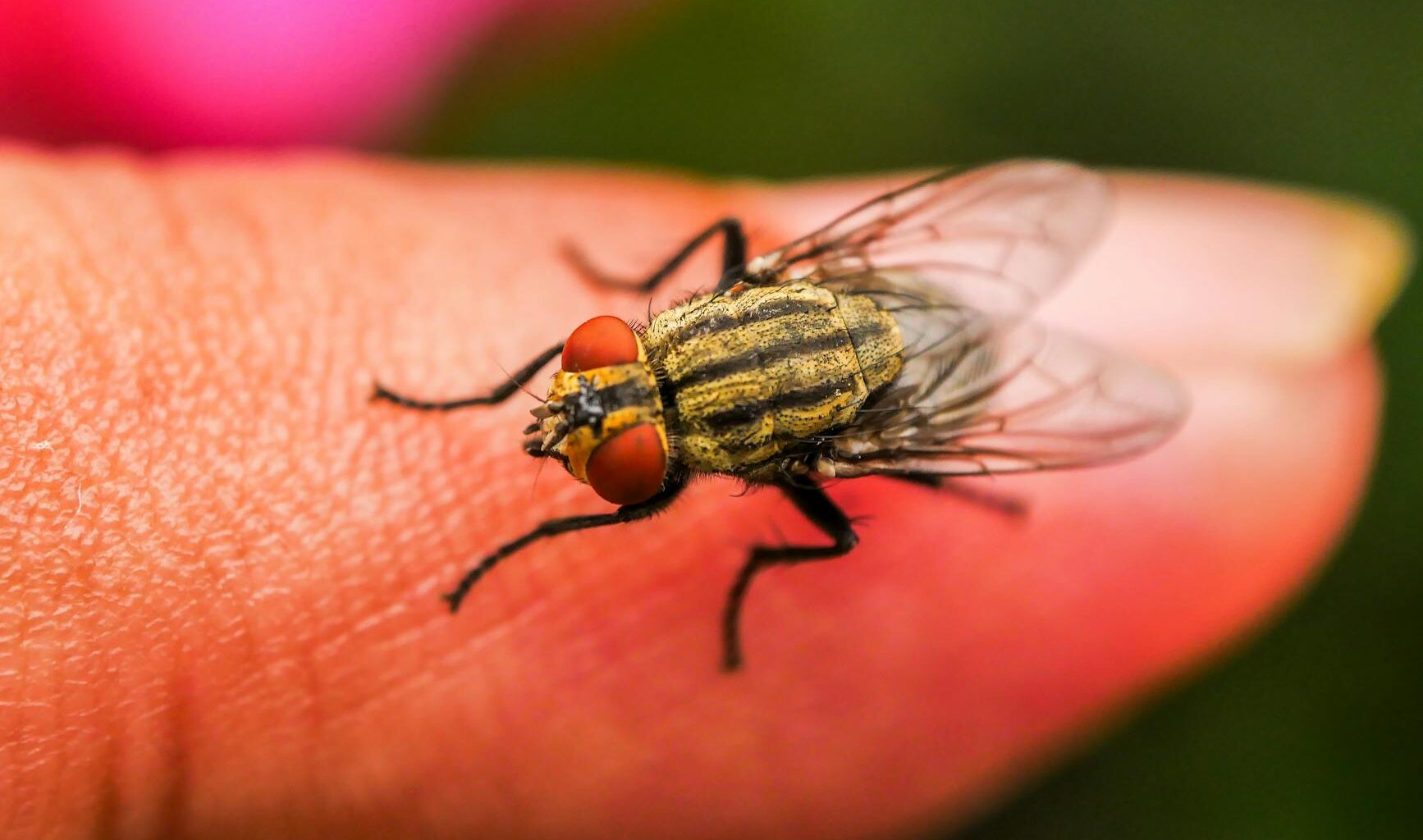
Immortalists have been doing this for decades. In the 1980s, the evolutionary biologist Michael Rose demonstrated the plasticity of ageing by doubling the lifespan of fruit flies. More recently, in 2019, researcher Greg Fahy showed that ageing in humans is not, in fact, a one-way process by reversing epigenetic ageing through thymus regeneration.
With each passing year, in other words, we immortalists become less and less wrong, suggesting that at some point fairly soon, we won’t be wrong at all.




2 comments
A lovely meditation. I hope that there are many more like this to come.
Thank you Michael. You and your work are a real inspiration.
Your email address will not be published. Comments are subject to our Community Guidelines. Required fields are marked *
Donate