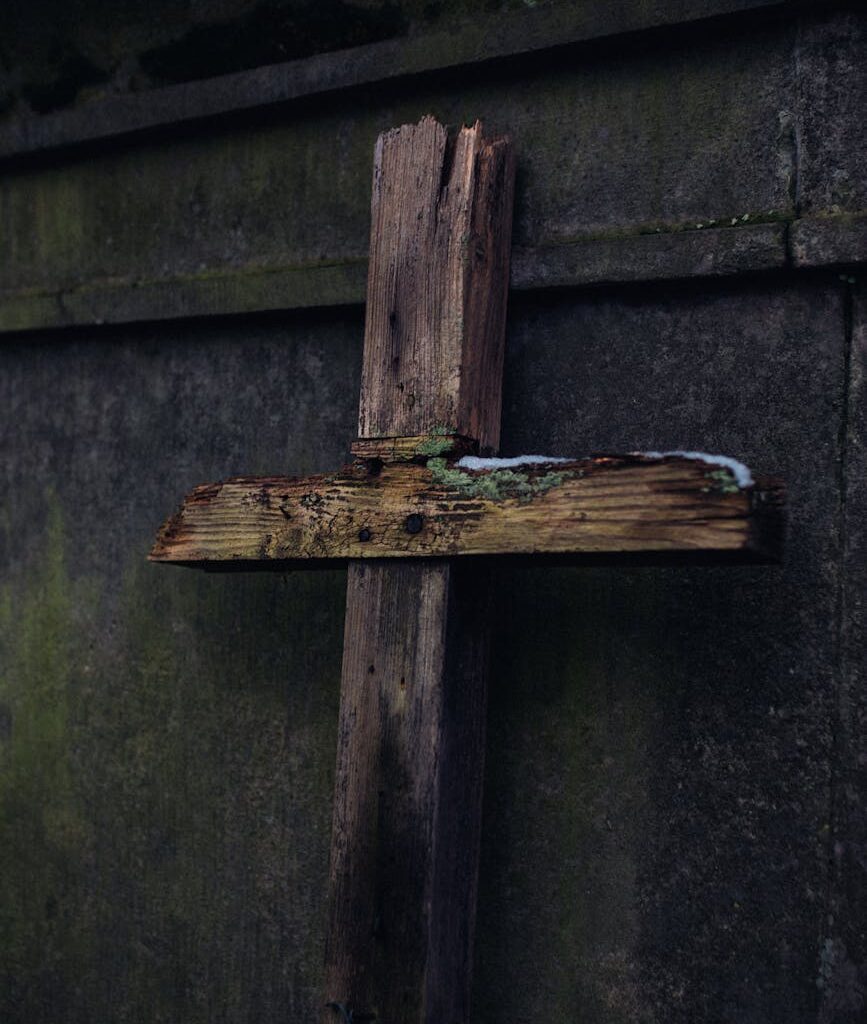
When I first held that modest symbol between my fingers, I wasn’t preparing a declaration for the public. I was initiating a private dialogue with myself, one that language had never been capable of holding. The cross rested lightly against my skin, yet it carried a weight that didn’t belong to tradition or theology. It spoke to an interiority that had survived long before anyone attempted to interpret it.
As a Jew by birth and actual freethinker, I didn’t wear it as a Christian. I wore it as a human being searching for coherence within an inner landscape marked by contradiction, memory, and an unspoken need for restoration. I wore it for many esoteric reasons I want to keep to myself. But I’ll still share a bit in this article.
Societies often prefer their illusions to another person’s reality
Still, the moment the cross became visible, interpretations rushed toward me. People didn’t ask what it meant. They informed me of what it must mean. They projected conversion, allegiance, and doctrine. They imagined a shift in identity where none had taken place.
This eagerness to categorise revealed something profound. Societies often prefer their illusions to another person’s reality. The more nuanced one’s motives are, the faster the world tries to flatten them into recognisable shapes. What I carried in silence wasn’t flattering to their frameworks, nor convenient for their assumptions, so they simply replaced my story with their own.
Margins, metaphors, and lingering questions
I had been walking for years through corridors of unspoken injury. Some forms of pain do not announce themselves. They accumulate, harden, and rearrange one’s psychology until silence becomes indistinguishable from endurance. Before that cross ever touched my collarbone, I had already descended into the deep interior where memory, trauma, and resilience coexist. The cross didn’t initiate but accompanied the descent.
In those years I encountered the uncomfortable truth that one can be harmed not by spectacular events but by the erosion of one’s humanity in the presence of indifference. Modern societies claim enlightenment yet often behave with astonishing moral amnesia. Those who feel deeply absorb this dissonance not as abstraction but as physical consequence. My body mirrored the fractures of the world I inhabited. So the cross became a reminder to seek equilibrium, not because I was noble, but because bitterness would have been an understandable but corrosive response.
I turned to ancient texts not as a believer of dogma but as a seeker of intellectual and emotional resonance. I read the Bible as literature, philosophy, and history written with trembling hands. Certain passages felt hollow. Others glowed. Some confronted me with a tenderness I hadn’t expected.
I was searching for language that could hold what I had endured, and occasionally I found fragments of it nestled inside those archaic lines. Meaning appeared not in the doctrines but in the margins, metaphors, and in the lingering questions that over centuries refused to die.
Society rewards the impersonator rather than the originator
European Christian culture is now in a state of accelerated danger, possibly collapse. Its institutions no longer embody the values they once claimed to guard. Yet within that collapsing architecture, the ethical foundation remains recognisable.
I wore the cross, in part, as an acknowledgement of that heritage. It resonated not as belief but as an emblem of a moral sensibility worth remembering. But a symbol in the public sphere quickly ceases to be personal. It becomes a screen for projection.
The world misread it so loudly that eventually the object could no longer hold the meaning I had entrusted to it. My intention was drowned by their noise. So I removed the cross because the symbol had become too entangled with the illusions of others.
In the process of navigating these misunderstandings, I learned something unsettling about contemporary culture. Some individuals don’t merely misunderstand others. They consume them. They appropriate voices, experiences, even suffering, and repackage them for their own gain. They mimic authenticity yet offer nothing original. They echo insights they never lived, then monetise them while silencing the one whose journey they stole. Society, disturbingly, often rewards the impersonator rather than the originator.
But no imitation can touch the core of a lived experience. One can replicate the outline of a symbol but never the essence it carried. I have witnessed this imitation game long enough to recognise it as a symptom of a deeper spiritual emptiness that afflicts our age.
If there is anything in my experience that speaks to a broader audience, it is this: meaning is sovereign
We live in a time that celebrates performance more eagerly than honesty, and surfaces more enthusiastically than depths. The cross revealed that paradox. It showed me how symbols become battlegrounds where personal meaning contends with collective projection.
Evil, I realised, is rarely dramatic. It often arrives dressed in normality. It thrives where empathy is replaced by convenience, and moral responsibility is replaced by social strategy. I have encountered that cruelty often enough to understand that it shapes the psychological climate in which many of us must survive. The cross helped me resist the internal collapse such cruelty invites. Yet eventually I no longer needed it physically. It had already completed its function.
I passed it on to someone else. The symbol has fulfilled its purpose when it becomes unnecessary to wear it. The meaning that rested outside now lives within. I no longer needed the world to see it, because I no longer needed the world to understand what it never truly saw.
Removing the cross didn’t signal a return to the dogma of origin. It signalled an arrival to myself, no longer governed by misunderstanding. An arrival into a truth that didn’t depend on interpretation. And an arrival into a clarity that had survived distortion and projection.
If there is anything in my experience that speaks to a broader audience, it is this: meaning is sovereign. No institution and no collective imagination can override what is authentically known within the self. People will misinterpret symbols. They will misinterpret choices. They may misinterpret you. But the interior truth, claimed and lived, doesn’t belong to the world that misreads it!
The cross didn’t define me. It revealed the part of humanity that resists simplification. Perhaps that’s what the modern world most needs to remember. When symbols fade, narratives fracture, and identity becomes contested terrain, one truth remains. The integrity of the inner life is the final frontier of human freedom, and it survives not through recognition but through the courage to inhabit it fully.



Your email address will not be published. Comments are subject to our Community Guidelines. Required fields are marked *
Donate