Dina-Perla Portnaar is known for the Dutch memoir, Exodus from the Lighthouse—Exodus uit de vuurtoren, about her restrictive religious upbringing. The book was adapted into a Dutch television production for KRO-NCRV, and has been discussed on various occasions, including at events and in academic research. In 2023, the Amsterdam City Archives added the book to its collection as a manifesto of ‘herstorical value’. In other words, herstory instead of history.
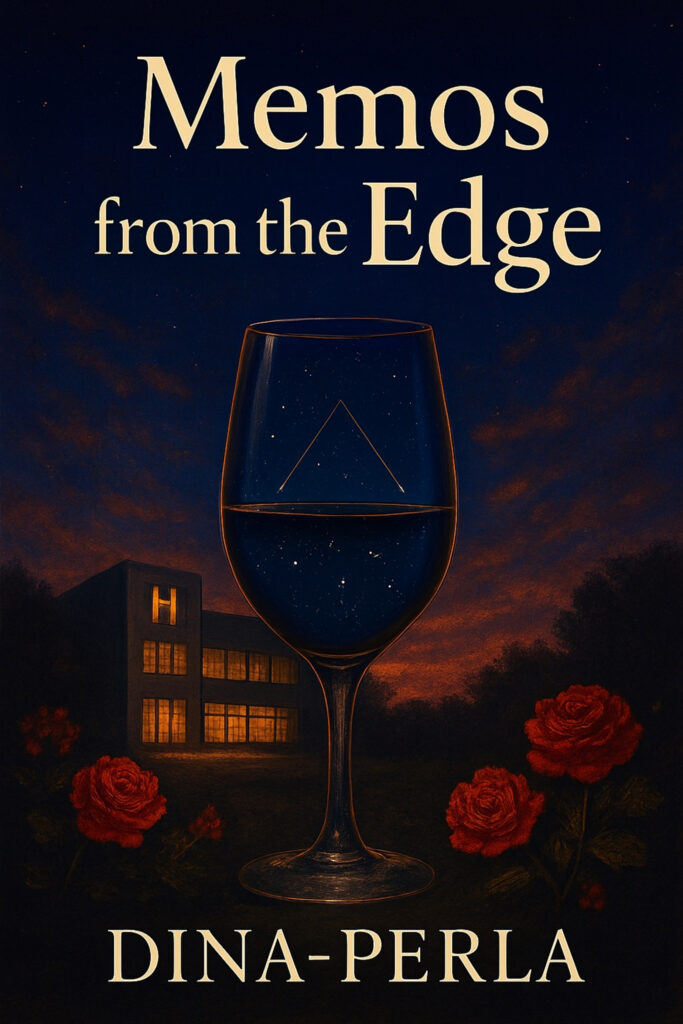
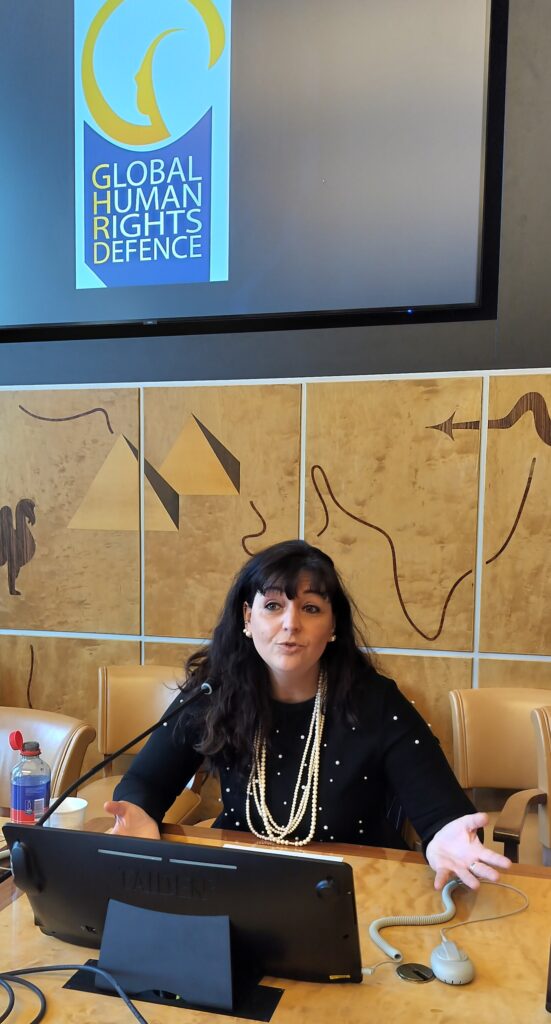
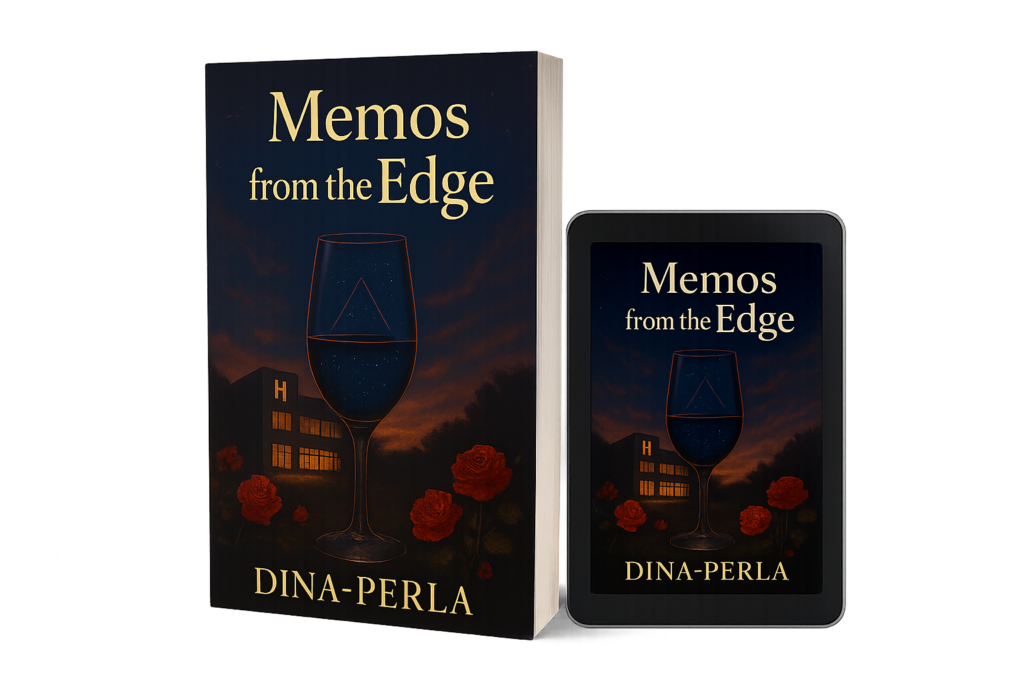
Now, her focus is on philosophical storytelling and genre mash-up. Dina-Perla Portnaar embraces genre pastiche, blending forms in fresh, inventive ways. Her French roots inspire her work, and her novels always unfold in three layers. Namely: a story-driven puzzle, hidden messages, and an accessible sense of mysticism. This has led to her upcoming novel, Memos from the Edge, which will be launched on 9 April 2026, and her 27 February 2026 speech at a side event at the 61st session of the United Nations Human Rights Council in Geneva, organised and made possible by Global Human Rights Defence. The Freethinker has received the speech exclusively to share with its readers.
First, though, a memo on Memos…
They accused her of murder, but the real crime is what she uncovered inside the fertility clinic. And someone tries to kill to keep it hidden.
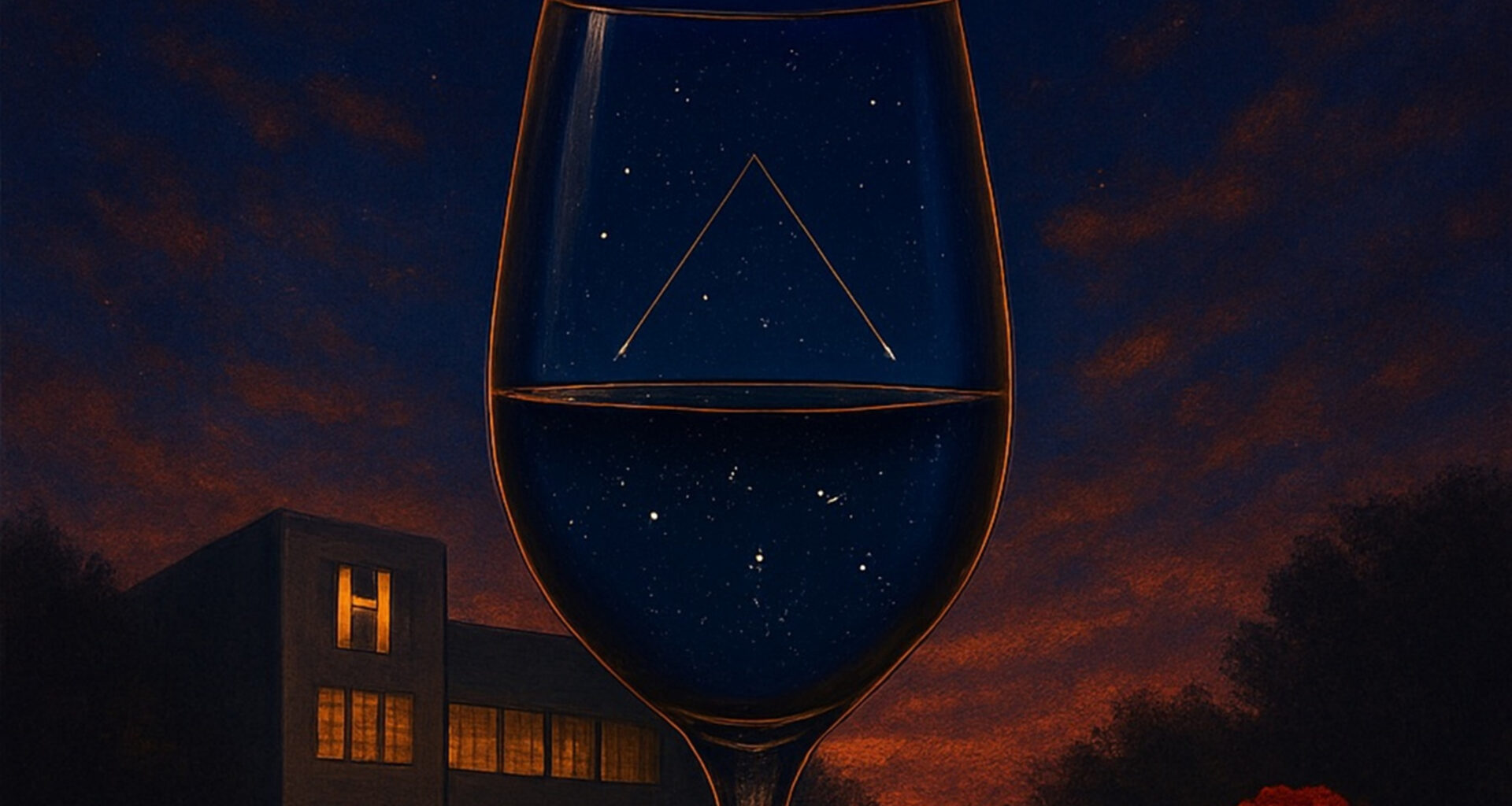
The public debate over the past few years has been very challenging, to say the least. The satirical, philosophical, and mystical novel Memos from the Edge therefore invites readers to pause and reflect on where we’re going, and whether we’re heading in the right direction. Memos from the Edge explores how identity intersects with larger social forces, and how truth-telling can transform both individual lives and collective consciousness.
The story reads like a glass of champagne
Memos from the Edge is very much dialogue-driven. The balance between descriptive passages and dialogue changes ongoingly. It’s almost a screenplay in the beginning. Through the dialogue, a balance is maintained between the philosophical and the realistic, deliberately bending conventions in the process. Expect rich wording, depth, and a compelling narrative structure.
The story draws bold parallels with current geopolitical conflicts, inverting familiar dynamics to offer a fresh, unsettling perspective. This creates a satirical framework for examining what it means to seek belonging as a highly sensitive person in today’s fractured world. The story is grounded in the everyday, to the point of being mundane, making it evocative. It reads like a glass of champagne: light and sparkling.
What the title is about
The title Memos from the Edge carries multiple meanings, which gradually reveal themselves throughout the work. One reference is that the title reflects the inner experience of the main character, Imane-Safae, a highly gifted and highly sensitive young woman who navigates life from a psychological and emotional ‘edge’. A place of heightened perception, vulnerability, and insight.
The ‘memos’ also refer to fragments of thought, memory, and feeling, transmitted from the margins of what society deems normal. These messages give voice to the often-invisible intensity of giftedness: the existential loneliness, overwhelmingness, and deep need to make sense of a world that frequently misreads Imane-Safae’s depth. The edge isn’t just where Imane-Safae stands; it’s where she sees more clearly than most.
What the book is about
When fertility Doctor Imane-Safae is accused of throwing a newborn in a glass recycling container, her world fractures overnight. The accusation is unthinkable, yet the truth she carries is more dangerous than the accusation itself. In the fertility clinic where she works, medicine and ideology intertwine in ways that threaten to destroy society.
As pressure from the investigation mounts, Imane-Safae’s longing to belong collides with her refusal to stay silent about her discovery. Betrayed by those she had to trust and shadowed by questions she never knew she needed to ask, she begins to confront the hidden threads of her life. Each revelation forces her to choose between safety and truth, and complicity and justice. She uncovers parts of herself that had long remained buried.
While the nation watches her trial unfold, Imane-Safae’s personal reckoning becomes a public battle over power, belonging, and the right to know the truth. Out of ruin and loss, she must find the courage to reclaim her sense of self, to redefine what it means to be human in a system built to divide.
Memos from the Edge is a provocative, philosophical novel about the fragile border between justice and revenge. Ideal for book club discussions about life’s dilemmas and the price of integrity.
You can pre-order Memos from the Edge by contacting vdi.eradicate202@passinbox.com.
And now for the speech, delivered earlier today (and viewable here)…
(After the moderator’s introduction)
Thank you, and thank you to the Special Rapporteur and to the representatives of the Baha’i and Ahmadiyya communities for your powerful and sobering contributions.
I am not speaking here on behalf of any institution or government. I’m speaking as an analyst and author who has examined what I believe is one of the defining dilemmas of our time—a dilemma that sits at the intersection of belief, power, and freedom.
The dilemma is this:
How do we protect freedom of religion and belief, as a cornerstone of human dignity, while ensuring that religion itself is not instrumentalized to undermine the very freedoms it is meant to protect?
This is not an abstract tension. It is one that has concrete human consequences, as we have heard today.
Blasphemy laws are often framed as tools to preserve social harmony, protect religious sentiments, or prevent unrest. But in practice, in many contexts, they operate very differently. They become mechanisms through which religious minorities are silenced, discriminated [against], criminalized, or rendered vulnerable to violence.
The issue before us is not belief. The issue is coercion.
International human rights law is clear. Article 18 of the International Covenant on Civil and Political Rights protects freedom of thought, conscience, and religion, including the right to adopt a religion, to change it, or to have none. It protects belief as an internal freedom. That freedom is absolute.
At the same time, freedom of expression, including expression about religion, may only be restricted under strict conditions of legality, necessity, and proportionality.
What we see in the application of blasphemy laws in certain states is unjust, unnecessary, and [disproportionate]. It is the criminalization of identity.
It is laws that are vague and selectively enforced.
It is accusations used to settle personal disputes.
It is entire communities living under permanent threat.
It is the chilling effect that silences dissent and debate.
And in many cases, it is not courts alone that punish, but mobs, social ostracism, forced displacement, and impunity.
The second dimension of this dilemma is more complex and more uncomfortable.
Around the world, extremist actors invoke ‘freedom of religion’ to defend practices or ideologies that contradict fundamental human rights principles. Literalist interpretations of religious texts, often centuries old, are mobilized to justify discrimination against women, minorities, or dissenters.
Here again, we must be precise.
International human rights law protects the right to hold beliefs. It does not protect the right to impose those beliefs through coercion, violence, or discriminatory legislation.
The freedom to believe is not the freedom to dominate.
And when states codify one religious interpretation into law—particularly in ways that target minority communities—they cross the line from protecting belief to enforcing orthodoxy.
The victims of this shift are rarely the majority. They are minorities whose theology differs, whose interpretation differs, or whose very existence challenges a narrow narrative of national identity.
We must resist the false binary that is often presented in these debates: that one must choose between protecting religion [and] protecting human rights.
In reality, freedom of religion and belief and minority protection are mutually reinforcing.
Pluralism is not the enemy of faith.
Accountability is not the enemy of belief.
Human rights are not the enemy of religion.
The true threat to both religion and human rights is coercion, especially when it is sanctified by law.
There is also a third dimension to this discussion. A dimension of governance.
When blasphemy laws are embedded in legal systems without safeguards, they undermine judicial independence and [the] rule of law. When accusations alone are sufficient to trigger detention, violence, or exile, due process—the rules ensuring fair treatment of individuals—collapses.
And when the international community hesitates to address these laws out of fear of appearing culturally insensitive, minorities are left without protection.
The United Nations has a particular responsibility here.
It must continue to affirm that protecting freedom of religion does not mean shielding religious doctrines from scrutiny, nor does it mean legitimizing discriminatory laws.
It must support states in reforming legislation that fails to meet international standards.
It must support mandate holders who document these patterns.
And it must amplify the voices of those directly affected.
Finally, I would like to return to something more human.
The people we are discussing today are not legal abstractions. They are individuals who navigate daily life under threat, sometimes because of what they believe, sometimes because they refuse to conform, and sometimes simply because they were born into a community deemed different.
If blasphemy laws are used to silence minorities, then they are no longer about faith. They are about power.
And power without accountability is precisely what human rights law was designed to restrain.
The challenge before us is not to weaken religion, nor to dismiss cultural context. It is to ensure that no belief system—religious or ideological—becomes a tool for persecution.
Freedom must be protected.
But so must those made vulnerable in its name.
And finally, some inspirational quotes from Memos from the Edge (without giving away any spoilers)…
© Dina-Perla Portnaar. All rights reserved
With organized religions, men have controlled women out of God’s name. Men have figured out how to uphold the frameworks from centuries ago with rigidity, limitations, short-sightedness, domination, and coercion. What if women had created religions centuries ago, instigating this evolutionary chain? Would they have created rules to control men out of God’s name? Would universal consciousness have reached a higher level? A dignity of power instead of what happens today? What if God is female or non-binary?
It’s absurd to withdraw from life for the sake of pleasing or gaining rewards in heaven, also at the cost of animals or plants.
Men never commit evil so completely and cheerfully as when driven by religious conviction, as Blaise Pascal intended to convey. How I weep because of their damage. Must women clean up men’s mess and harmful ideologies in the future? My heart races with fear, knowing that may be true, at least in part. Can women instill a lasting, peaceful consciousness throughout the masses? Is it a matter of individual blueprints given to us or developed over time? Shouldn’t we obey this guidance to Truth for our assignments during our lifetimes?
Organized religions and ideologies fail at harmonizing the inside out and outside in of a human because they have ignored individual blueprints. A leader deciding for others goes against the Truth. Is it not a matter of constructing a joint value system that underlines life’s worth and innocence by aligning those blueprints? Isn’t that the essence of intimacy between us and God as the Source?
If God exists, wouldn’t He just be, not in need of frameworks or rule books? Isn’t He meant to be everything except dogmatic? Wouldn’t He want people to replace the opposing politics of Him with gentle and joint guidance and celebration? Doesn’t He want to strengthen a balanced alternative between religion and secularism?
If God exists, isn’t it time that He shows us that He can never be the God of one group, wanting to eradicate another? That the story of the chosen people is an artificial danger? That there’s no holy war against anyone who or anything that lives? Isn’t being alive the essence of completeness and worthiness?
Isn’t it time to not only coexist with each other but to define the underlying chain of purpose–people from different backgrounds? Isn’t that what that modern talk about diversity and inclusivity is about? If God exists, isn’t it time to introduce humanecy, not labeling it as religion or ideology because that has often manifested itself as cancer? Isn’t it time to exterminate cruelty forever and to make war an idea that does not exist in any realm?
I want peace, accountability, and liberation. I don’t want to shift from the victim to the perpetrator, as power-hungry individuals do. We don’t heal by staying in a consciousness in which we were victimized. We heal by realizing ourselves, by being. I want to be.
Where was God when the Mexican savages slaughtered us? When white Americans couldn’t be at peace? Where was God when the unthinkable happened to me, and then in front of my eyes while I was playing dead, covered in the blood of those who were? Where were God’s promises according to the sages from whatever religion many centuries ago, as you promised? Why didn’t God at least let us die with dignity?
I protest. I’m tired of the same game that God lets the world play in fresh rounds of evolution. For what? Another round of destruction and conquering evil? For His grace that is under pressure? For ours? Shouldn’t these cycles be more sophisticated by now?
Pericles said it right. Just because you don’t care about politics doesn’t mean politics doesn’t care about you. It’s everywhere. Look around.
The boy raises his finger. “Are we going to die?” “At some point, yes, but death isn’t the end, my child. Just as birth isn’t the beginning. Death is a transition to another chapter of existence. Souls are like flowers. Because of their roots, they live countless lives and return to earth as spirits in many forms. Mother Earth is older than we can fathom. Each life is like the fragrance of flowers, and the value of one life is a whole world.”
Humans have endless potential, but when misguided notions win and are supported by large groups, they threaten our humanity.
Humankind is its worst enemy, because most don’t dare to be vulnerable with one another.
There’s a difference between speaking vulnerability and showing it. We need both to serve as a mirror for humanity. Vulnerability is a form of love. God is unconditional, eternal, and all-encompassing Love. Everything else isn’t God, but people using His name in vain.
End of time? That’s another rubbish concept. Do no harm, is that right? We harm each other all the time and get away with it, except for the rules and conventions we’ve created ourselves. Look at this young woman. If someone did this to her, will the perpetrator be prosecuted? Will the punishment be enough? Who decides what’s fair?
Maybe God is with us in the midst of evil, guiding us to find our way back to good. Perhaps knowing we’re never alone is the true splendor of life.
Our freedom is being used to limit our freedom.
How do we address the masses who seek false purposes because their stories have failed, and because they flee from reviving themselves? Everyone is crucified, but not everyone fights for their resurrection. Some allow themselves to be crucified on small crosses. I want to co-create with God’s magnitude. Let’s not waste time, for it’s fleeting. Although, I’m sure God sees it differently, for He’s all-knowing.
I want humanecy, connecting those who form the bonds of an awakened yet human spirit. We need to meet each other steadfastly but with gentleness, for life is worthy. How do we achieve this when there are dangerous people on earth, capable of the unthinkable? How do we hold onto each other amid hatred, dejection, and loss? We must, for God is worthy.
Coexistence isn’t the ultimate solution. There’s an alternative consciousness that transcends the functional tolerance of various races within societies. Never have we reached that state in history. We have been torn between fascism and totalitarianism at worst and freedom and democracy at best. We have never chosen to not simply live and let live, but to share a common story of values across the globe, regardless of race, nationality, gender, religion, education, or any other difference.
The media and politics polarize us. These pillars could support a shared story of values, but instead, they push humanity into the abyss, disconnecting us from ourselves and the fabric of the whole. Good luck to those seeking truth amid power structures, hidden agendas, fake news, and AI.
If their God matters more to them than we do as their neighbors, are they not broken?
I wish for God to reclaim our free will when we falter. Look at what humans are capable of. Rather than washing away this planet or permitting more war, let God transform people’s minds.
I have surrendered to the rain, but I long for more lightning in the storm. Because I don’t see how I can reach a time when I will be cleansed, and cleanse others with the waters of forgiveness, without God reclaiming our free will.
The translucent glass walls at Marseille Hospital reflect the weight of people’s joys and sorrows around the clock. Whether the carved-out turning points are called fate, Divine, or fortuitous, Imane-Safae doesn’t know. Who does? As her days unfold against the beat of dreams being conceived, crushed, or delayed, she hopes there’s a Divine intelligence guiding the chain of events.
Besides, why are people narrow-minded about using CRISPR for preferences, like choosing blue eyes for their children? What’s the harm if the risks are minimized, with no accidental damage to other cells, causing transgenerational consequences? Should we avoid making decisions for unborn human beings? Don’t we already decide whether a boy gets circumcised or whether to terminate a pregnancy, up to fourteen weeks in France? What makes one choice acceptable and another not?
We value self-determination and democracy. So why not let women decide if they want to carry their child or opt for a surrogate? Legal agreements are straightforward these days. Many countries permit surrogacy out of altruism. If we want women to emancipate, shouldn’t we also free them from rigid expectations about how they should have children?
I try to catch my tomorrows by reaching into my future. The pride of my desires and needs has long since faded away. When the storm swallows the precision of my mind, what remains of the memory of my future?
Why does the hunger for God result in (geo) political, racial, ideological, religious, and spiritual barbarity? If God calls us to advocate for Him and seek Him, this barbarity must end.
We stand on the shoulders of giants who fought for life and progress long before us. It’s up to us to keep fighting. I must find the strength to honor our lineage.
We argue over imbecile matters and create so much noise during our lifetimes, not knowing that it’s our love language, risking losing each other along the way, only to find each other when it’s too late.
A single cell, as small as a grain of sand, contains the code for an entire human life. By modifying that microscopic core, we take the bold step of shaping future generations for the better.
She knows, always trust a predator’s first confession.
The entrance is an invitation to step back in time and rewrite the past.
As humans, our inner compasses always need outer magnets to find our way. Magnets being God and people who guide us. It’s a matter of finding the right people.
If only they could comprehend the edges of time, so they could speak for her in remembrance of her having visited the world.
It looks good on us when our hearts are open, when we can feel each other’s joys and sorrows. But when does open become too much, carrying burdens that weigh us down, causing us to lose more of ourselves along the way?
I would have liked to be free, not as a bird, but as a dragonfly.
How can we meet each other again, being part of the same cloth, if we don’t deal with the frayed rags now?
In times of crisis, we aren’t seen, heard, or judged as individuals, as we should be. We’re forced to share a collective voice, compromising our human fragility, where Truth and nuance reside. That may be the greatest tragedy.
The universe mirrors an overload of wrongdoings when people drown in unfairness.
Women in her position often carry the heft of something far greater than themselves. It’s not their bodies or pain, it’s the world itself. A society that asks them to silence their truth to protect the lives of men who will never care to feel the severity of their actions.
It feels like the world demands just that: silence; her silence; their silence; centuries of silence.
What does that even mean when your very core isn’t allowed to take space in the world? Isn’t strength a luxury for those untouched by unfairness?
How do I recruit ambassadors of harmony? Women should lead because they carry life for nine months. They know. Few initiate wars like men do. Women grow weary of men’s pursuit of global dominance and their failure to address the role of religion and ideology in fueling hatred.
Religion and ideology hold the greatest examples of historical plagiarism. God and mysticism existed long before religion. That’s why spirituality prevails.
There’s something sacred about the moment before revelation, a feeling of standing at the edge of the world just before it inclines.
Every perspective has its roots, but the freedom to hold one comes with responsibility.
She fled to the monastery, to realize that a battle without rules isn’t a battle. It’s chaos, one of the era’s greatest challenges.
The healthy tissues must remain beacons of civilization, as we have come too far to jeopardize what’s at stake. We must aim higher to counteract the collapse of civilization. We must decide what kind of species we wish to become in this phase of evolution. This choice has never been about ignorance, but about the courage to act on the knowledge gained from previous trials. Who do we become when we lose sight of the truth we’d rather forget, driven by our fear of death and the endless cycle of violence and survival?
Calculation destroys people’s minds across the globe, divides, and takes control. Those who know who they are cannot fall prey to this trap. The past is a foreign country where things are done differently; a prologue. We don’t get to start with a clean slate in the present. We get to renew on the back of the past in the now. The fear always exists because our pasts can have futures we never expect.
What is remembered is lived, but what happens when the story is told incorrectly? If our authenticity is stolen and our existence is denied, if we look at the falsification of our history, it can get ugly.
I might never feel at home in the world again. Tell me what to do when I mourn the lives lost in Mexico, but I can’t mourn our losses. Accuracy is often the first casualty of conflict, but can anyone see my heart’s purest intentions? When facts invert, peace drifts away, making us incapable of man-made shortcuts. Can peace initiatives continue with their mission?
Grief, though heavy, is not a chain but a bridge. One that connects what was lost to what still remains, urging us to walk forward with courage and hope.
We fail to educate that peace should be the norm, when it isn’t. The world’s educational failures are as if somebody enters a burning building to pull someone out, only to have that person punch away, demanding evidence that the building’s on fire. Even after that person admits seeing the flames.
Achieving humanecy requires articulating and committing to a unified narrative that transcends leadership. This can be achieved once humans reach a decent amount of emotional and spiritual maturity. Fluctuating is permitted, as a constant inner state is impossible, but not to the extent of the extremist levels and the bestial human condition.
You always want the truth. But the truth doesn’t want anything. It waits for people to wake up and watches.
Every day, she’s been fighting battles within the confines of her mind, against the ghosts of her past and the demons of her present.
While unconsciousness calls for revolution, life demands evolution. How many politicians are escapists believing they create change, yet sleepwalk through society? Is it any surprise that anarchists sense their opportunity from miles away?
Statehood isn’t about dominance, ownership, or privilege. It’s about service, the dignity of power, the choice to rely on one another, and a shared responsibility toward humanity.
Power plays against those demonized on any given day. All of this forms the bedrock of abuse. It fosters a false sense of security, with God cast as the central figure, promoting group identity and belonging by creating divisions between ‘us’ and ‘them’.
Moral modesty and renewal, embodied by humanecy, open the door to willingness, connection, and moderation. It also paves the way for clarity.
Purpose shouldn’t be stopped by the discomfort of our days.
I had to rebuild my ground without knowing the foundation was broken.
Stand where you can be seen. Our generation cannot escape the duty to speak.
Getting caught up is easy; breaking free is the hardest thing humanity will ever do.
The only way to fail is to stay down out of fear of failing again.
True belonging arises when loyalty to truth surpasses loyalty to tribe, tradition, or trend.
Everyone is included in exclusion. We either abandon our humanity and civilization or rise to the challenge.
A line splits the people: abandon dignity and collapse, or defend it and rise. Let battles be fought with words, values, and standards that protect what’s highest in us.
Heaven is a lie if it demands hell for others.
This is the true mark of a hypersexual culture: arousal without tenderness, repression without wisdom, and desire without responsibility.
I don’t know what tomorrow will bring. But I know this: I will no longer seek belonging through the lies of those who use me. I’ll belong because I choose, where I choose.
We can experience consciousness that suffers, but consciousness is never the source of the suffering. Only by embracing our depths of consciousness and expanding our awareness beyond the self, can we bridge the darkness of the current dystopia to the light of the utopia that awaits.
Civilization requires restraint. We transform our emotions into something durable with patience, trust, and discipline, without falling prey into intoxication of the moment.
You can pre-order Memos from the Edge by contacting vdi.eradicate202@passinbox.com.



Your email address will not be published. Comments are subject to our Community Guidelines. Required fields are marked *
Donate