

Originally published on the National Secular Society’s website on 27 February 2026 and republished here with permission.
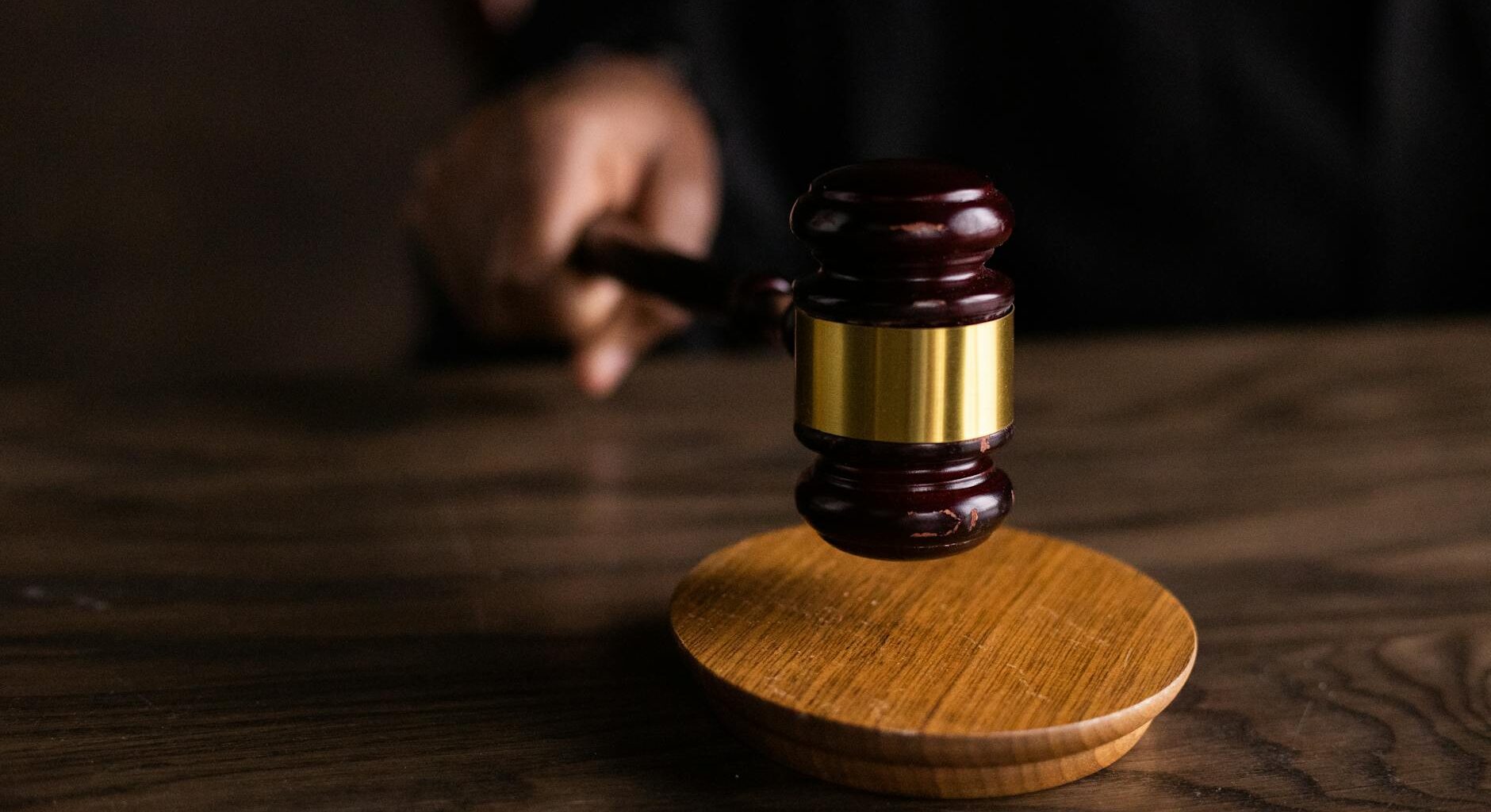
Today saw a decisive victory for freedom of expression: the High Court rejected the Crown Prosecution Service’s attempt to reinstate Hamit Coskun’s conviction for burning a Quran.
It will hopefully mark the end of a case that ought never to have been brought at all.
The case raises serious questions, not simply about a flawed prosecution, but about why a fundamentally unsustainable case was pursued with such determination.
From the outset, the facts were uncomplicated. Mr Coskun, a Turkish-born atheist and asylum seeker of Armenian and Kurdish heritage, took part in a one-man peaceful protest outside the Turkish consulate, during which he burned a Quran and shouted “Islam is a religion of terrorism” and “fuck Islam”. He threatened no one. He injured no one.
He was subsequently arrested, prosecuted and convicted of a ‘religiously aggravated public order offence’.
You don’t need to agree with his views or the manner of his protest to defend his right to express himself in the way he did – but it is worth reading his backstory to understand his motivation.
The original charge was extraordinary. Prosecutors alleged that he had caused harassment, alarm and distress to “the institution of Islam”.
That formulation was very revealing.
England and Wales abolished blasphemy offences nearly two decades ago. Criminal law protects people – not ideas, institutions, or beliefs – from harm. Charging a man for distress caused to a religion itself suggested an attempt to revive, by implication, what Parliament had deliberately consigned to history.
Only after we exposed the egregiousness of that charge was it withdrawn and replaced with an alternative allegation. But the instinct behind it remained unmistakable. The prosecution appeared to treat offence to religion itself as the harm requiring legal protection.
The facts of the protest made matters still worse.
During it, Mr Coskun was attacked and threatened with death by a man wielding a knife.
That man, Moussa Kadri, was convicted of assault and possession of a bladed article and received a suspended sentence, avoiding imprisonment.
Yet prosecutors relied upon that very violence to argue the protest had become “disorderly”.
In other words, the attack upon Mr Coskun became evidence against him.
The CPS went further still. It argued that burning a book in a residential area of central London “is in itself disorderly” – and “all the more so when the book is a holy text”. Mr Coskun, it said, had “effectively provoked” disorderly conduct, evidenced by the fact that he was viciously attacked.
The implications were extraordinary.
If accepted, violence or threatened violence would become proof that speech should never have occurred. The law would reward intimidation and punish the person targeted by it. A classic heckler’s veto. The more volatile the audience, the narrower the space for lawful protest and expression.
Mr Coskun’s defence exposed the consequences starkly. The court, they argued, was being asked “for all time” to determine that burning any book – even a copy of Harry Potter – on the streets of central London would be “ipso facto disorderly” as a matter of law. They described this as “the first time in history” a court had been invited to recognise a concept of “intrinsic disorderliness”.
It was an absurd submission that shames the CPS.
The CPS insisted the case was not about blasphemy. Yet its own language gave the lie to that claim. Prosecutors repeatedly described the burning of a holy book as “desecration”, even while denying that offence to religion lay at the heart of the prosecution.
When the case reached the Crown Court on appeal, the judge recognised precisely what was at stake. The conviction was quashed. The judgment made clear there is no blasphemy law in England and Wales and that criminal law cannot be used to shield people from offence, even profound or grievous offence.
That should have been the end of the matter.
Instead, the CPS chose to appeal to the High Court.
Its submissions were striking. The CPS argued that the Crown Court had not been “rationally entitled” to reach its conclusion. More troubling still was the suggestion that anyone not at least distressed by the burning of a Quran could not be considered “right-minded”.
That argument revealed the underlying problem. The prosecution’s case depended upon elevating emotional offence – and the apparently “inevitable” reactions that follow – into a legal standard.
It’s also worth noting that its submissions suggest a troublingly low opinion of British Muslims’ ability to handle contentious expression.
Freedom of expression protects speech precisely because it can shock, disturb, or offend. The law cannot make criminality depend on how upset people feel. If it did, the loudest outrage – or the most threatening reaction – would end up determining the limits of free speech. That can’t be how a how an open and tolerant society works.
The High Court rightly rejected the CPS’s attempt to resurrect the conviction. In doing so, it reaffirmed a principle that should never have required restatement: criminal law exists to prevent harm to individuals, not to protect beliefs from criticism or symbolic protest.
That outcome is an important victory for freedom of expression.
But victory in court does not erase the deeper concern.
This prosecution began with a charge that effectively treated a religion itself as a victim. It continued despite the obvious dangers of relying upon the hostile reaction of onlookers to justify criminal liability. And even after a Crown Court judge corrected the error, the CPS persisted in pursuing the matter to the High Court.
Public prosecutions carry great authority – and great responsibility. Appeals exist to clarify the law or correct injustice – not to resurrect cases that lack merit.
The unavoidable question therefore remains: why was this appeal pursued?
It is difficult to avoid the conclusion that the case was appealed on some basis other than the strength of the legal argument. Whether driven by external pressure, institutional ideological zeal, or an unwillingness to concede error, the result was the same: a peaceful protester was dragged through the courts to defend conduct that has now been confirmed as lawful.
The National Secular Society and the Free Speech Union co-funded Mr Coskun’s defence throughout, not because we endorse Quran burning, but because the principle at stake extended far beyond one person’s individual protest.
Had this prosecution succeeded, it would have opened the door to a blasphemy law in all but name – enforced indirectly through the policing of offence and the anticipated reaction of religious fundamentalists willing to threaten disorder or commit violence.
The High Court has rightly refused the invitation to introduce a blasphemy law by the back door.
But serious questions remain about how the original charge was authorised – and why a case so fundamentally flawed was pursued.
Those questions deserve answers. And this time, they should be directed at the Director of Public Prosecutions.
Related reading
A victory for free speech: the Hamit Coskun ruling, by Stephen Evans
Convicted for blasphemy in modern Britain: an interview with Hamit Coskun, by Daniel James Sharp
Blasphemy Laws 2.0: The conviction of Hamit Coskun, by Noel Yaxley
Image of the week: Hamit Coskun, victim of a new form of blasphemy law?, by Daniel James Sharp
Coskun’s conviction is a surrender to Islamic blasphemy codes, by Stephen Evans
The burning question: are blasphemy laws back? by Stephen Evans
Image of the week: 20 years since the Jyllands-Posten cartoons controversy, by Daniel James Sharp
Islam and free speech, 20 years on from Jyllands-Posten: interview with Jacob Mchangama, by Daniel James Sharp





Your email address will not be published. Comments are subject to our Community Guidelines. Required fields are marked *
Donate