

Introduction
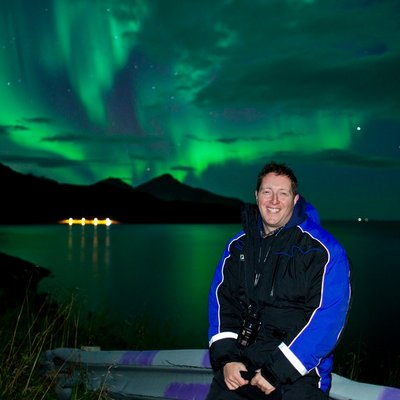
Phil Halper is a fellow of the Royal Astronomical Society and a science communicator and sceptic with a large online following. On his YouTube channel, he engages with some of the biggest names in religious apologetics and discusses science and philosophy, with a special focus on cosmology and the Big Bang.
His work has appeared across the major press and in peer-reviewed journals, and his astrophotography has been published in major magazines and media outlets. When he was the journalist in residence at the Penn State Institute for Gravitation and the Cosmos, he collaborated with many of the world’s leading cosmologists, including Stephen Hawking and Sir Roger Penrose. His first book, co-authored with Niayesh Afshordi, Battle of the Big Bang (2025), is described as ‘a thrilling exploration of competing cosmological origin stories’ and has been labelled one of 2025’s best science books by New Scientist and Smithsonian.
In this interview, conducted last year, we discuss Halper’s life and work, including his views on religion, science communication, and the animal suffering argument against the existence of god. The transcript has been lightly edited for clarity and concision.
Interview
Samuel McKee: Tell us about your background and religious upbringing.
Phil Halper: I was brought up Jewish. I went to Hebrew school and learned the Torah, the Hebrew language, and Jewish history. I was quite a strong believer, but at some point in my teenage years I rebelled against my upbringing. This rebellion was sparked by the Passover ceremony. I found the Passover story incredibly immoral—killing all the firstborn children and animals. Quite frankly, I thought God was a monster. When Richard Dawkins’ book The God Delusion came out and he explained the unpleasant character of the Old Testament God, I found myself in complete agreement. From then on, religion was no longer a strong factor in my life.
In 2010, I went back to university to study astronomy and at some point I attended a debate between Stephen Law and William Lane Craig. I became interested in philosophy of religion and debated some Muslims and this all galvanised me to take religion much more seriously.
Anything about religion in particular?
The claims about cosmology and animal pain [i.e. that animals aren’t self-aware and can’t suffer from pain and thus their suffering is not an argument against an all-powerful and benevolent god] in particular were false. To engage more knowledgeably, I sought out books and videos on Big Bang cosmology and studied both string theory and loop quantum gravity. I was dissatisfied with the lack of material about these on YouTube, so a mathematician friend of mine encouraged me to make it myself. He hit me up with one of the founding fathers of quantum gravity, Abhay Ashtekar, and we filmed in Dubai, Cambridge, and the USA. I had no idea about making films back then! But it got hundreds of thousands of views, which was a stepping stone to doing more. Sir Roger Penrose then became involved, and it snowballed from there. That is the origin of my Before the Big Bang film series. I ended up making films with all the major cosmologists, including Stephen Hawking and Alan Guth.
Wow. Tell me more about that.
Stephen Hawking was really incredible. We had many trips to Cambridge and even accompanied him to Rome for a reception at the Vatican. We nearly met the Pope, but Hawking became ill, so that was missed. This all relates to the philosophy of religion because of religious arguments like the cosmological argument and the fine-tuning argument, particularly the strong interaction version of the fine-tuning argument. I still had my eye on that side of things even though I was excited about explaining the cosmology to the public and making these ideas more visible.
How did Battle of the Big Bang come about?
The book came about because the name Niayesh Afshordi kept coming up when we were discussing these ideas about the competing models for the early universe. I had seen him on the front cover of Scientific American, and I saw his name in various papers. I thought he would be good to speak to. I was strongly encouraged to collaborate with him on this topic, so I went to Canada to his institute to interview him and we hit it off, eventually deciding to write this book, which is based on my Before the Big Bang film series.
[See also Halper’s recent interview with the Institute of Art and Ideas, here.]
Can you tell us a little about your time at the Penn State Institute for Gravitation and the Cosmos?
I was invited to be the journalist in residence at the Penn State Institute for Gravitation and the Cosmos. I had done outreach with them, so they invited me over and I worked with them to promote some of the conferences, interview scientists, and create content. It’s been a wonderful experience and I’ve met so many people. I once walked home from dinner with Ray Weiss, the Nobel Laureate from LIGO, just talking for ages about the history of their work.
What brought about your work on animal suffering?
The papers on animal pain came about because I’d heard claims from religious apologists about the topic and had volunteered on a dolphin intelligence research project in Hawaii, where we had lectures on dolphin cognition. I had tried to keep up with the literature, and there was an article showing that dolphins had passed tests for self-awareness, which refuted the claim that only higher primates had this.
I decided to make a film interviewing scientists on the subject. This got a reaction from the religious apologist William Lane Craig (among others), who posted a video reply. I was so relieved because the criticisms were so poor! There were so many errors and fallacies there, I couldn’t believe it.
I replied by video, and there was a long back and forth before I debated Michael Murray on Unbelievable. During preparation for this debate, I noticed that there had been a patient who had lost his prefrontal cortex. Craig had claimed that a prefrontal cortex was necessary for self-awareness and that most animals, apart from higher primates, don’t have one, and so lacked self-awareness. This man was obviously self-aware, so it totally refuted their position.
I later got in touch with some of the authors of the study of the patient lacking a prefrontal cortex. With them and another author, I wrote some papers on the topic of animal suffering in which we criticised apologists’ claims about it. We also looked into how fish feel pain. It’s incredible to me that people had not even looked for pain receptors in fish until the 21st century. Can you believe that? It was mind-blowing. A lot of studies showed that fish do feel pain, again refuting the previous theological defence against the argument from animal suffering that fish don’t have these cortical regions and thus can’t feel pain. We partnered with philosophers of consciousness and some of the world’s leading experts on pain systems, and more papers have come since. The theological implications are obviously strong against the existence of an omnipotent, omnibenevolent god.
What drove you to get so involved in all these debates?
I have wanted to engage since my deconversion. My first debate was the one with Michael Murray. I had done debates that weren’t broadcast before, but that was my first time on something like Unbelievable. I had debated Muslims, but on a small scale. I was super nervous debating Michael Murray and had prepared so much, but once I did it, I was ecstatic. Many people said to me that it was amazing. Unbelievable liked me and invited me back for more, so I got sucked in. It’s fun and enjoyable, with a few exceptions. When someone is personally attacking you, it’s not fun, but most of the debates aren’t like that, and I avoid those sorts of debates now. All the ones on Unbelievable have been really nice.
I was also partly driven by some disappointment at my fellow atheists. I had seen them engage with Christians, and many times I felt that they had poor responses to some of their philosophical arguments. I thought atheists could do so much better, so I decided, ‘I’ll give it a stab’. But it wasn’t just me; there were other atheists doing an incredible job interacting with the philosophical claims being made by apologists. I started a show with two of my favourites, Alex Malpass and Dan Linford. I’m in awe of these guys, and I thought it would be great to have them on a regular show. That’s how The SCI Phi Show began. There, we interact with the claims of Christian apologists. I’m very proud of that show, and if you want really high-quality replies to Christian apologists, you should give it a watch.
Related reading
Debunking creationists, flat-earthers, and other enemies of science: interview with ‘Professor Dave’, by Samuel McKee
Evil gods and fun with philosophy: Interview with Professor Stephen Law, by Samuel McKee
The future of biology, science vs. religion, and ‘ideological pollution’ in science: Interview with Jerry Coyne, by Samuel McKee
Bringing back the dialectic: interview with Stephen ‘Rationality Rules’ Woodford, by Samuel McKee
The new faces of unbelief for Generation Z: the rise of the British social media atheists, by Samuel McKee





Your email address will not be published. Comments are subject to our Community Guidelines. Required fields are marked *
Donate