In early 1944 I was born in London, a city I love. I spent much of my childhood in rural north Oxfordshire, an area to which I have a great sense of belonging. And I have lived in Victoria, Australia (mainly in the Melbourne area), since 1976. I am now 82 years old, so I hope I have gained a little wisdom, or at least enough to take stock and sum up my life.
We are all, I think, products of our genes and environments. I might have a genetic predisposition to nonconformity as, when I was a child, my sympathies were for the underdog, not the powerful; for the prey, not the predator; for indigenous people, not ruthless colonisers.
My father, an emotional and physical bully, disliked me from infancy. Both my conservative parents regarded me as an embarrassing freak, a changeling, and my experiences of them led to my firm determination to be as unlike them as possible. They were my worst enemies. Fortunately, I received acceptance and love from my maternal grandparents. My grandmother often quoted to me some advice from Shakespeare: ‘This above all: to thine own self be true.’
I spent ten miserable years in Anglican boarding schools. I disliked all-male company, loathed sport (I found running for more than a minute or two painful), and soon detested Christianity as false and oppressive. The schools were, in my eyes, places of middle-class cruelty, regimentation, and heavy-duty indoctrination. With a few exceptions, like science, most of my real education began after I left school at the age of eighteen.
In the ‘Faith’ column of the Sunday Age (Melbourne), a regular contributor once said that he believed in God because he perceived order or structure in the world.
I accept there is structure and some degree of order in the universe; otherwise I would not exist, nor would any reader of these words. I don’t profess to know why the world is the way it is, and it may not be possible for anyone to answer this question. If the universe were created by a massive supernatural intelligence, however, I am satisfied that such an entity could not be good, given that I know about or see so much suffering and injustice.
Christian theologians have a term, ‘theodicy’, for their efforts to explain away why God allows suffering and injustice, but theodicy amounts to sophistry, such as that God gives human beings free will. What about the suffering of non-human animals? I think theists have abandoned the notion that bad things happen so that good may come out of them, which most people (I hope) find fatuous and unethical.
For me, the existence of congenital deformities, diseases, cruelty, wars, natural calamities (earthquakes, hurricanes, volcanic eruptions), predatory and parasitic organisms, pain, death, and grief are good enough reasons for regarding the god of monotheism (Jehovah, Yahweh, Allah, God) as absurd and therefore mythical and false. And if God does not exist, then Jesus was not an avatar of God, and Mohammed was not God’s chosen prophet.
If a deity really existed, its existence should be blazingly obvious. So why do we hear sly humbug that we have to have ‘faith’: that we are supposed to accept a deity’s existence without honest and satisfactory evidence? And why are the leaders of religions so very anxious to inculcate their ideas into children—their own and other people’s—and to avoid letting children hear the views of non-believers and sceptics?
The world around me appears to be the result of many natural processes which have taken place over very long periods of time. My understanding of them is limited, but so is that of other people. I reject magic, miracles, and the supernatural; and do I not regard religious faith as ‘a good thing’. Most people, however, have some view of or attitude to the world and life, or to use the German term, a Weltanschauung, and this is mine.
We are intelligent, but imperfect, creatures living in a partly intelligible and imperfect world. We may strive, and I think should strive, to make it better for ourselves and others, but we will never make it perfect. Indeed, we may have irreconcilable opinions as to what would be perfection. Human beings are social animals, so we should normally encourage care and respect for others.
Human beings are aware that they will eventually die, and this is why a number of religions offer a supposedly eternal afterlife to faithful believers. I think this is a human conceit. I reckon that when I die my personality will disappear and, in Bertrand Russell’s words, ‘nothing of my ego will remain’. People who knew me may remember me, but they too will die. In two hundred years’ time, probably no one will know I existed. I never had to worry about the thousands of millions of years during which I did not exist before I was conceived, so why should I worry about the millions of years when I will not exist after I die?
Life is, I hope, about living, relating to others, trying to live well, and helping others to do the same. Working out and knowing the truth about things does not necessarily ‘set you free’; but lies, myths, and dogma can often ensnare and enslave.
Because I felt imprisoned for ten years as a child and adolescent, I set a very great value on responsible freedom. This means that I have not been attracted to authoritarian nationalism or political quasi-religions like fascism and communism. I have a deep dislike of anything that smells of groveldom. Freedom for myself means that I should also respect and value the freedom of other people.
Respect for other people does not mean automatic respect for their opinions. I don’t like most versions of Christianity and Islam, but this does not give me the right to be unpleasant to Christians and Muslims. However, I don’t like the way some Christians, Muslims, and a few others want privileges for their beliefs and sanctions against anyone who criticises their ideas.
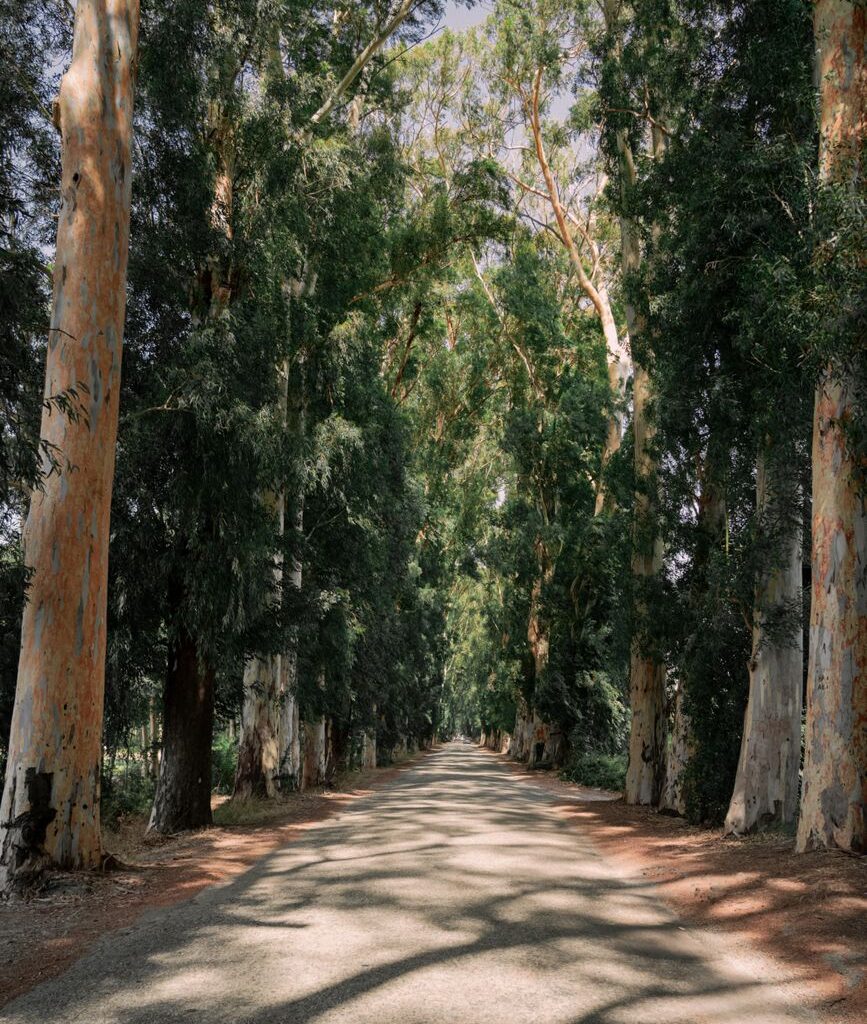
I care about the world around me and avoid wasting resources or causing wanton damage. I dislike extravagance; and I make an effort to be environmentally friendly and to treat non-human animals with respect and, if needed, kindness. (I have been a vegan since about 1980.) By temperament I am non-competitive but curious: I like exploring and recording, not winning. I love forests and wooded landscapes, and I hate cold and treeless places; but I appreciate many old buildings and monuments. I like silence rather than noise, but I enjoy a few sorts of music. Also, I avoid large crowds.
One of my indulgences is books, especially old ones. They were a valuable consolation and stimulus during my childhood and some had a powerful influence, such as The Science of Life (1929) by H. G. Wells, Julian Huxley, and G. P. Wells; the poems of Henry Longfellow; The Dragon Book of Verse (1935); and stories of the Canadian forests and the beaver by Grey Owl (Archibald Stansfeld Belaney), especially The Tree (1937), which always reduces me to tears.
Unlike some humanists and ‘new atheists’, I am not a ‘cultural Christian’; and I am not attracted to ‘decaffeinated’ gatherings like naming ceremonies. My daughters were named by their parents registering their births. But if people want quasi-religious ceremonies, that is their choice. If I have a funeral, it must be non-religious.
I stand for freedom of religious and other opinions as long as they do not harm others. That means certain religious practices should not be tolerated. Child sacrifice and suttee (or sati; self-immolation of widows) were clearly wrong, and so are relics of barbarism like infant circumcision and other types of genital mutilation, as a baby or child cannot give informed consent. If people want to snip bits off their bodies, knock out two front teeth, or be tattooed, they should wait until they are adults. I am not impressed by ‘But God commands me to do this to my child.’ Religious dogma and imposition should not trump human rights, including the right of children to bodily autonomy.
I am familiar with the dispute about free will or determinism, and have been dissatisfied with the arguments on both sides. I suspect it would very probably require an almost infinite amount of data to settle the matter one way or the other, and from this I suspect that the whole subject is a false dichotomy. Human beings do not have magical powers, nor are they seventeenth-century clockwork automata. I can choose to hold my breath, but only for so long; I can decide what to eat (of what is available), but not to sprout wings or have extra eyes in my head. I know I will die, but I don’t know exactly when and nor does anyone else.
The world is a complicated place, and I think that science is a useful way of understanding it, as science sifts evidence before making decisions and is also subject to correction and revision. Science can sometimes tell if a poem on a piece of old paper was written by a long-dead poet or is a later, clever forgery. However, science cannot normally decide whether the poem is a good one. So beware of scientism, the simplistic notion that science can do almost everything. Science can be, and has been, used for cruel or harmful purposes unless it is mediated by ethics.
I think there are too many people on this planet already: the human environmental ‘footprint’ is far too high, above the replacement level of the world’s resources. People should be urged to have small families (one or two children) and birth control should be encouraged (but not forced). For population stability to work, it should be in lockstep with raising the living standards of poor countries and with the education of, especially, women. Educated women usually have more power and control over their lives.
My physical health has been reasonably good, but from the age of eighteen I was prone to recurrent, hard-to-treat clinical depression. This limited what I was able to do with my life. But most people have disappointments.
So I am an ‘Old Rat’ (old-fashioned rationalist) who doesn’t like ‘faith’, but has a romantic streak and gets a warm, numinous feeling in beech woods. (I think even Old Rats are allowed to be emotional at times.) I am proud to have been a part of the freethought movement since 1962 or ’63, which included editing The Freethinker (1972–73); and I hope that during my remaining few years of wandering through what John Bunyan called ‘the wilderness of this world’, I can be useful. There are, of course, plenty of things I regret not doing; but that is part of the human condition.
In my study, on top of my computer, are a small toy elephant, a photograph of Charles Bradlaugh, and, in a frame, some words spoken by Rudyard Kipling in 1923. They include: ‘To be your own man is a hard business. If you try it, you’ll be lonely often and sometimes frightened. But no price is too high to pay for the privilege of owning yourself.’
I know.



1 comment
Wow! An erudite summary of a lovely approach to life. Thank you.
Your email address will not be published. Comments are subject to our Community Guidelines. Required fields are marked *
Donate