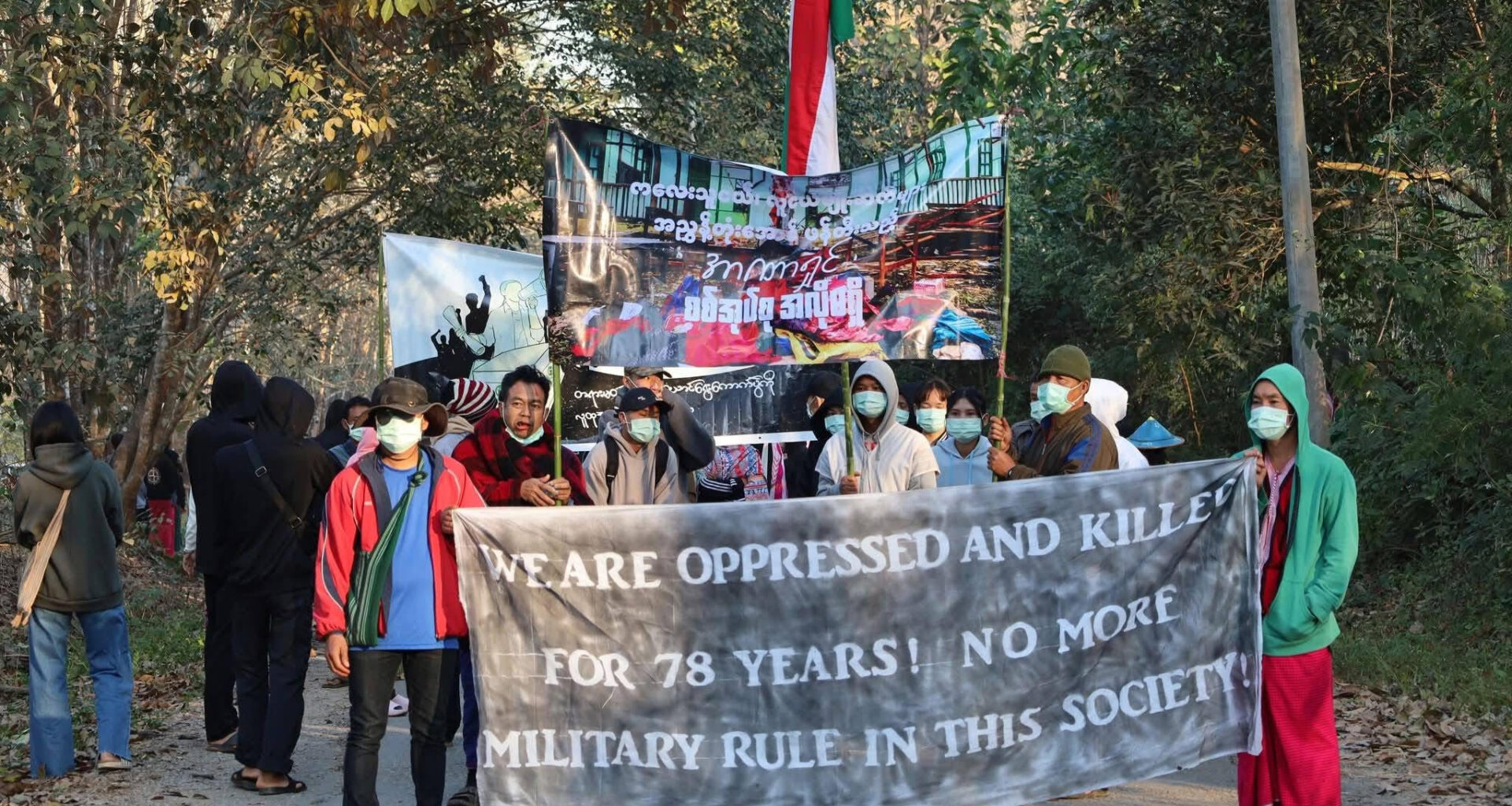
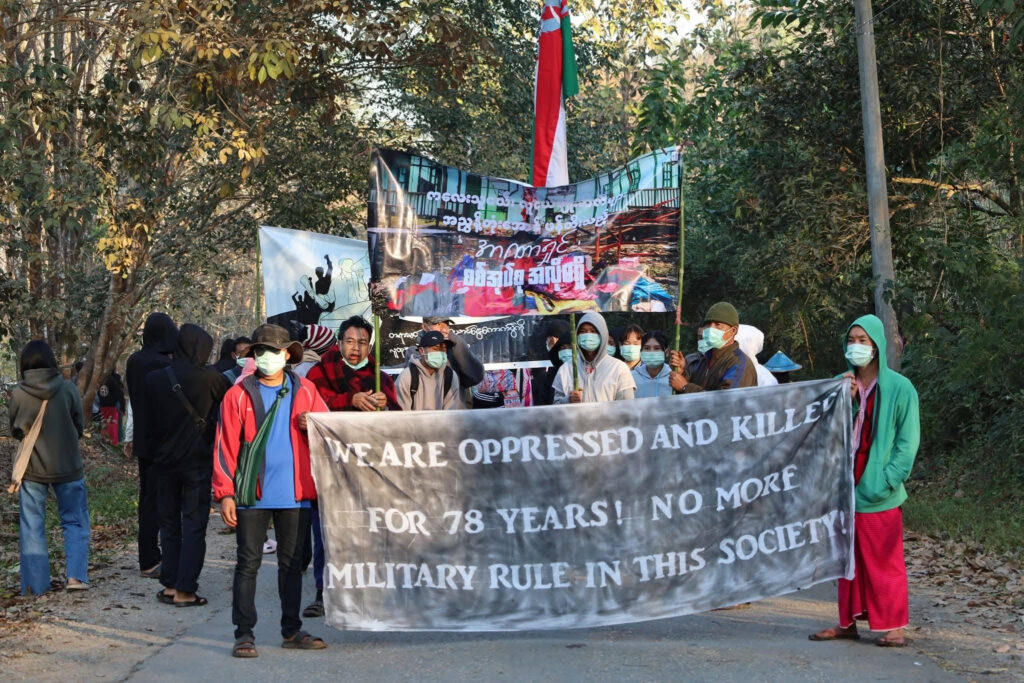
Have you ever heard of an election where a dictatorship’s proxy party wins by barring genuine opposition from competing? The 2025–26 Myanmar election typified such a scripted farce: widely condemned as a stage-managed performance to legitimise military rule, rather than a true democratic contest.
Myanmar’s military junta, led by Senior General Min Aung Hlaing, seized power in a coup in February 2021, overthrowing the elected government of Aung San Suu Kyi’s National League for Democracy (NLD), which had won the 2020 general election by a landslide. The junta even attempted to justify its power grab by alleging, during the 2025-6 election campaign, that the NLD victory in 2020 was the result of massive electoral fraud—claims never substantiated by credible evidence.
(For more background on Myanmar’s troubled political history and the democratic resistance to military dictatorship, see my previous articles for the Freethinker here, here, and here.)
Within this context, the junta’s December 2025–January 2026 election was widely viewed as a sham: an attempt to cloak dictatorship in constitutional language, not a return to civilian politics.
The Junta’s Proxy Parties: USDP and NUP
Myanmar’s political system still operates under the 2008 Constitution, drafted by an earlier military regime. That charter automatically reserves 25% of parliamentary seats for serving military officers appointed by the commander-in-chief. In other words, the military begins every election with a guaranteed bloc of power before a single ballot is cast.
The remaining elected seats are divided between the two chambers: the 440-seat Pyithu Hluttaw (House of Representatives) and the 224-seat Amyotha Hluttaw (House of Nationalities), together forming the 664-member Union Assembly.
For the 2025–26 election, the junta introduced elements of a proportional representation (PR) voting system, replacing some first-past-the-post elements. While PR can be democratic in other contexts, critics contended that it was used here to fragment opposition votes and secure better outcomes for military-backed parties.
Even before the first phase of voting began, 31 candidates had already effectively won unopposed, including 28 from the junta-backed Union Solidarity and Development Party (USDP). Many of these constituencies were located in war-torn areas such as Sagaing Region, where ongoing fighting made meaningful electoral competition impossible.
Also before voting began, Khin Yi, chairman of the USDP, stated that any new government formed afterwards would inevitably collapse if it failed to cooperate with the military.
The USDP also flooded the field with more than 1,000 candidates nationwide. The second major pro-regime force was the National Unity Party (NUP), successor to the Burma Socialist Programme Party, which ruled the country during the one-party dictatorship from 1962 to 1988.
Reports even emerged of factory workers in Yangon’s industrial zones being pressured by employers and local authorities to support the USDP. Such allegations further exposed the coercive nature of the process.
Unsurprisingly, the USDP claimed a sweeping victory, winning more than 72% of contested seats. Combined with the military’s constitutionally guaranteed bloc, this gave pro-junta forces overwhelming parliamentary control.
Observers also raised suspicions that the USDP benefited from manipulated ‘advance voting’, a tactic associated with the notorious 2010 election, in which civil servants and state employees were pressured to cast ballots early in favour of the ruling party.
The Useful Idiots
The National League for Democracy, along with dozens of other political organisations, refused to register for the junta’s election. Their boycott reflected a broad consensus that participation would only lend legitimacy to a fraudulent process.
Yet some politicians and activists chose to participate, arguing from a pragmatic or realpolitik perspective. They hoped the post-election environment might create space for ceasefires, negotiations, or gradual reform.
Instead, many discovered that even collaboration offered no protection.
Several parties that attempted to participate were dissolved or sidelined by the military-controlled Union Election Commission (UEC), demonstrating that compliance with the regime’s rules did not guarantee inclusion. The central absurdity of the entire exercise soon became clear: even those willing to play by the junta’s rules could be discarded at any moment.
For example, Sandar Min, who was expelled from the NLD in 2023 after accusations of collaborating with the junta, joined the National Democratic Force party (NDF), which optimistically registered to contest the election nationwide. The UEC shut them down. This crackdown also extended to several other groups, including the Democratic Party of National Politics (DNP), theWomen’s Party, and the Union Farmers and Workers Force Party. Accordingly, Sandar Min and several other high-profile figures from the NDF were compelled to run as independent candidates in the election. By participating in the sham election, they found themselves falling victim to the very regime they had validated.
People’s Pioneer Party: A Conservative Alternative Crushed
The People’s Pioneer Party (PPP), led by Dr Thet Thet Khine, sought to position itself as a nationalist and conservative civilian alternative. Despite efforts to compete, the party remained marginal in a political arena dominated by military patronage networks and regulatory controls.
The PPP ultimately won only a small number of seats across all levels of government—further proof that even regime-tolerated alternatives were tightly contained. Meanwhile, towards the end of the election process, Thet Thet Khine herself was placed under ‘restricted movement’ conditions at her home.
The People’s Party: How Opposition Was Neutralised
Another participant was the People’s Party, led by Ko Ko Gyi, a prominent veteran of the 1988 pro-democracy student movement. Once known for resisting dictatorship, Ko Ko Gyi later endorsed participation in the 2025 election, arguing for non-violent political struggle.
For some citizens exhausted by civil war, repression, and economic collapse, the People’s Party seemed like a possible moderate opposition voice.
The junta quickly demonstrated otherwise.
Candidates who joined the electoral process faced legal threats, censorship, and prosecution for campaign rhetoric deemed sympathetic to the anti-junta resistance. For instance, veteran democracy activist, former political prisoner, and People’s Party candidate Lwin Myint was sentenced to a year in prison with hard labour for his rhetoric. The lesson was unmistakable: entering the junta’s political circus offered no protection from repression.
The People’s Party performed poorly overall, while Ko Ko Gyi himself failed to emerge as a meaningful challenger to the USDP machine.
Armed Struggle and the Collapse of Electoral Legitimacy
To many critics, the result had been decided long before the first ballot was cast. The presidency was always expected to go to Min Aung Hlaing, while other senior offices would be distributed within a military-approved framework.
Far from serving the public, the election functioned as a conduit through which the military elite, proxy parties, and their business cronies could preserve control over state power and national wealth. This occurred while millions of ordinary people remained trapped in poverty, war, and displacement.
With political dialogue offering no tangible pathway to liberation from the military regime, the ongoing armed struggle that erupted after the 2021 coup has become Myanmar’s only path forward. Dislodging the military and its cronies from both economic and political power is only the beginning of the process. To achieve this, one must first recognise the 2025-26 Myanmar election for what it truly is: a fraudulent process meticulously engineered to guarantee a victory for the junta and its allies.
Note: During the editing process, ChatGPT was used to help improve the fluency, flow, and coherence of this piece.





Your email address will not be published. Comments are subject to our Community Guidelines. Required fields are marked *
Donate