

What is futurism? One could describe it as a position of ‘science-optimism’ or ‘techno-optimism’. It is a concerted effort to dream of and reach for a future in which science and technology have advanced to the point that humanity has fully spread its wings and achieved the most extraordinary possibilities. It is living with a vision in which artificial intelligence and robotics, genetic engineering and spacefaring have seen humanity rid itself of disease and become interplanetary, while also having solved all the major problems at home on Earth. Futurists see humans taking the next evolutionary and cultural leap to try to bring the greatest utopian horizons closer.
Whilst futurism is a position of hope, most futuristic visions in pop culture, literature, and the press are dystopian. They foresee the problems of war, scarcity, climate change, etc., continuing to worsen until humanity reaches a breaking point and reverts to its most savage instincts, and thus advanced civilisation comes to an end. Rather than envisioning a leap forward, such pessimism sees the late twentieth century as humanity’s high point, coming just before an inevitable regression. Even worse, some pessimists predict extinction or annihilation from nuclear warfare or the extremes of the far left and far right—death by communism or by fascism.
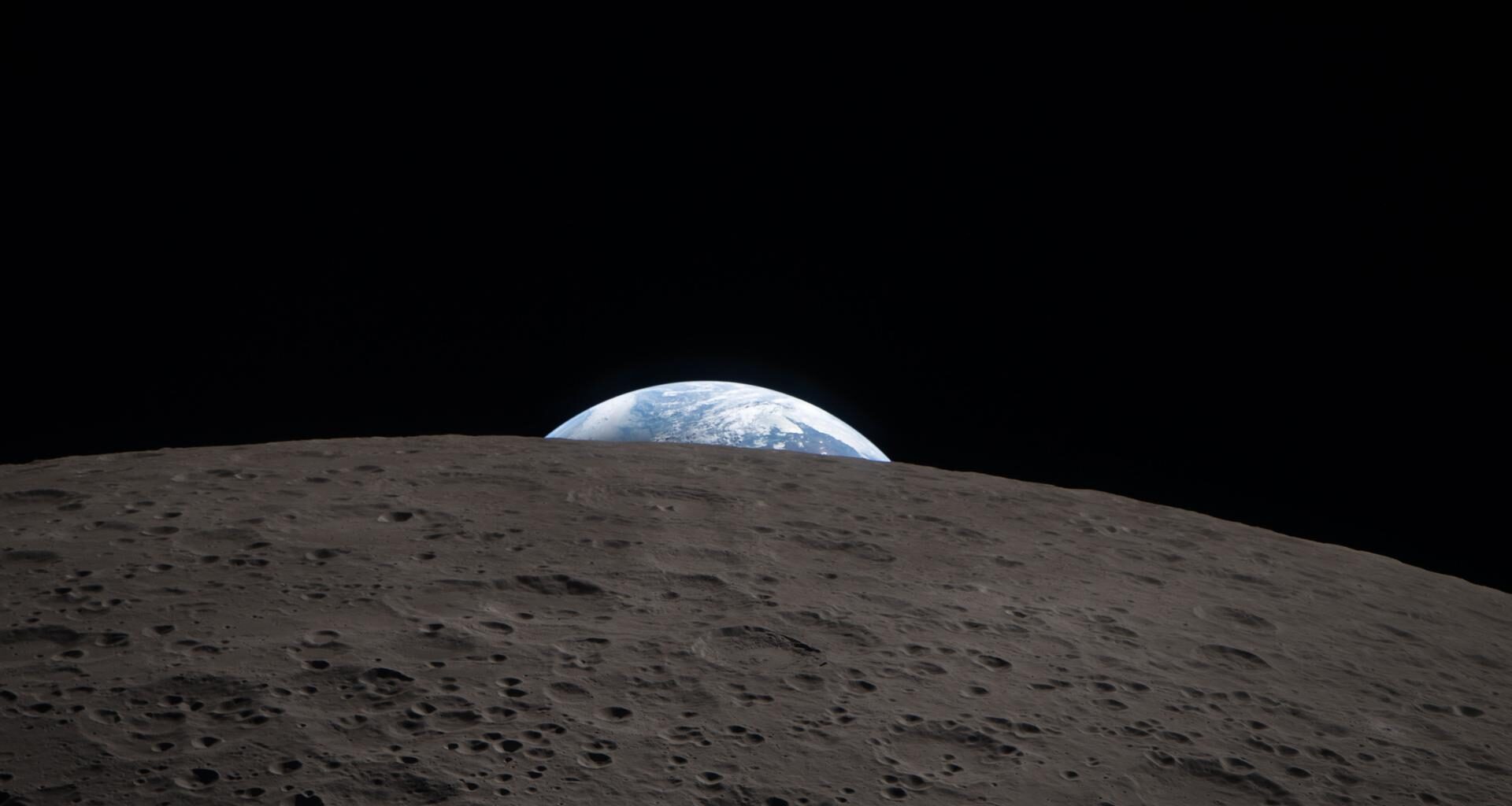
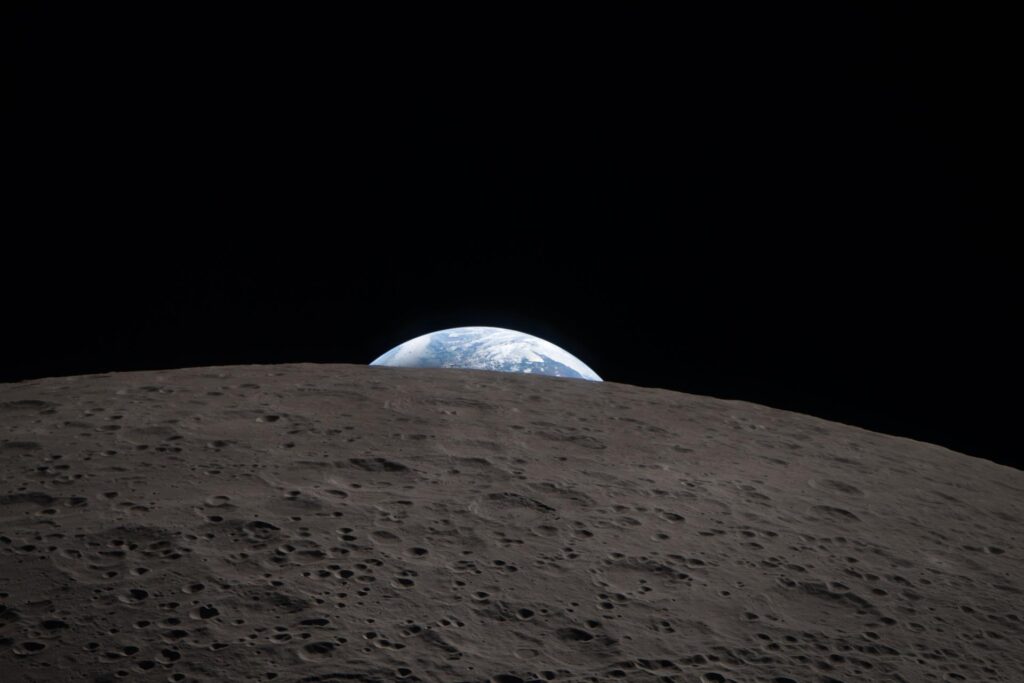
There are not enough champions of futurism, in part because there are not enough outstanding science communicators. The recent NASA-led Artemis II mission, in which a crew of astronauts flew around the Moon and back to Earth again—during which journey they broke a record to become the humans who have journeyed the furthest from their home planet—has shown just how easily a bold scientific vision can breed excitement and optimism, even overshadowing, if only for a while, all the bad news from Iran, Palestine, and Ukraine.
We urgently need figures who can inspire and communicate a vision of futurism to the public, especially to children and young people. Statistics show record levels of anxiety and depression amongst young people (and boys in particular). Generation Z and Generation Alpha simply do not believe in a future without despair. We need to give them more reason to believe in an incredible future. Rick Tumlinson, one of the great space advocates of our generation, has famously said that the next generation has been sold the idea that the greatest they can aspire to is to try to save a planet we have screwed up, rather than to try to reach for the stars.
When one thinks of futurists, one might think of media personalities and science communicators such as Neil DeGrasse Tyson or Bill Nye the Science Guy. But I am referring, rather, to those equally inspiring but arguably deeper thinkers whose books you would find on the top shelf of a Waterstones or a Blackwell’s, or even at an airport bookstore: figures like Yuval Noah Harari, Steven Pinker, and Lord Martin Rees.
Rees, much like his compatriot and former coworker Stephen Hawking, presents a mixture of optimism and caution. Using his public position to the best of his ability, Rees has long been a steady voice for advancing science and technology to their utmost. Despite his age, the astrophysicist and former head of the Royal Society remains generous with his time and energy in pushing STEM forward as much as he can. His books often serve as a rallying call for humanity to wake up and fulfil its potential.
Steven Pinker, the Johnstone Professor of Psychology at Harvard University, is well known for his optimism when it comes to humanity’s future. Author of books including The Better Angels of Our Nature (2011), Enlightenment Now (2018), and Rationality (2021), he rejects dystopian forecasts, instead arguing that, in the long term, the human race has progressed and can continue to progress, despite what the bleak news reports of the day may say. He calls for the fulfilment of Enlightenment optimism, a future in which we will cast off all suspicion and cultural baggage in favour of a bold vision for humanity. I echo his sentiments.
Yuval Noah Harari burst onto the scene over a decade ago as the author of the heavy-hitting book Sapiens: A Brief History of Humankind (2014). He has since written such books as Homo Deus: A Brief History of Tomorrow (2016) and 21 Lessons for the 21st Century (2018). A history professor from Israel, his perceptions on our past and hopes for our future set him apart in our overly pessimistic public sphere. He is brutally honest about our often savage past (and present), discussing the evolutionary pathway that brought us here, but he argues that we are now at a point where we can take far more direct control of our future through technology. The things that brought us here need not be what take us forward.
Artemis II feels like a gift at this moment. It is an opportunity to champion a bolder vision of the future. Soon, perhaps, thanks to Artemis, we will be living on the Moon, and possibly even Mars, pushing our best technology to its limits again, and dreaming of a better, more united technological future. I have noticed that, in the wake of Artemis II, young people are suddenly wondering why we didn’t do it years ago and have been inspired to adopt an attitude of ‘Let’s get this done!’
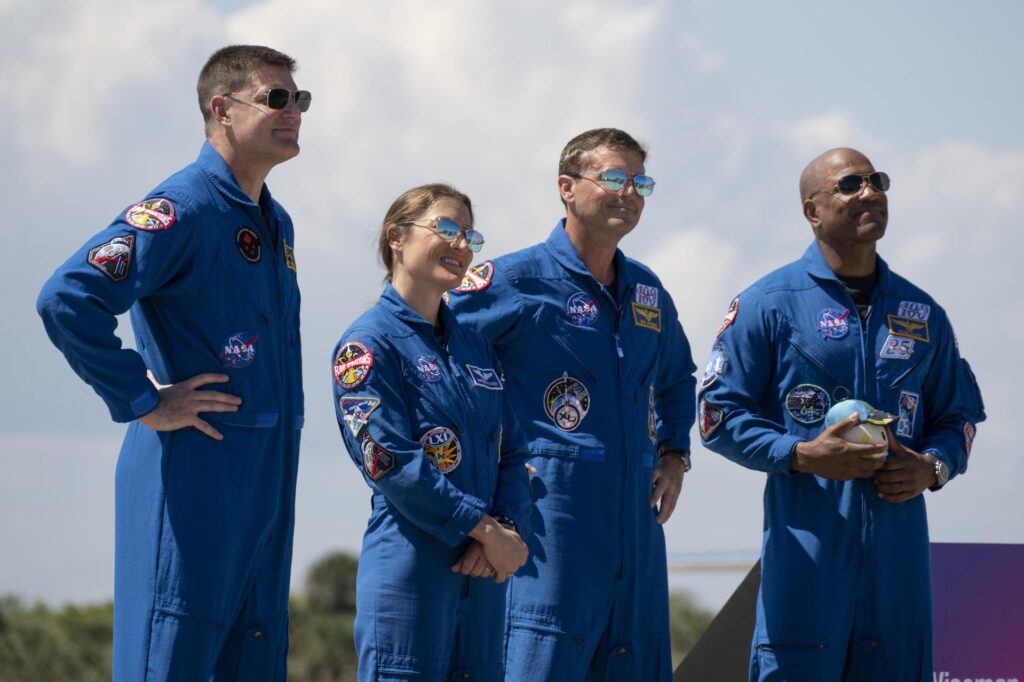
Artemis II has inspired another outburst of the overview effect, the exhilarating and inspiring change in perspective that comes with seeing the Earth from another orb, this time dubbed ‘Moon joy’. I love astronauts because they represent the very best of us: a cosmic elite. We should see more of them, rather than the usual suspects, on our TV and phone screens. So here’s to the Artemis astronauts, groundbreaking heroes, pioneers of the future: Jeremy Hansen, Christina Koch, Reid Wiseman, and Victor Glover.
Dreams, as Artemis II has shown, are there to be realised. We should all be futurists, and public about it.







Your email address will not be published. Comments are subject to our Community Guidelines. Required fields are marked *
Donate