There is just one book that’s completely word and letter perfect from the first time it was not even written down, but recited. Now, demands that you believe the impossible do not lead to peaceful outcomes, nor do they lead to peaceful or tolerant regimes. And I’m not going to ask you which Muslim country you would like to live in.
– Christopher Hitchens, from a debate on Islam with Tariq Ramadan in 2010
Hitchens is not alone in his scepticism. Muslim scholars regularly ponder similar themes, though (of course) from a different perspective and in baffled tones. They often ask, for example: ‘Why are Muslims out of touch with modern times?’ Let us take Turkey as a brief case study. Though Turkey is secular by constitution, it is increasingly dominated by Islamism, and its record on the rights to freedom of and from religion is problematic, to say the least. One recent notable example: in April, the Turkish government vetoed the conferral of an honorary degree by a Turkish university on English professor Peter Atkins for his public criticism of religion. Out of touch, indeed.
When the question is about the wider ‘Muslim World’, especially the ‘Middle East’, criticising even the Taliban might be met with accusations of ‘Islamophobia’, ‘Orientalism’, or ‘Euro/Western-centrism’, and even ‘blasphemy’. And yet, the rejection of the laws and codes of such regimes as those in Iran and Saudi Arabia (and Turkey) is almost beside the point. It is, at core, the regressive tenets, alongside the static nature, of contemporary Islam itself that harm Muslims the most. Islam is arguably the world’s most dangerous religion, currently, as evinced by the bloodletting it inspires the world over as well as the tyrannies in Iran, Saudi Arabia, and elsewhere.
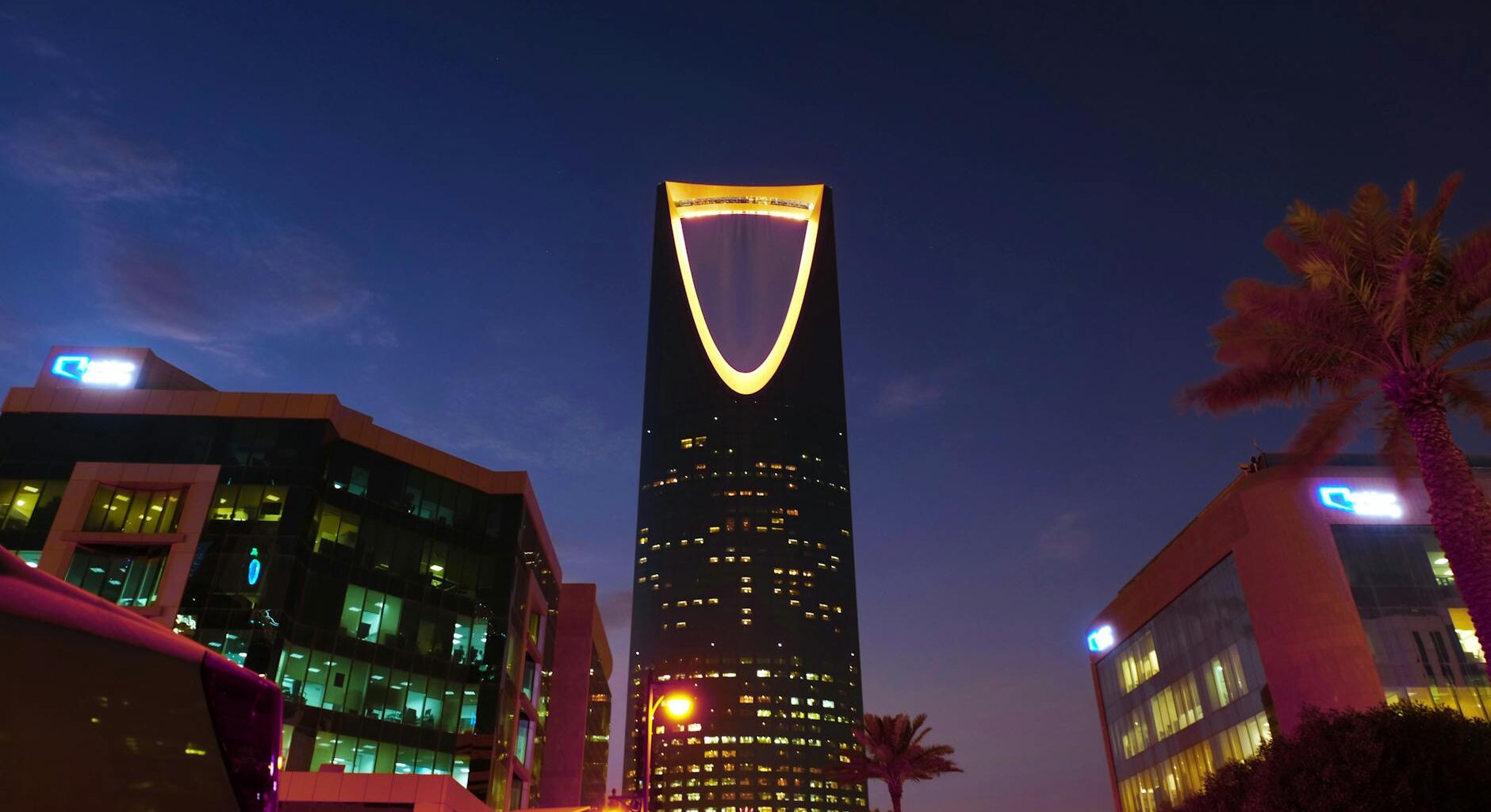
The mere physical manifestation of modernity, such as the numerous skyscrapers and expansive highways constructed in a ‘Middle Eastern Capital’, remains essentially meaningless without a corresponding intellectual evolution. While immense wealth from oil and gas can readily purchase advanced technology, complex engineering, and raw labour, it is fundamentally incapable of producing the particular type of talented ‘human capital’ necessary for true innovation. To achieve truly meaningful levels of societal advancement, there is an urgent need for a robust, secular education system designed to foster unconstrained thinking and critical inquiry.
The secular ethos is a concept that originated from, and is relevant to, societies where religions share key characteristics: ones where they are centred on historical narratives, hold political power, look to expand their influence, and are in conflict with scientific thought.
Drawing a historical parallel, just as Christianity functions as the prehistory of modern Europe, Islam serves as the prehistory of the Muslim world. The central challenge facing the Islamic world today is its historically regressive failure to fully secularise. For Muslim cultures to adapt to modernity, they must intentionally transition into what can be described as a ‘post-Islamic era’. This shift necessitates a comprehensive commitment to a secular ethos.
Richard Dawkins once made up a psychedelic drug, ‘Gerin Oil’ or ‘Geriniol’, to parody and criticise religion, arguing that high doses of this substance are at the root of violent events such as suicide attacks and witch hunts. Once an official and governmental system in Europe, ‘high-dose’ religion has become ‘diluted’ into a ‘liberal’ or ‘moderate’ mode of ideology thanks to centuries of secular thought, debate, and resistance. In Europe, and the secular West more generally, we no longer regularly see deaths for apostasy, adultery, or even witchcraft; we no longer believe in slavery, genocide, or inequality (even if the practice often falls short of the theory).
This is not because of the sublime ethics of religions but thanks to the secular ethos, refined over centuries. (This does not necessarily mean atheism, by the way.) These modern developments do not derive from religions and have no place in any religious scriptures. The ‘value’—in terms of freedom, prosperity, respect for human rights, etc.—of any modern society is directly correlated to its secularity. When secular principles are violated, this value will almost inevitably be downgraded.
Critically, entering a post-Islamic era does not mandate the erasure or abandonment of personal faith. Instead, it refers to the systematic removal of religious dogma from the machinery of state governance and the analytical laboratory of the mind. This evolution marks the transition from a society strictly governed by religious law to one grounded in human-centric governance. Within this post-religious space, the modern citizen would finally be born: an individual free to define their own identity and purpose outside of ancient, mythological, inherited archetypes.
This secular process acts as an absolute necessity for any civilisation that looks actively to shape its future, rather than merely residing in a future. It represents a gruelling intellectual rite of passage, involving the careful deconstruction of the sacred status once afforded to political, religious, and social institutions. By stripping away divine mandates, a society can begin to construct a more sustainable foundation for itself based on the reliable, though fallible, ground of human reason.
The construction of a secular society is an intensive internal labour that no amount of oil wealth can bypass or replace. For the ‘Muslim World’ to attain true ‘greatness’, its achievements must be measured by the depth of its intellectual freedom. The transition toward a post-Islamic, secular reality serves as the only viable bridge connecting a storied, traditional past to a truly innovative and sustainable future.
Related reading
The need for a new Enlightenment, by Christopher Hitchens
A reading list against the ‘New Theism’ (and an offer to debate), by Daniel James Sharp
What has Christianity to do with Western values? by Nick Cohen
Do we need God to defend civilisation? by Adam Wakeling
The problem with ‘Islamophobia’, by Mark Lilly
When does a religious ideology become a political one? The case of Islam, by Niko Alm
The need to rekindle irreverence for Islam in Muslim thought, by Kunwar Khuldune Shahid
From the UK to Iran, self-critique is the antidote to global Muslim crises, by Kunwar Khuldune Shahid
Digging for Christian Foundations: Tom Holland on Triggernometry, by Adam Wakeling
‘Do as I say, not as I do’: a review of ‘Dominion’ by Tom Holland, by Nicholas E. Meyer
Did Christianity make the Western mind? (a review of Tom Holland’s Dominion) by Charles Freeman
Convicted for blasphemy in modern Britain: an interview with Hamit Coskun, by Daniel James Sharp




Your email address will not be published. Comments are subject to our Community Guidelines. Required fields are marked *
Donate