

Introduction
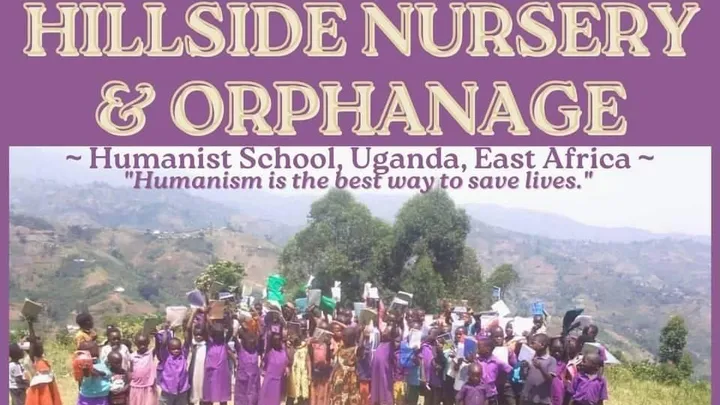
Enginel B. Johnson (also known as Bwambale Johnson) is the founder of Hillside Nursery and Orphanage School, located in the mountainous region of Mount Rwenzori, Kasese, Uganda. The school was established to support orphans and children from impoverished families affected by numerous regional hardships. With over 300 children under his care, Johnson works tirelessly to provide food, education, and shelter despite limited resources. Previously supported by the late Lynda Tilley, the school now faces ongoing challenges in securing necessities. Johnson remains committed to uplifting vulnerable children through compassion, education, and humanistic values. I spoke to Enginel last year about his vital work; below is the transcript of our conversation, lightly edited for clarity and concision. (A version of this interview was previously published on the Humanists International blog.)
Interview
Scott Douglas Jacobsen: How do you define humanistic education?
Enginel B. Johnson: Humanistic education, also known as personal growth, focuses on emotional well-being, self-academic wisdom, and critical thinking skills.
Why is it essential in the African context today?
Humanistic education helps learners develop critical thinking, communication skills, and adaptability to new situations.
It also encourages learners to take a broad interdisciplinary approach.
What are the barriers to implementing humanistic education in African schools?
I will mainly refer to Hillside Nursery and Orphanage. Implementation is complex because of gender discrimination, a poor learning environment, and a lack of scholastic materials (e.g. classrooms, desks, and textbooks for teachers). Poverty has been the most significant barrier hindering us from the start, of course. Fewer teachers can act as volunteers for the unprivileged. Lastly, the area’s remoteness is another challenge.
How can education support critical thinking, secularism, and ethical development?
Education can support critical thinking and secularism by encouraging evidence-based reasoning, free-thinking questions, and respect for all individuals.
How do traditional African values and philosophies align with or challenge humanistic education?
Traditional African values are used in a holistic approach to learning, with a focus on oral traditions, and humanistic education is based on evidence, so there’s a big gap between the two.
Still, traditional Africans encourage their thoughts on man, God, and the universe, while humanistic education has no superstition.
How are educators, activists, or institutions promoting or silencing humanistic education?
Some educators and activists have come to see how humanistic education helps. But many criticise, making free thinkers the enemies and attacking humanistic projects in the media and other platforms because humanists do not believe in religion. This means there is a low number of free thinkers.
What should be the role of governments and policymakers in fostering humanistic education?
Not only governments and policymakers but also foreign organisations should come in and support humanistic education through building humanistic schools and supporting other projects that can foster literacy and limit illiteracy in remote areas like ours because this sort of education has the best values, vision, and goals and will lead to a better future for the young generation.
What long-term impact will humanistic education have on social progress, peace, and democracy?
The impacts are many. It supports positive emotions in learners, hence providing motivation and high self-esteem.
Seeking help and avoiding negative emotions, such as anger, anxiety, stress, and depression, will contribute to social progress and peace in the community.
What inspired you to embrace and promote humanistic education in a deeply religious and traditional region?
Basically, I wanted to create opportunities for new groups, discussion, and one-on-one teaching of free-thinking skills in the mountainous area.
Also, I wanted to inspire young people to be free thinkers.
What is the typical story of a child at Hillside transformed by humanistic education?
Through transformation, learners can tell stories about their social skills, feelings, intellect, artistic skills, and practical skills.
What is an appropriate way to address resistance or suspicion from religious leaders or parents toward your educational model?
There shouldn’t be segregation. Let all the services be given to all individuals equally. With time, they will realise how good this educational model is regardless of faith.
What is the role of art, music, and storytelling in fostering emotional growth?
They offer powerful avenues for emotional growth, providing a safe space for expression.
How do you cultivate civic responsibility from a young age?
Encourage young people to volunteer, which will teach them the value of helping others and contributing to their communities without expecting anything in return.
What partnerships or support networks make the most significant difference to the school’s mission today?
Democracy, open government, and human rights help us to foster our mission.
How does the team measure the success or impact of humanistic education at Hillside?
We view the primary goal of education as the creation of lifelong learning habits, with the students being given the motivation and tools needed to seek out and learn new things.
The team believes all learners should feel safe and encouraged in the classroom to develop the tools needed to achieve their full potential.
What messages do you wish to share with donors or volunteers?
I am thankful to everyone who wishes Hillside Nursery and Orphanage School to become a role model school, helping the unprivileged become important people in the future.
Please support the orphanage by donating food, scholastic materials, shoes, uniforms, and seats.
We need help with a block of seven classrooms and a four-room toilet for the orphanage. We have no help. Any amount donated will make a big difference.
You can support us here: https://www.gofundme.com/f/support-hillside-nursery-school-and-orphanage-in-uganda.
We had a friend who used to donate food and scholastic materials—Lynda Tilley. Unfortunately, she passed away in August 2023. In her memory, the humanist activist Kato Mukasa created a fundraiser to renovate the only building that we had, which we named after Lynda.
So I call on well-wishers to come and support the orphanage school, doing whatever one can!
How do you ensure inclusion and equality?
By creating a welcoming environment through implementing culturally responsive teaching, a diverse curriculum, and inclusive practices that foster critical thinking and empathy for the orphanage.
What legacy do you hope Hillside Nursery and Orphanage School will leave for future generations?
Personal growth and self-actualisation development in the mountainous area.
Critical thinking, emotional well-being, and collaborative learning in the mountainous area.
Thank you for the opportunity and your time, Enginel.
Thank you. I honour your support for us.





Your email address will not be published. Comments are subject to our Community Guidelines. Required fields are marked *
Donate