

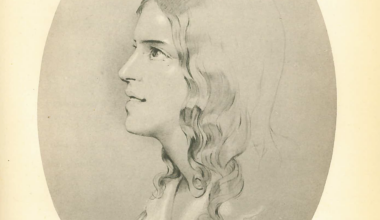
Ali Shariati (1933-1977) was one of the main ideologists of the 1979 Iranian Revolution. His revolutionary reinterpretation of Islam, known as ‘Red Shi’ism’, was used as ideological inspiration for the Iranian youth.
In his famous pair of lectures given in 1970, Religion against Religion, Shariati drew an important distinction between two kinds of Islamic history. He argued that the main struggle in history was not between religion and secularism. Instead, it was an internal conflict: ‘the religion of revolution’ against ‘the religion of legitimacy’. Shariati divided Shi’ism into two kinds.
Red Shi’ism, he argued, is true Islam. It is a social movement that began with the Prophet Muhammad and was carried forward by Imam Ali and Imam Hussein. For Shariati, Red Shi’ism is revolutionary. It brings together oppressed people to fight against class hierarchy, oppression, and exploitation. Shariati argues that a ‘Black Shi’ism’ emerged in the sixteenth century when the Safavid Dynasty made Twelver Shi’ism Iran’s official religion. Shariati saw this as a corruption of religion. The conservative clergy (ulama) made deals with royal power and feudal aristocracy. They turned the dynamic revolutionary idea of protest into a static tool of domination. Black Shi’ism created fatalism and passive lamentation among believers. It made them the guardians of cemeteries focused only on the afterlife, not social justice. For Shariati, Black Shi’ism was an ideological drug. It justified clerical tyranny and upheld the existing order of wealth and power.
Shariati took Marxist class analysis and applied it to Quranic myths. He used the story of Cain and Abel as the first myth of human history. According to Shariati, Abel stands for primitive communism, a system based on shared ownership and human goodness. Cain stands for private property, which divides people and creates class exploitation. Shariati saw all history as a struggle between Abel’s cause and Cain’s oppressive system. This system rests on an institutional ‘Trinity of Tyranny’ with three pillars. Pharaoh represents political despotism and autocracy. Qarun (Croesus) represents economic exploitation, capitalist buildup, and feudal wealth. Balaam represents religious and clerical hypocrisy, the official religion that justifies social inequality. Red Shi’ism, according to Shariati, opposes the Trinity of Tyranny by working to destroy Cain’s system. For Shariati, Tawhid (monotheism) means more than belief in one God. It is a complete worldview that demands social and economic equality. Tawhid rejects splits between spirit and matter, sacred and profane, or divine sovereignty and human freedom. It calls for a ‘divine classless society’. Shirk (polytheism), by contrast, exists when society divides into oppressors and oppressed.
Shariati believed that traditional Shi’i ideas needed to change. They had to become tools for moving masses into action. One key change was how he treated Intizar, the concept of waiting for the Hidden Twelfth Imam, the Mahdi. The orthodox clergy saw Intizar as passive waiting. Believers would suffer oppression until salvation arrived. Shariati gave it new meaning. He made Intizar a duty. The faithful must work to bring about utopia by fighting against tyranny.
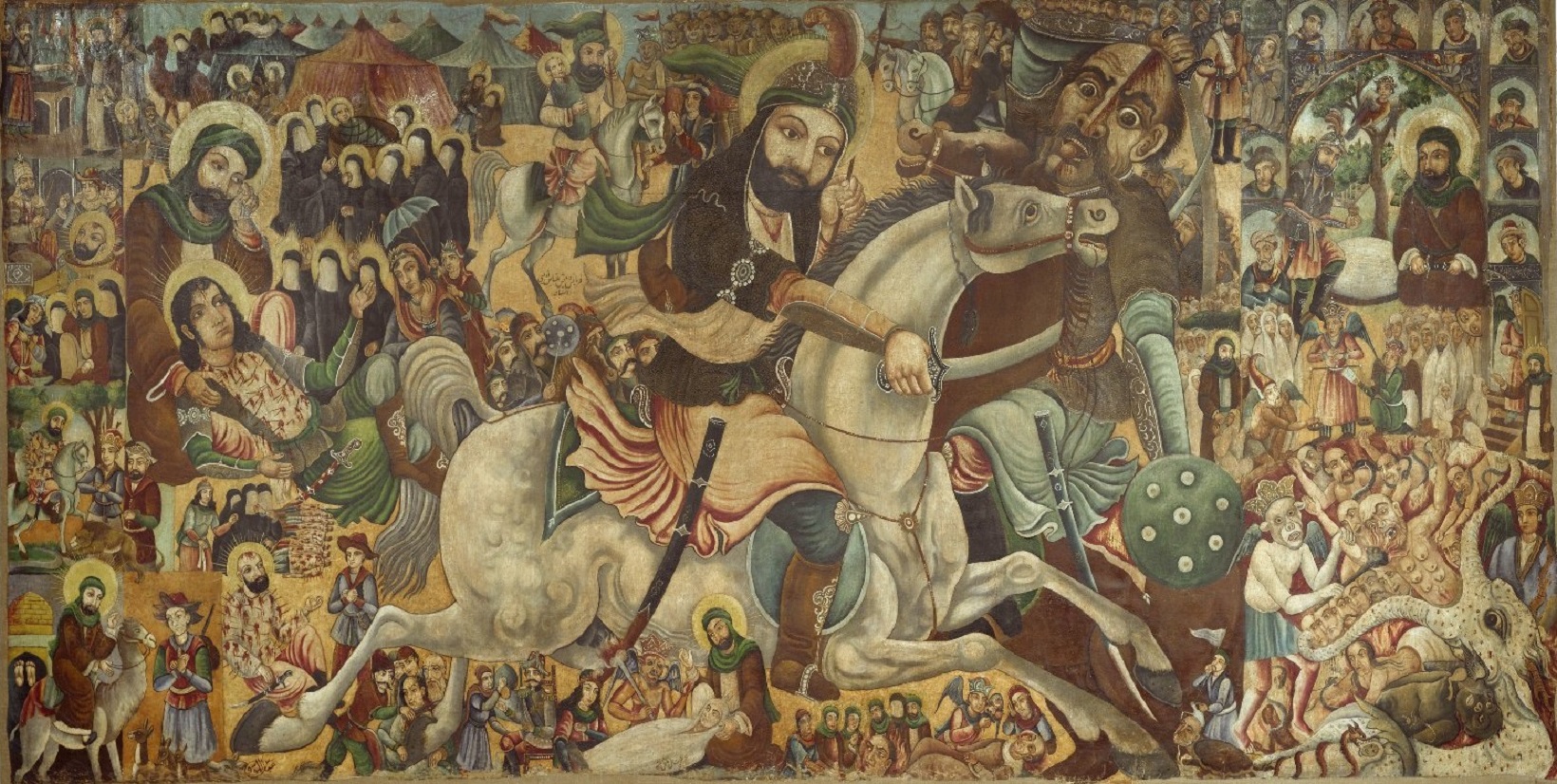
At the heart of Red Shi’ism lies the tragedy of Karbala. In 680 CE, Imam Hussein and his followers were killed by Caliph Yazid of the Umayyad dynasty. Shariati made Karbala into a symbol of eternal revolution. His slogan captured this: ‘Every day is Ashura; every land is Karbala’. Hussein refused to obey Yazid and serve him. This refusal created the idea of martyrdom as a tool for revolutionaries. When change through reform fails and those in power absorb dissent, activists face a choice: bow down or accept martyrdom. Through self-sacrifice, they expose the oppressor’s cruelty and stir the masses awake. Shariati stated this plainly: ‘In the eternal struggle of history, if you can kill your opponent, do it; if you cannot, die, and by your death bear witness of the truth’.
Two Protofascisms: Red Shi’ism and Georges Sorel’s National Syndicalism
Shariati based his work on Quranic interpretation. According to intellectual historians Ali Mirsepassi, Peyman Vahabzadeh, and Zeev Sternhell, his framework echoes the counter-Enlightenment philosophy of French syndicalist Georges Sorel (1847-1922). Sorel mixed far-left syndicalism with far-right integral nationalism to create national syndicalism, a proto-fascist movement that helped lead to Mussolini’s classical fascism.
Red Shi’ism and Sorel’s national syndicalism show how European anti-liberal thought moved to the global periphery and made traditional religious or nationalist ideas serve revolutionary ends. Just as Karl Marx observed that Islam could establish a fundamental division among peoples, between those within the faith and those outside it, thus reducing complex differences in geography and culture to this single distinction, religious populism functions as a populist myth for Muslims, while integralist nationalism served as a populist myth for European movements.
Both Shariati and Sorel wanted to fix the decay of bourgeois society. They rejected rational politics and turned instead to a mobilising, non-rational myth built on heroic self-sacrifice. In his Reflections on Violence (1908), Sorel attacked European liberal democracy, Enlightenment rationalism, and bourgeois materialism. He claimed that parliamentary democracy and consumer culture bred spiritual decay, moral weakness, and social breakdown in the West. Shariati critiqued modern Western civilisation and its Pahlavi counterpart in nearly the same terms. Drawing on the work of Frantz Fanon, Jean-Paul Sartre, and Georges Gurvitch during his time in Paris, Shariati attacked Western capitalism for reducing humans to economic beasts. Both thinkers argued that liberation cannot come through rational education or parliamentary reform; rather, it requires revolutionary struggle that cultivates heroism and moral purpose. In this way, both Sorel and Shariati shared an emphasis on revolutionary myth. Sorel rejected the orthodox Marxist view that historical development follows objective economic laws and rational science alone. Instead, he argued that people perform extraordinary acts through non-rational, emotional images that move collective imagination.
For Sorel, the General Strike is the central revolutionary myth, the image of total conflict between workers and the bourgeoisie. Whether such a strike could actually occur was irrelevant to Sorel. What mattered was its psychological and ontological significance: it provided an absolute picture of struggle that brought together different segments of the working class, removed any possibility of moral compromise, and motivated people to act without self-interest. Shariati accomplished a similar move by transforming Karbala and Ashura into a myth of the Iranian revolution. According to sociologist Peyman Vahabzadeh, abstract Marxist theories of class consciousness could not mobilise traditional Iranian society. By reframing Karbala as the myth of struggle between Tawhid (absolute good) and Shirk (absolute evil), Shariati opened a path to liberation.
Both Sorel and Shariati measure ideological authenticity not by electoral success or material gain, but by willingness to suffer for one’s cause. Shariati constructed a moral framework centred on the martyr. He treated martyrdom not as passive acceptance but as active resistance, a means to show moral superiority against the autocratic state. According to historian Ervand Abrahamian, Shariati merged Marxist vanguardism with Shi’i concepts of martyrdom; the raushanfikr (enlightened intellectual) functions as a social prophet who moves masses through acts of self-sacrifice.
The parallel between these two thinkers appears in their political legacies. Both worked against established centres of power and tradition. Sorel challenged official socialist parties in parliament, while Shariati attacked the conservative religious leadership. Both philosophers built ideological systems that rejected liberal pluralism, individual rights, and rational negotiation in favour of all-encompassing myths. This made their work available for adoption by totalitarian regimes. Sorel’s theory of myth influenced Mussolini and the Cercle Proudhon and helped shape Italian Fascism despite his early anti-state politics. Shariati’s work followed the same pattern despite his warnings against clerical dictatorship; Ayatollah Khomeini and the clergy used his mythology to establish the Islamic Republic.
Sorel and Shariati’s anti-liberalism and myth-making populism clearly share a foundational structure. Nevertheless, it is important to appreciate their differences.
Firstly, Sorel was agnostic, shaped by Henri Bergson’s vitalism and William James’ pragmatism. He treated myths as fictional constructs with a purely practical purpose. The General Strike, for him, was just a tool. Shariati, by contrast, held a transcendent and ontological worldview. When he spoke of Tawhid, Cain and Abel, or Imam Hussein’s martyrdom at Karbala, he meant a real historical process of actualising divine truth.
Secondly, the locus and mechanics of revolutionary violence differ greatly for each thinker. Sorel tied violence to industrial syndicalism, sabotage, and street fighting (revolutionary proletarian violence). He saw it as an active force in which workers strike directly at the state’s apparatus to overturn the existing order. Shariati drew on Frantz Fanon’s ideas of anti-colonial violence but added a distinct theological element of martyrdom. For Shariati, martyrdom was the oppressed person’s ultimate weapon, and it meant self-sacrifice. By spilling one’s own blood, martyrdom inverted power relations. This way, according to him, the state’s strength became useless. This achieved ‘the triumph of blood over the sword’.
Islamofascism or Islamo-leftism?
Even though Georges Sorel and Ali Shariati operated in different eras and locations, and even though there are important differences between them, both can help us understand how European counter-Enlightenment thought spread globally. In addition, they shared the same fate of being used as foundational thinkers by totalitarian regimes. Both adopted methods from European anti-liberal as well as anti-imperialist philosophers and rejected rationalism, identified cultural decay within pluralistic liberal societies, and used non-rational myths. The work of both thinkers shows how powerful myths can be and, when combined with a broad rejection of modernity, how a commitment to sacrifice and myth can reshape politics.
It’s fair to say that Ali Shariati’s Red Shi’ism itself doesn’t count as ‘Islamofascism’, the form of political Islam that can be seen as animating al-Qaeda, Islamic State, the Muslim Brotherhood, Hamas, and Hezbollah. It fits better under the heading ‘Islamo-leftism’. After all, it helped to inspire the useful idiots for the Islamist movement led by Ayatollah Ruhollah Khomeini, along with other secular left-wing groups which were similarly fooled (and later purged) by the religious fanatics. While we can appreciate Sorel and Shariati’s contributions to political philosophy and sociology, we must also learn from them how easy it is for anti-liberal and anti-Enlightenment syncretic populist movements to serve as protofascisms and help to give birth to totalitarian regimes—whether intentionally or not.






Your email address will not be published. Comments are subject to our Community Guidelines. Required fields are marked *
Donate