It is a familiar, though no less arresting, spectacle to watch a clerical patriarch draped in the robes of divine authority instruct half the human species on its ‘proper place’. Iranian Supreme Leader Ali Khamenei’s recent pronouncements on women, reiterated through sermons, state media, and ideological instruction during late 2025, once again reveal the central paradox of the Islamic Republic: a state that claims metaphysical certainty yet survives only through constant coercion. Theocracy, after all, does not merely govern; it narrates. And in that narrative, women must be indispensable yet perpetually subordinate; praised only insofar as praise disciplines, elevated only to the point where elevation does not threaten control.
Khamenei insists that women flourish best within the domestic sphere, that their moral and spiritual excellence lies in modesty, sacrifice, and self-effacement in service of the family. Listening to such pronouncements, one might imagine Iranian women as passive beneficiaries of benevolent restraint rather than as historical actors repeatedly resisting it. His language, soft, paternal, and insistently moral, presents patriarchy as kindness and confinement as protection. The cage, we are assured, exists only for the bird’s own good.
Yet as Christopher Hitchens once observed, the essence of authoritarianism is not cruelty alone but the claim to know what is good for you better than you do yourself. In authoritarian religious systems, this claim acquires a dangerous permanence: disagreement is no longer dissent but heresy. For Khamenei and the clerical establishment, theology does not merely justify gender hierarchy; it constitutes it. Divine will, monopolised by an all-male elite, becomes the explanation for why women must veil, why they must seek permission for ordinary freedoms, and why their political energies must be neutralised before they harden into collective power.
The Supreme Leader frequently invokes the language of ‘dignity’. But dignity, when defined by those who govern through fear, becomes a semantic trap. For women in Iran, dignity has come to mean compliance with an ever-expanding regime of surveillance regulating dress, speech, sexuality, mobility, employment, and even public affect. A dignity so fragile that it can be shattered by uncovered hair or laughter in a park is not dignity at all; it is anxiety masquerading as moral order.
Khamenei’s insistence that feminism is a Western contagion, alien to Iranian or Islamic tradition, collapses under even cursory historical scrutiny. Iranian women have been central to political mobilisation since at least the Constitutional Revolution of 1906, organising schools, newspapers, and networks of resistance under successive authoritarian regimes. What distinguishes the present moment is not the novelty of women’s dissent but its scale, visibility, and refusal to remain symbolic.
This became unmistakably clear during the nationwide protests that erupted on 28 December 2025. Initially triggered by economic collapse, the demonstrations rapidly metastasised into a political uprising spanning nearly 200 cities. Bazaar closures, student walkouts, and street protests converged into a sustained challenge to clerical authority, accompanied by chants explicitly rejecting the Supreme Leader himself. Women were not ancillary participants in this unrest; they were among its most visible and defiant figures.
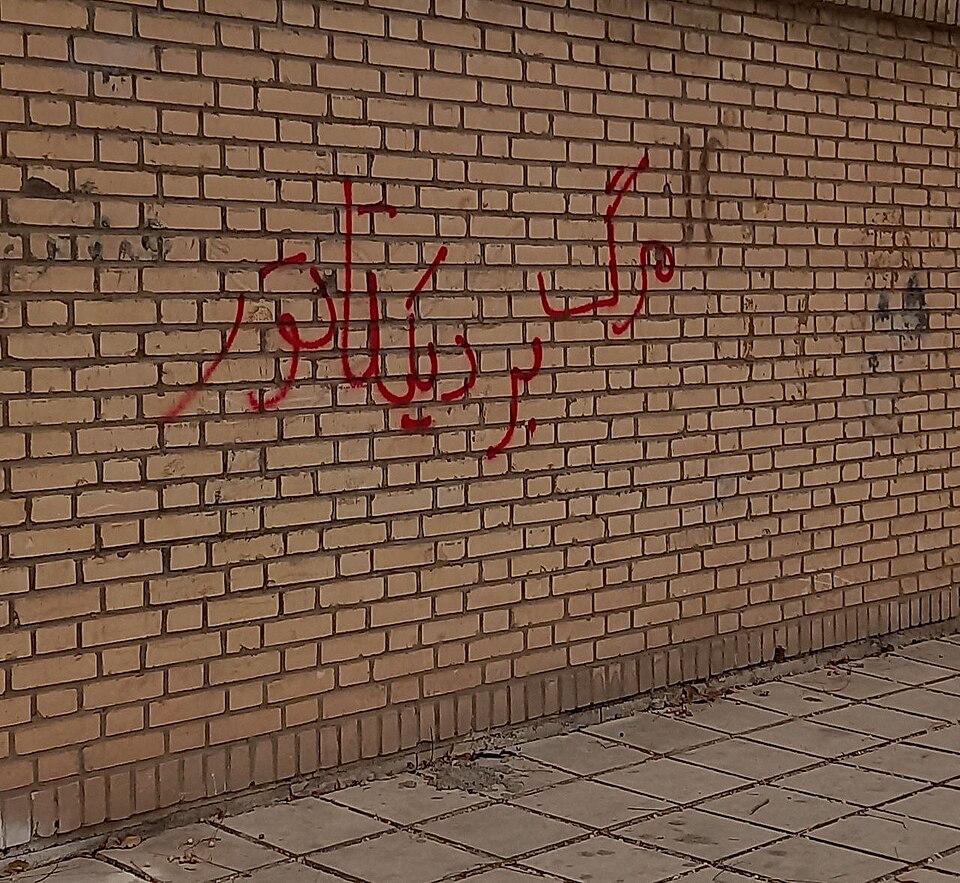
The state’s response was swift and lethal. Security forces deployed live ammunition against demonstrators, killing dozens within days. Among the dead were Saghar Etemadi (22), shot during protests on 3 January 2026, and Mohammad Nouri (17), who died after being shot in the lung days earlier. In Lorestan and Kermanshah provinces, multiple protesters, including the Kadyourian brothers, were killed, with credible reports that authorities withheld bodies to coerce silence from families. Such tactics are not aberrations; they are structural features of a regime that confuses obedience with stability.
Even universities were not spared. On 31 December 2025, security forces raided women’s dormitories at Melli University, arresting female students accused of participating in demonstrations. Internet access was deliberately disrupted nationwide in early January, underscoring the regime’s fear not only of protest itself but of its documentation and transmission.
These events expose the hollowness of the regime’s moral rhetoric. A state that claims spiritual strength yet panics at unveiled women chanting slogans reveals its own insecurity. As Hitchens noted, belief systems confident in their truth do not require armed patrols to guard hairlines and laughter. Iran’s morality apparatus, expanded through new hijab enforcement laws in 2025, is evidence not of ethical certainty but of ideological fragility.
Khamenei’s discourse also relies heavily on the instrumentalisation of women as symbols rather than citizens. Women are cast as bearers of cultural purity, vessels of national honour, or threats to social order; anything but autonomous political subjects. Symbols can be praised, but they cannot vote, strike, or demand bodily autonomy. Metaphors do not organise protests; people do.
The irony is inescapable. A regime that claims to protect the family presides over policies that systematically destroy it. Mothers bury children killed by security forces; daughters mourn fathers beaten in detention; wives navigate legal systems designed to treat them as minors. The sanctity of the family, it turns out, is expendable when weighed against the preservation of clerical power.
The philosopher Isaiah Berlin once defined liberty as the capacity to say ‘no’. Iranian women have been saying ‘no’ for decades: no to compulsory veiling, no to legal infantilisation, no to the fiction that male clerics possess exclusive access to divine truth. Their refusal is not imported from the West; it is a universal human response to domination. And it is precisely this universality that terrifies authoritarian regimes. To acknowledge it would be to admit that theology here functions not as revelation but as preference; one that disproportionately benefits those who rule.
Khamenei’s remarks thus reveal more than intended. Theocracy does not fear immorality; it fears independence. A woman who chooses her clothing may choose her beliefs. A woman who demands rights may demand representation. And a woman who rejects infantilisation may reject the premise of clerical supremacy itself. Independence breeds scepticism, and scepticism is fatal to any system that cannot survive scrutiny.
These pronouncements, then, are not harmless relics of an ageing worldview. They are the ideological oxygen of a regime that continues to arrest schoolgirls, raid dormitories, censor the internet, and kill protesters—and all while insisting that women are sacred beings best protected through submission.
To this, the only honest rejoinder is the one Iranian women have already delivered in the streets, in classrooms, and at graveyards across the country:
We are not your metaphors.
And we are not your property.
Related reading
Neither turban nor crown, but Woman, Life, Freedom, by Maryam Namazie
Feminism and religion are incompatible, by Maryam Namazie
No Hijab Day, 1 February: Confronting Misogyny, by Maryam Namazie
It is time to recognize sex apartheid as a crime against humanity, by Maryam Namazie
Verses of Life: A Review of ‘Woman Life Freedom: Poems for the Iranian Revolution’, edited by Bänoo Zan and Cy Strom, by Daniel James Sharp
The ‘Women’s Revolution’: from two activists in Iran, by Rastine Mortad and Sadaf Sepiddasht
The Silent Revolution Against Religious Oppression in Iran, by Siavash Shahabi
Image of the week: celebrating the death of Ebrahim Raisi, the Butcher of Tehran, by Daniel James Sharp
The hijab is the wrong symbol to represent women, by Khadija Khan
Iran and the UN’s betrayal of human rights, by Khadija Khan
Rap versus theocracy: Toomaj Salehi and the fight for a free Iran, by Noel Yaxley


Your email address will not be published. Comments are subject to our Community Guidelines. Required fields are marked *
Donate