

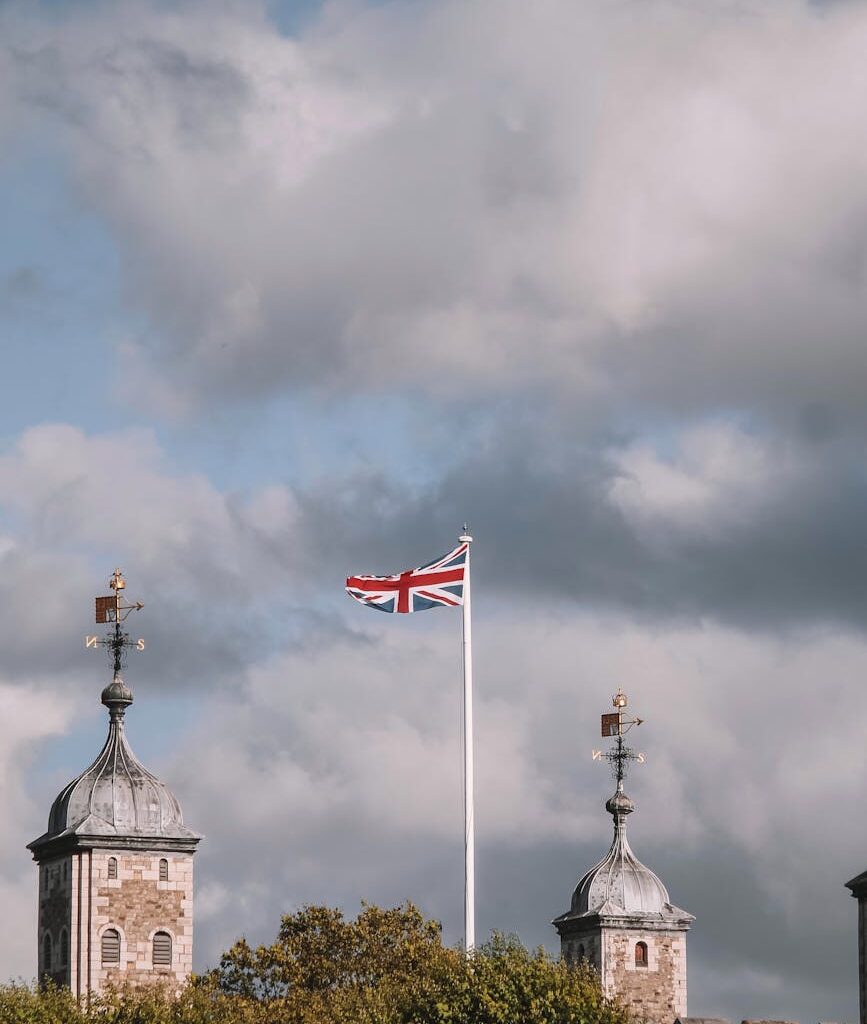
Originally published on the National Secular Society website on 9 April 2026 and republished here with permission.
In the space of a few days, both our Prime Minister and the Leader of the Opposition have been rehashing a familiar line about Britain’s ‘Christian identity’. It is a well-worn political trope. But in today’s climate, its revival looks less like nostalgia and more like a calculated response to rising identity politics – and that should raise alarm bells.
Over Easter, Kemi Badenoch declared that “Britain is a Christian country” before announcing proposals to channel more public money into churches to fund repairs – despite the fact that the Church of England is perfectly capable of funding itself, but chooses instead to prioritise evangelism.
She went further, stating that her hypothetical government would “embrace, promote and defend” Christian heritage, adding that “churches embody the values that built our country”.
Meanwhile, addressing Christian faith leaders at a Downing Street Easter reception, Keir Starmer argued that government and faith should not be “two separate things operating in separate spheres”, and spoke of building a “proper partnership” with the new Archbishop of Canterbury. This speaks volumes about the Church of England’s uniquely privileged access to the machinery of the state.
These statements should concern anyone who values the separation of religion and government. This is not a dry constitutional technicality – it is a cornerstone of successful liberal democracies. When the state aligns itself with religion, it inevitably privileges some citizens over others, erodes equality, and invites division.
And there is a further danger. Weakening the principle of church-state separation does not simply elevate Christianity; it undermines the very argument against those who would seek to impose religion on politics in more coercive ways. If we abandon the Enlightenment principle that religion and state must remain distinct, we play straight into the hands of Islamists who have no regard for that boundary.
You cannot credibly defend liberal secular democracy while simultaneously arguing that one religion should enjoy a privileged role in public life. If the state can promote and privilege Christianity, on what basis can it resist demands from other religious groups – many of them growing in size and confidence – to be treated the same, or even to go further? The erosion of secularism does not strengthen Britain against religious extremism; it weakens it.
At a time when Britain is becoming both more religiously diverse and more irreligious, doubling down on the idea of a “Christian country” is particularly misguided. It is also, in Starmer’s case, an explicitly anti-secular position – one that risks blurring the essential boundary between private belief and public authority.
Both Badenoch and Starmer may simply be playing to the gallery. There is a political calculation here: a desire to stem the loss of votes to parties such as Reform or Restore, which frame Christianity as a bulwark against societal change and the growing influence of Islam in Britain. But this is a dangerous game. Once mainstream politicians begin to adopt the language and framing of religious identity politics, they legitimise it – and make it harder to contain.
The idea that Britain must “return” to Christianity to preserve its identity is often presented as an emerging national consensus. It is nothing of the sort. In reality, the narrative remains largely confined to a narrow set of voices, amplified by a small number of well-funded media outlets, mostly owned by the hedge fund multi-millionaire evangelical Christian Paul Marshall.
Much of the ‘vibe’ was created by The Bible Society’s claims of a “quiet revival” – which was recently retracted after it was shown to be based on flawed and unreliable polling.
But public figures as varied as historian Tom Holland and agitators like Tommy Robinson have, in their own ways, promoted the idea that Christianity is the foundation of everything good about Britain, and that its decline signals moral and cultural decay.
But this framing is both historically simplistic and politically unhelpful. The values we cherish in modern Britain – democracy, human rights, equality before the law, freedom of expression – were shaped by a wide range of intellectual, cultural and political forces. Christianity is undoubtedly one of them, but it is far from the only one. The Enlightenment, liberal philosophy, scientific progress, and hard-fought social reform movements have all played a decisive role. Indeed, at various times in history the Church of England and other Christian institutions in the UK have been outright hostile to values such as equality and free speech.
To suggest that these values belong exclusively – or even primarily – to Christianity is to misunderstand their origins and to risk alienating the many citizens who share those values but not that faith.
Much of the current push to reassert a “Christian Britain” is, at its root, a fear response. Whether those fears relate to immigration, cultural change, or the growing visibility of other religions, they are grounded in a sense of uncertainty about identity and belonging. And fear, while politically potent, is rarely a sound basis for public policy.
A more rational and constructive response would be to ask how we can build a shared national identity grounded in common values – values that all citizens can subscribe to, regardless of their beliefs.
Religion is not one of those shared foundations. Christianity is now a minority religion. In Scotland and Wales, the nonreligious are the largest religion or belief group. A national identity built around a faith that most citizens do not actively follow or believe in is, at best, a fragile proposition.
New research from More in Common underscores this reality. While Christianity has historically shaped aspects of our institutions and culture, it plays little role in most people’s daily lives. Crucially, most Britons see religion as a private matter – something that can provide meaning, community, and comfort. But they are uneasy when religious institutions wield political power, receive special privileges, or appear to infringe upon individual freedoms and equality.
That instinct is sound. It reflects a deeply British commitment to fairness, tolerance, and the rule of law – principles that are best safeguarded not by elevating one religion above others, but by ensuring that the state remains neutral on matters of belief.
This is why secularism is not a threat to religious freedom, but its protector. By keeping religion and state separate, we create a society in which everyone, believer and non-believer alike, can live according to their convictions without fear of discrimination or coercion.
By contrast, any form of Christian nationalism, with its echoes of Trump’s fusion of religion and politics, would be profoundly divisive and, ultimately, anti-British. It would fracture our society along religious lines, undermine equal citizenship, and erode the delicate balance that allows a diverse population to coexist peacefully.
Politicians on both the left and the right should resist the temptation to pander to this trend. The short-term electoral gains are unlikely to outweigh the long-term damage.
Instead, they should defend a secular vision of the state: one that protects the right to religious belief but does not privilege it, keeps politics neutral with respect to faith, and builds a shared identity that includes people of all religious and non-religious backgrounds around common civic values.
That is the foundation of a modern Britain – and it is one worth defending.



Your email address will not be published. Comments are subject to our Community Guidelines. Required fields are marked *
Donate