

Many years ago, I attended a sales course where we were taught to begin a presentation with what was called, if my memory serves me correctly, an ‘Initial Advantage Statement’. The idea was simple: start with something which everyone in the room could agree on. Having established that initial agreement, you could then move on to the rather more difficult business of persuading them to accept your proposition.
Listening to politicians today, I sometimes wonder whether they attended the same course.
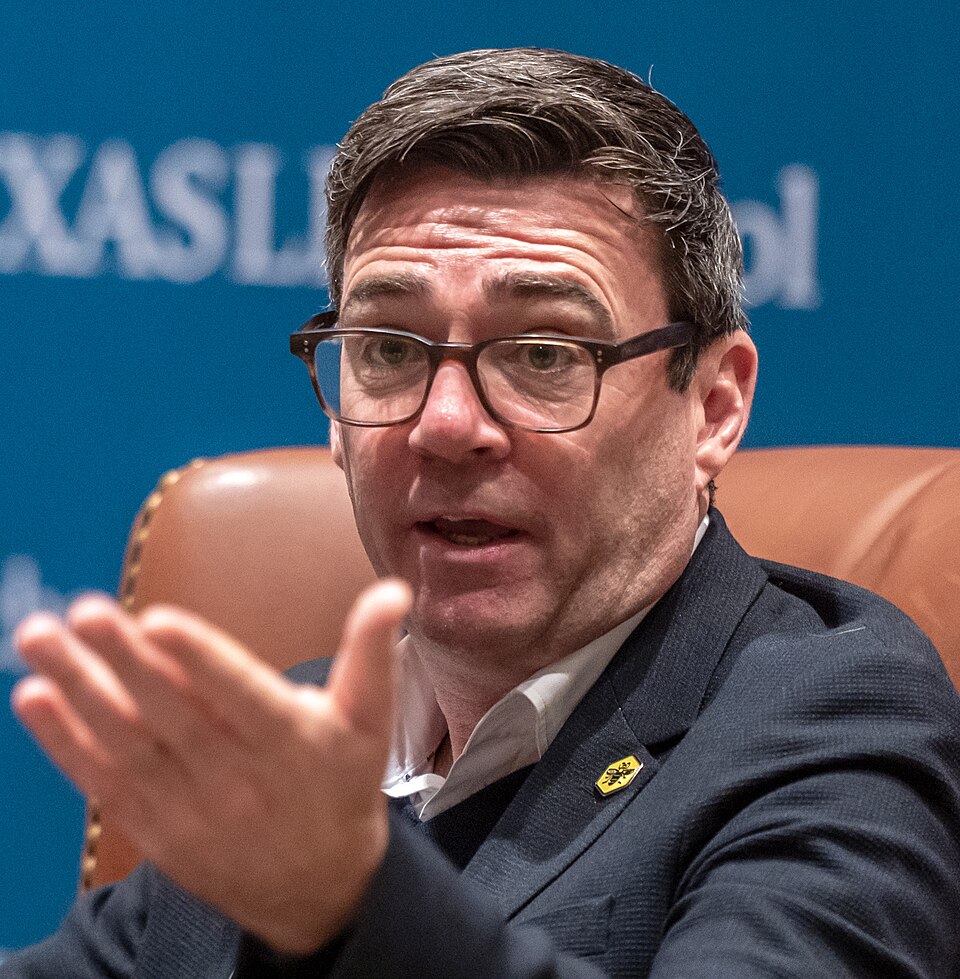
Our latest prime minister, Andy Burnham, recently provided a good example when discussing assisted dying. He supports assisted dying in principle, but argues that the debate should wait until palliative and adult social care have been properly reformed and funded.
Who could possibly object to better end-of-life care?
Certainly not me. Nobody should feel driven towards an assisted death because adequate palliative or social care is unavailable.
So far, so good. We have our Initial Advantage Statement.
But agreement with that proposition does not logically require us to accept the next one: that Parliament should postpone assisted dying until end-of-life care has been ‘fixed’.
There is a rather large problem with that little word.
What does ‘fixed’ mean?
Universal access to specialist palliative care? A fully funded social-care system? The elimination of regional inequalities? And who decides when this happy state has been achieved?
More importantly: when?
‘Fixed’ has something of the quality of that other wonderfully elastic political word, ‘soon’. It sounds reassuring while committing the speaker to remarkably little.
And Parliament has hardly rushed this issue.
Kim Leadbeater’s Terminally Ill Adults (End of Life) Bill would have allowed terminally ill adults in England and Wales, expected to have less than six months to live, to request assistance to end their lives, subject to safeguards. It passed the elected House of Commons by 314 votes to 291 in June 2025.
Then it reached the Lords.
More than a thousand amendments were tabled. Some undoubtedly represented legitimate scrutiny of an enormously important piece of legislation. Others were regarded by supporters as an attempt to run down the parliamentary clock.
Whatever the motivation, the clock duly ran down. The Bill failed to complete even its Committee stage before the parliamentary session ended.
Among its opponents were bishops of the established Church, who sit in the House of Lords as Lords Spiritual.
Their contributions are worth examining rather than simply dismissing because they came from bishops.
The then Bishop of London, Sarah Mullally, is a particularly interesting example. Before entering the Church she was a nurse and became Chief Nursing Officer for England. Her concerns about coercion, inadequate palliative care, and vulnerable people feeling themselves a burden therefore deserve serious consideration.
But during the Lords Committee stage she made a revealing statement: ‘[h]owever many amendments there are to this Bill, the Bill will never be safe.’
That is rather different from saying that the Bill needs better safeguards. If no conceivable collection of amendments could make assisted dying safe, the objection would appear to be to the principle itself.
The Bishop of Newcastle, Helen-Ann Hartley, explicitly defended the place of faith in the debate, saying that a viewpoint grounded in faith was as legitimate as one grounded in any other ‘belief or none’.
On that point I largely agree with her.
Religious believers are perfectly entitled to participate in public debate. Their arguments should be heard alongside everyone else’s.
But there is an important difference between having the right to make an argument and being given a seat in the legislature because you hold religious office.
Twenty-six Church of England bishops are entitled to sit in the House of Lords as Lords Spiritual. In a modern secular democracy, that is itself worthy of debate. Their arguments about assisted dying should carry precisely the weight that their evidence and reasoning deserve—no more and no less.
Which brings us back to Andy Burnham.
Burnham was brought up as a Roman Catholic, attended Catholic schools, and was an altar boy. He has described himself as ‘Catholic by upbringing’ but ‘not particularly religious’, while acknowledging the influence of Catholic social teaching on his politics.
It would be unfair to conclude from this that Catholicism dictates his views on assisted dying.
Indeed, there is evidence that it does not. Burnham has supported abortion and LGBT rights and has publicly challenged the Catholic Church over its position on homosexuality and same-sex marriage.
He is clearly capable of disagreeing with his Church.
But childhood religious formation does not necessarily disappear when religious observance does. Ideas about life, death, suffering, guilt, and moral duty can be instilled long before we are old enough to examine them critically. A believer might call that moral formation. A secularist might call at least some of it childhood conditioning.
Indeed, it is probably difficult for the religious to accept the idea of assisted dying because revealed religion teaches as a fundamental that our lives are a gift from God. Thus it is not for mere humans to terminate our lives, regardless of how much suffering might be avoided by doing so. Religion, if not always religious people, is always impelled to interfere in the lives (and deaths) of others, because it claims to know the truth of God. Religion, in other words, is often a form of social control.
Might some residual Catholic influence be contributing to Burnham’s instinct to postpone assisted dying?
Perhaps. We cannot know, and should not pretend that we do.
What we can examine is his argument.
If inadequate palliative and social care makes assisted dying unsafe, identify the deficiencies and demonstrate the connection. Tell Parliament what needs to change and how we will know when it has changed.
Those are propositions capable of rational examination.
Saying that end-of-life and social care should first be ‘fixed’ is not.
There is no logical contradiction between improving palliative and social care and debating whether a mentally competent, terminally ill adult should have some control over the manner and timing of their death.
Parliament should decide that question on evidence, reason, and the merits of the arguments—religious or otherwise.
Not defer it until some undefined future day when end-of-life care has finally been declared ‘fixed’.






1 comment
Great well-argued article. Thanks Colin
Your email address will not be published. Comments are subject to our Community Guidelines. Required fields are marked *
Donate