

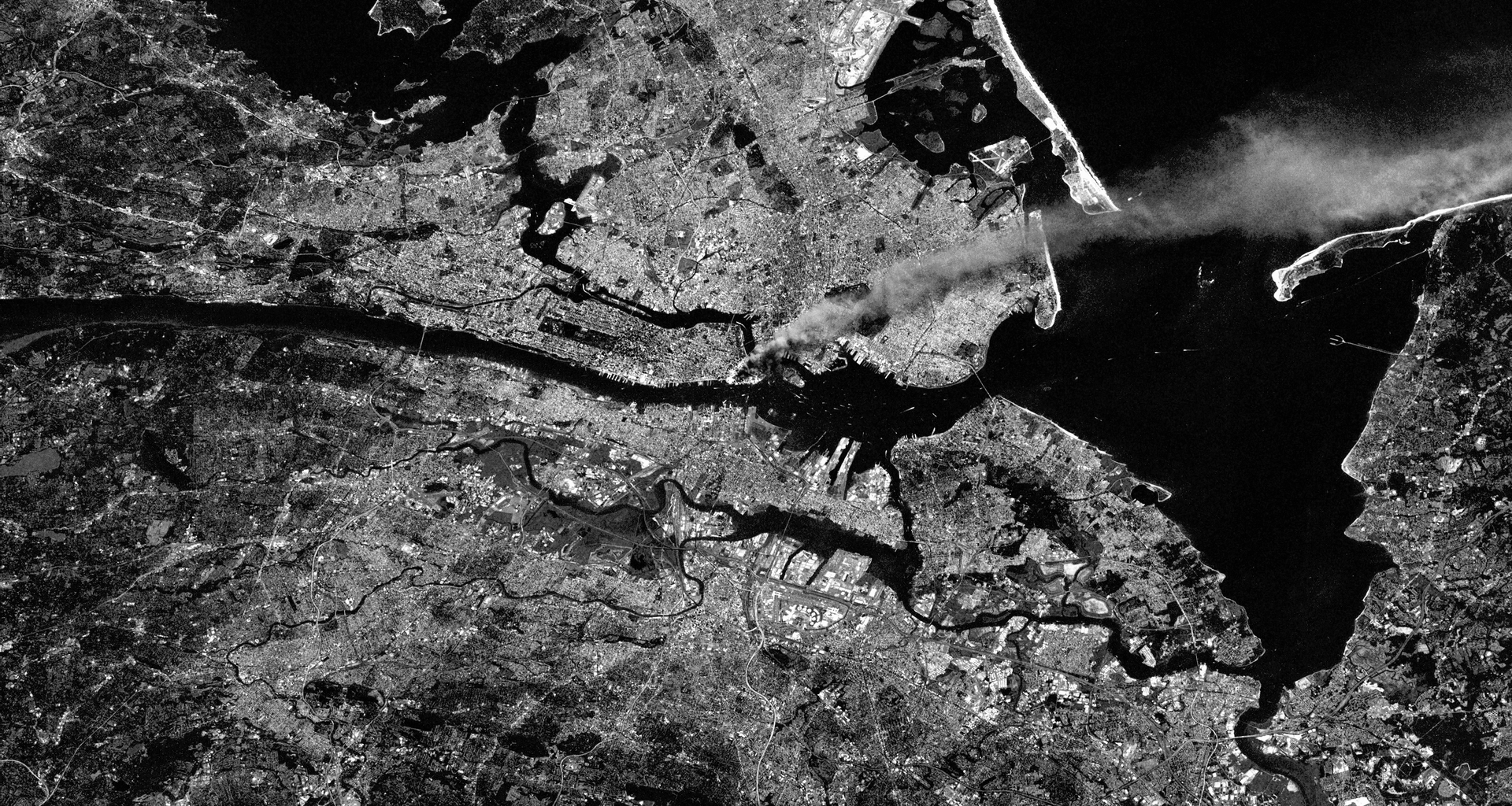
The essay below was originally published on 11 September 2021 in Areo Magazine, where I worked for some years under Helen Pluckrose and Iona Italia, including as assistant editor. Areo is now closed, but its legacy lives on. Its archive is owned by Quillette, where Iona now works, and it is with Quillette’s permission that I republish this essay to conclude the Freethinker’s short series of 25th-anniversary perspectives on the legacies of 9/11.
I considered updating these reflections on Islamic fascism, written for the twentieth anniversary of 9/11, but I think it best to let them stand pretty much as they are, with only some minor cosmetic adjustments, primarily formatting and dating changes. I don’t think I would change much, anyway; certainly, the main thrust of the piece I would stand by, and it is as relevant as ever. I have also updated the title above (the original title remains below). But I’ll take the opportunity to make some additional reflections at the end, and I have added a postscript.
On Islamic Fascism: Reflections on 9/11 Twenty Years On
Where were you on 9/11?
Few events are accorded such status in public memory: there is an expectation that, if you are old enough, you will remember to the second where you were and what you were doing when the planes hit.
I was five, so I have no memory of that day. My mother tells me that she had seen the news just before she was due to collect me from school. At the school gates, she learned more from the other parents. My parents chose, as many did, not to tell me what had happened. But later, after Bush and Blair had spoken, my father mentioned that we were now at war. I am told that I was upset when I overheard this, despite knowing nothing about what was happening.
This was in Scotland, not America. The news that day was global—and rightly so. It was a world-historical turning point. It launched the United States and its allies into decades of war around the world. It loudly and bloodily informed everyone on the planet of the arrival of a murderous new ideology. Jihad became a familiar word. Without 9/11, al-Qaeda would have remained a little-known terrorist group, an Islamic caliphate would never have been declared, and we would have been spared so much death.
I disagree with those who downplay the significance of 9/11. Ben Sixsmith in The Critic, for example, argues that:
[9/11] did not have the epochal geopolitical significance that it was assumed to have.
Liberalism was growing weak in subtler ways, at home and abroad. Internal disputes over matters such as migration and supranationalism, and “cold” rivalries with secular China and more-or-less secular Russia, loom larger in our minds than jihadis, as well as more transcendent matters such as environmentalism and pandemic risk. To the extent that militant Islam concerns us, it is generally at home, where it has been idly allowed to spread …
Of course, jihadism could burst into the news again … But the War on Terror was talked into being as if it was the historical successor of World War Two and the Cold War—conflicts that contrasted major geopolitical and ideological powers. Jihadists, for all of their morbid destructive potential, have neither the power nor the coherence for the same to be true …
The attacks of 9/11 were a defining moment for thousands of families, of course, for obvious reasons, but they were also a defining moment for commentators who sought to prolong the twentieth century and its idealised conceptions of ideological conflict between the forces of liberty and the forces of totalitarianism.
But the existence of many other problems does not negate the import of jihadism. China and Covid might loom a bit larger now, but jihadism, despite its many defeats and failures, is the most resilient terrorist wave in history. Islamic State, as the editors of The ISIS Reader (which I review for this magazine here) point out, has declined before, and was able to build itself back up and rapidly seize swathes of territory; it still has affiliates across the world and significant resources and propaganda reach.
Al-Qaeda was able to revive itself after its decimation in Afghanistan (owing to the opportunity of a Saddam-free Iraq) and its friends and hosts have just retaken control of that benighted country. Afghanistan was al-Qaeda’s pre-eminent base pre-2001, and the Taliban’s return to power is likely to make that true again. The last time this was the case, al-Qaeda was able to cause more direct damage to the United States in a single morning than any other enemy since the Confederacy.
As for militant Islam at home and the issues with immigration, I agree with Sixsmith, but his implication is that, somehow, these problems have little to do with official jihadism, when in fact it is the propaganda and, albeit less often, the direction and resources of al-Qaeda and IS that inspire domestic terror attacks in the name of Islam. Look, for example, to the career of Anwar al-Awlaki.
There are, of course, major differences between the conflicts of the twentieth century and the War on Terror, but it is absurd to say that jihadist organisations with global reach and appeal lack power and coherence. Such organisations have at times had the power or backing of nation-states, and their goals are quite simple—the defeat of the United States and the establishment of Taliban-style Islamist regimes and/or caliphates throughout the Muslim world and beyond.
The war on jihadism is a war of liberty against totalitarianism. I don’t mean that the foes of jihadism are all starry-eyed democratic romantics (although some of us may be), but that al-Qaeda and its spawn are expansionist totalitarians. Osama bin Laden and his heirs were and are quite explicit about this. Jihadism is a totalitarian ideology: it demands the subjugation of entire populations to a utopian vision of a Sharia paradise, and it seeks to do this by any means necessary, including genocide (as the Taliban’s erasure of pre-Islamic culture in Afghanistan and IS’s persecution of, among others, the Yazidis demonstrate). To acknowledge this cannot simply be dismissed as a longing for the battles of the past: it is merely to apply the lessons of history (the threats from China and Russia, too, are threats of expansionist authoritarianism).
Jihadism is a form of fascism. Angus Colwell has recently criticised Christopher Hitchens for his use of the term Islamofascism: ‘Hitchens was bright enough to know how historically inaccurate this was: fascism was a historical creation of its place and time, not a moral cudgel.’ But Colwell refers us to an essay in which Hitchens defends the term against just such criticisms, and in which Hitchens reminds us that words are not our masters but our servants. If ideological terms were locked in to specific historical moments, then political discourse would become pretty difficult. If, for example, an antisemitic totalitarian rose to power through manipulations and lies tomorrow, would the word fascist not be applicable? Colwell writes as if there were no debate on this matter, yet the scholars Ibn Warraq and Hamed Abdel-Samad have both examined the historical links between Islamism and fascism and the deep similarities between those two ideologies.
Jihadism and fascism share many features—including antisemitism, the fetishisation of death, leader worship, anti-intellectualism, yearnings for past glories as against present humiliations, utopianism, expansionism, and obsessions with purity—and therefore jihadism can be legitimately described as Islamic fascism.
I don’t wish to single out Ben, whom I regard highly, but his arguments reveal the shortcomings of some conservative views on this subject. Meanwhile, in its idiocy, much of the anti-imperialist left regards jihadism as anticolonial revenge against America for its depredations rather than the murderous theocratic fascism that it actually is.
The apologetics that claims an equivalence between America and jihadism is one of leftism’s great shames. Noam Chomsky’s comparison of 9/11 to Bill Clinton’s 1998 bombing of a Sudanese pharmaceutical factory is the classic demonstration of the poverty of this view. Even if you believe Clinton was wrong to bomb the factory, as I do, there is no comparison. Clinton’s 1998 strikes were part of a limited response to al-Qaeda’s bombings of the US embassies in Nairobi and Dar-es-Salaam that year, which killed more Africans and Muslims than Americans. The missiles of 9/11 were packed full of human beings and were fully intended to slaughter as many people as possible in the world’s most cosmopolitan city—all in the name of an avowedly murderous, imperialist, fascist ideology. Osama bin Laden was delighted by the spilling of the blood of thousands in the heart of multicultural New York. All his targets were civilian targets (including the Pentagon). He had no compunction about any of this, nor did he differentiate between military and civilian.
And why did bin Laden target the World Trade Center? Perhaps he thought it represented the evils of world capitalism? Perhaps his attack was a misguided assault by the Third World on the power of international finance? No. In an Al Jazeera interview from October 2001, bin Laden said that:
The values of this Western civilization under the leadership of America have been destroyed. Those awesome symbolic towers that speak of liberty, human rights, and humanity have been destroyed. They have gone up in smoke. [Emphasis added.]
Before 9/11, the Americans had a few opportunities to kill or capture bin Laden. One of the reasons they never took advantage of these was the fear of collateral damage. There is no moral equivalence between the two sides here. Bin Laden wanted to kill as many people as possible in the name of his totalitarian faith, while the Americans rightly agonised over civilian death as they attempted to capture this murderer. Indeed, even after 9/11, when planning the 2011 raid on the Abbottabad compound that killed bin Laden, bombs and drones were ruled out partially because the man believed to be bin Laden frequently walked in his garden with children and the Americans feared killing innocent Pakistanis. And, as Raymond Ibrahim has shown, while al-Qaeda’s statements to the West may have been full of spurious grievances and justifications, its propaganda aimed at Muslims was entirely religious in character.
So, 9/11 was a world-historical event, and jihadism is a form of fascism that must be fought. But what of the man behind the attacks? Some of the details above are taken from Peter Bergen’s new biography, The Rise and Fall of Osama bin Laden. This excellent book convincingly argues that bin Laden was one of a tiny number of individuals who have changed history through sheer force of will.
Bergen has studied and written extensively on jihadism, and he even met bin Laden in 1997 when he produced the first TV interview with the man who would go on to slaughter thousands and mutilate the heartland of the world’s most powerful nation. He was also the first and only outside observer to view bin Laden’s Abbottabad compound before the Pakistanis destroyed it to prevent it from becoming a shrine. Bergen’s first-hand knowledge and decades of experience in reporting on jihadism shine through in this biography, which is a work of lightly worn expertise. It is fairly short yet incredibly detailed and rich. It provides, for the first time, a properly rounded view of bin Laden, in all his dimensions: family man, business mogul, bloodthirsty religious fanatic, spin doctor, strategic incompetent and more—from his privileged birth to his pathetic death (Bergen’s account of the hunt for bin Laden and Operation Neptune Spear is thrilling).
By looking at bin Laden and his influence on history, Bergen is able to clarify bigger issues, such as the successes and failures of the American War on Terror. And he shows that bin Laden, despite not being a religious scholar, was a deeply religious man who consciously modelled himself on the Prophet Mohammed, and that, above all else, it was his religious beliefs that inspired him:
Of course, bin Laden’s beliefs were not a mainstream view among Muslims, but assertions that Islamist terrorism has nothing at all to do with Islam are as nonsensical as claims that the Crusades had nothing to do with Christian beliefs about the sanctity of Jerusalem.
Bergen’s portrait of bin Laden also shows us how laughable the man was. He would cover his ears at racetracks if music started to play over the loudspeakers and avert his eyes from uncovered women. In his grotty Abbottabad compound, as the Arab Spring went on without his or al-Qaeda’s help (inspired by liberal and anti-corruption campaigners rather than religious fanatics), he felt abandoned by history and pontificated to his family members so that he could feel important once more. His lack of intellectual curiosity, his egotism, his arid spirituality, and his pathetic exile would be enough to make one pity him if he were not also a mass murderer.
Osama bin Laden was ultimately a failure. Though Bergen harshly criticises George W. Bush’s strategy and actions (such as the barbaric and futile use of ‘enhanced interrogation’, viz. torture), he also shows how bin Laden blundered. Bin Laden believed that 9/11 would destroy America and make it withdraw from the Muslim world (thus allowing Taliban-style utopias to topple the corrupt Arab regimes), when in fact it led America to become ever more involved. Rather than causing the downfall of a superpower, as bin Laden absurdly believed he had done with his paltry part in the war against the Soviets in Afghanistan in the 1980s, 9/11 led to the utter annihilation of al-Qaeda. Bin Laden’s spectacular tactical success on 9/11 was also a staggering strategic error.
Alas, things changed. Bergen criticises Bush’s invasion of Iraq for leading to the revival of al-Qaeda, and although I still believe it was right to overthrow Saddam Hussein, it is hard to disagree with this analysis. I think it likely that Saddam’s Iraq would have imploded anyway, and the fortunes of al-Qaeda would have been revived in an even worse way had there been no intervention, but the historical record is clear that events in Iraq led to the resurgence of a defeated bin Ladenism.
Still, bin Laden was never able to launch a 9/11-level assault on the United States again. This was his aim until the end, unlike Awlaki, who thought the way forward was to instigate lone wolf attacks in the West. In that sense, at least, the War on Terror has succeeded.
But perhaps that is about to change. The Taliban has retaken Afghanistan following Joe Biden’s withdrawal of US forces. I believe that international forces should have stayed for as long as necessary. Even if it proved impossible to transform Afghanistan into a properly democratic state, the relatively small mission there was all that stood in the way of the Taliban’s return. Donald Trump’s peace deal with the Taliban is castigated by Bergen, and rightly so. The Taliban has repeatedly reiterated its support of al-Qaeda, whose leaders have sworn oaths of allegiance to each of the successive Taliban emirs as ‘Commander of the Faithful’, meaning leader of all the world’s Muslims (hence the rift with Islamic State, whose head also claims to be the global leader of Islam). Since day one, the Taliban has broken its promises to be a more moderate version of the old fundamentalist regime. By betraying the people of Afghanistan, and especially its women and girls, the West has also gifted its avowed enemies a base from which to launch apocalyptic attacks once more. Bin Laden’s successor, Ayman al-Zawahiri, if he is still alive, is no doubt smirking. The US will rue the day it agreed to leave Afghanistan, as the people of that country are ruing it even now.
I have been against the withdrawal from very early on, and the horrors of the last month have strengthened my conviction. What has occurred in Afghanistan is a real-time refutation of the dogmas of both the anti-imperialist left and the isolationist right. It was and is our business to be in Afghanistan, as it was and is the business of the Afghans. For all its many and deep flaws, and all the mistakes and failures of the intervention, the West will regret its abandonment of the ousted Afghan regime. (The Uyghurs of Afghanistan are also at risk, fearing a Taliban-China alliance: the withdrawal, therefore, may turn out to benefit the CCP as well as jihadism, allowing it to extend its influence and its genocidal aims ever further.)
I only hope that the resistance being mounted in the Panjshir Valley by Ahmad Massoud, son of the late anti-Soviet and anti-Taliban Northern Alliance leader Ahmad Shah Massoud (who was known as the Lion of Panjshir and was assassinated two days before 9/11 by al-Qaeda), succeeds in carving out a non-Taliban space in Afghanistan. Ashraf Ghani’s former Vice President, Amrullah Saleh, has, unlike his boss, bravely stayed in the country to fight alongside Massoud. The situation in Panjshir is looking tenuous, but all is not lost. For some heartening words, I recommend a read of Saleh’s defiant and coruscating despatch from Panjshir and Peter Bergen’s interview of Massoud.
Joe Biden should never have left the country, and certainly not in the disastrous way that he did. He should swallow his pride and send the troops back in. If he has even the remotest spark of honour, he will commit to helping the Panjshir resistance with all the resources he can muster, but I don’t have much hope that he will. (As Bergen amusingly points out, bin Laden wanted to have President Obama killed but told his men to leave Vice President Biden alone as he was ‘totally unprepared’ for the role of president. For once, I agree with bin Laden.) Let us hope, at least, that Biden, and the West more generally, gives Afghan refugees, especially the women and girls and those who risked both their and their families’ lives to support the intervention, safe harbour.
There is one small spark of hope. However long it takes and however much it destroys, jihadism is a self-defeating ideology. It has demonstrated the need to reform or enlighten Islam. Its actions have led many—including former dogmatists—to criticise or leave the faith. For example, Ibn Warraq relates that one pious young Iraqi girl who originally celebrated 9/11, after seeing what al-Qaeda did to her country, remarked: ‘Now I hate Islam. Al Qaeda and the Mahdi Army are spreading hatred. People are being killed for nothing … [The clerics] are making a society of nonbelievers.’ That story comes from Warraq’s book (reviewed by me here) on the heartening wave of disbelief in the Muslim world, which is in large part a response to the horrors committed by the faithful. It will take a very long time, no doubt, but the ideology of jihad inscribes its own destruction. It is to the heretics and infidels that we must look for hope.
The 9/11 assault on the United States was committed by filthy fascists, and now, twenty-five years later, those fascists are resurgent. Jihadism has evolved and become less centralised, and the rift between al-Qaeda and Islamic State has been fascinating to watch. IS, too, I predict, will make a return in the coming years. The West’s supposed allies, Pakistan and Saudi Arabia, who have, respectively, sponsored the Taliban and spread fundamentalist Islam around the world, are friends the West is better off without. The West should have stood by its commitments in Afghanistan: one does not defeat this sort of evil quickly. It was a forever war, and so what? All wars against totalitarianism are forever wars. If you leave fascism in peace, it won’t return the favour.
All we can do is understand the enemy, and to that end Peter Bergen’s biography of Osama bin Laden is one of the few pieces of essential reading. Bin Laden, whose first name meant ‘lion’ and who had vowed to die a martyr’s death, died pathetically in a shabby compound, having been sidelined from great historical events and reduced to vainly applying dye to his greying hair. But his vision lives on. Twenty-five years after al-Qaeda’s evil attack, it is necessary to recommit to opposing the totalitarian Islamic fascism that has destroyed, and continues to destroy, so many and so much—and to honour those, all around the world, of all faiths and none, from the passengers of United Airlines Flight 93 to the new lions of Panjshir, who have stood against it, often at the cost of their lives.
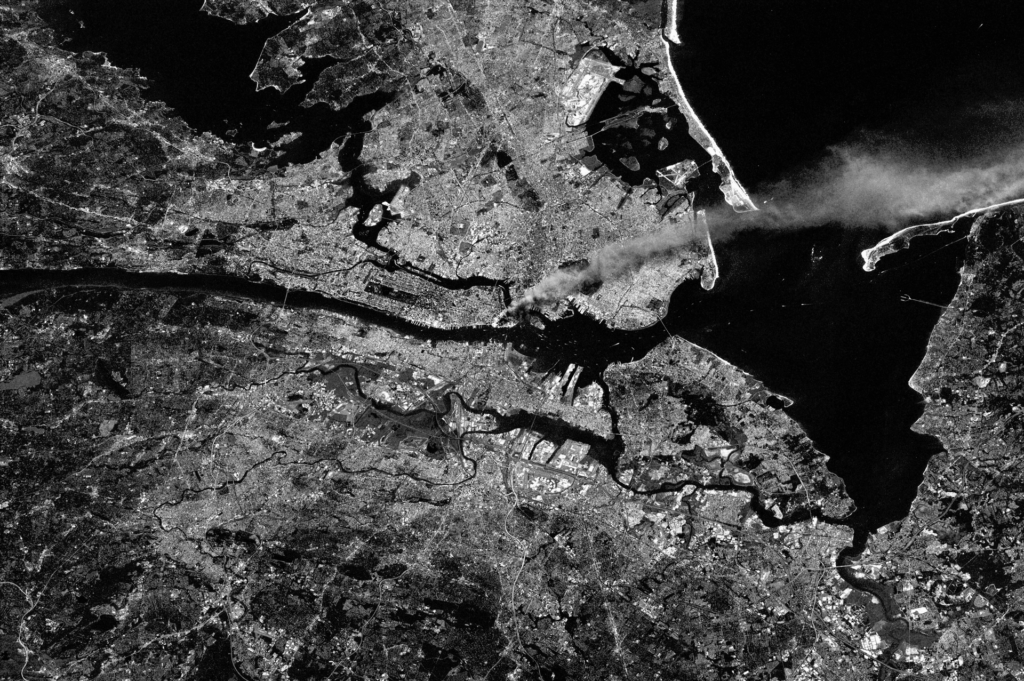
Further Reflections on Islamic Fascism (17 September 2026)
To begin where I left off. Sadly, my hopes that Ahmad Massoud and Amrullah Saleh’s National Resistance Front (NRF) might ‘[carve] out a non-Taliban space in Afghanistan’ came to nothing. The NRF lost the Panjshir valley and now operates in exile, but it remains probably the most influential face of the pro-democratic, anti-Taliban resistance. Alongside the other main military opposition group, the Afghanistan Freedom Front (led by General Yasin Zia and founded in March 2022), and civil society groups, including women’s rights advocates, the NRF is part of the Vienna Process for a Democratic Afghanistan, so named in contrast with the Doha Process which ultimately stripped Afghanistan of its hard-won freedoms. Though there are many factional, tactical, strategic, and political differences between the groups involved in the Vienna Process, it remains the best hope for a Taliban-free Afghanistan. Its broadly progressive and democratic (and arguably quasi-secularist) ethos shows that the dream of a free Afghanistan, so briefly and imperfectly realised, still lives. The Taliban is not, and never has been, Afghanistan.
Indeed, I wish it were better appreciated that Afghans were not passively ‘democratised’ by the US. They were not ‘unready’ for democracy, and many more Afghans than Westerners died fighting for a free Afghanistan. They did not simply surrender to the Taliban in 2021; they were systematically betrayed by those they thought were their friends. See Terry Glavin’s recent essay for more on this theme. A taste:
“Afghanistan political leaders gave up and fled the country,” Biden said, deliberately omitting the fact that what he had told the Afghan leadership to do was hand over several ministries of the Afghan republic to the mass murderers the leadership had been fighting from long before 9/11. Biden was asking Afghan soldiers to fight on behalf of a new Popolzai-Ghilzai khanate the Americans had themselves designed.
As predicted, the Taliban very quickly abandoned even the pretence of moderation. It has restored a brutal theocracy and returned the women and girls of Afghanistan to a state of serfdom. And, of course, it has given succour to their old al-Qaeda friends. The killing of Osama bin Laden’s successor, Ayman al-Zawahiri, by US forces in Kabul in July 2022 was ample demonstration of that. Their alliance, which gives al-Qaeda a haven to regroup and rebuild, is an open secret. Thankfully, the Taliban also restrains al-Qaeda somewhat, desirous as it is of protecting whatever international reputation it can be said to have. But this isn’t so different a situation as before; Taliban leaders were wary of bin Laden decades ago, and failed to restrain him in 2001—or turn him over when the towers came down. That al-Qaeda is weaker than ever, thanks to the War on Terror and the growth of rival groups, is only a very little comfort. Glavin again:
Al-Qaida’s franchises in Africa command up to 10,000 fighters and earn about $100 million annually in taxation, smuggling and expropriation, according to Yale University’s Graeme Wood, author of The Way of the Strangers: Encounters With the Islamic State. This is a state of affairs that confounds the notion that Al-Qaida has been reduced to an irrelevant, incompetent rump, Wood points out. “It’s hard to accept that your enemy is an idiot and that somehow you are losing to him anyway.”
And I didn’t even bother to footnote Hamas, Hezbollah, the Houthis. . .
(For a slightly contrary view of al-Qaeda’s present capabilities, see Kyle Orton’s 9/11 anniversary retrospective, here. These analyses are not incompatible, and it is my view that both contain much truth. The War on Terror successfully and hugely degraded al-Qaeda, yes, but it is resilient and patiently rebuilding, and far from defeated.)
Five years after the fall of Kabul, the world is changed. Wars in Ukraine and Iran, Israel and Gaza, the return of Donald Trump, and the rise of the New Theism and an aggressive Christian nationalism in the US and beyond are but a few of the developments that have supplanted the threat of jihadism in the West’s public consciousness. But jihadism, in its most lethal al-Qaeda and Islamic State (IS) forms, remains a global concern. It strikes me that Ben Sixsmith’s words, quoted above, are extremely Western-centric; in addition to continuing IS-inspired attacks in the West, IS and al-Qaeda’s presence has reached Iran, Russia, and swathes of Africa. Meanwhile, an Iran-inspired Shia wave of jihadism is on the horizon, as Kunwar Khuldune Shahid has written in this magazine. Despite the theological and political splits between these groups, it is folly to argue that there is no powerful, coherent, global jihadist threat. For all their differences, every jihadist group is, at bottom, the same: they are Islamic fascists. German, Italian, and Japanese fascism were distinct and even at odds in very many ways, but fundamentally identical. One does not need a comprehensive, one-size-fits-all definition of fascism to grasp the point.
As if this wasn’t enough, Peter Bergen’s recent anniversary piece in the New York Times reminds us that jihadism, despite its barbarically medieval soul, moves with the technological times:
Fanaticism, religious or otherwise, can drive dangerous, nihilistic attacks by those who don’t care what happens to them or their followers. That is particularly worrisome in an age when artificial intelligence could be used to develop and deploy bioweapons against which we have only weak defenses.
I also now raise an eyebrow at Sixsmith’s ‘more-or-less secular Russia’. Putin’s Orthodox bent and backing was quite apparent in 2021; now that his genocidal war against Ukraine is cheerfully championed by Russian Orthodox clerics and presented by them and him as an ‘anti-woke’ holy war against the decadent, limp-wristed West, as represented by Ukraine—well, ‘secular’ doesn’t seem to be the word, whether it is qualified or not. (For some reason, I’m reminded of George W. Bush’s foolish claim to have gotten ‘a sense of [Putin’s] soul’ after listening to Putin’s vapid religious murmurings.)
If anything, many of the developments I mentioned buttress my case by broadening it. For a long time, jihadism seemed to be the main threat presented by religion to the world. This was always too narrow a perspective, of course, but it was understandable. Now, it is clear to all. It is not only Islamic fascism we are contending with now. It is a resurgent religious fascism, and it is everywhere. Islamic fascism, Christian and Hindu nationalism, and Jewish fanaticism, to name the most egregious varieties, spread theocratic misery wherever they appear. The Christian and Hindu versions of theo-fascism are, between them, destroying the world’s two greatest secular democratic republics, while any chance of even a moderately fair settlement of the Palestine question is being ruined by apocalyptic bigots on both sides.
In a world where nuclear powers are led by zealots, where nuclear proliferation is rife, and where terrifying new AI and bio-weapons of mass destruction will soon easily be procurable by even the dullest of terrorists, theo-fascism is as potent and as dangerous as ever. Perhaps more so. Yes, after all, it is still liberty against totalitarianism. Yes, the Enlightenment is at stake.
And therein lies the essential fact: this war is not between West and East, between Christian and Muslim. It is a war between the Enlightenment and its opposite. Some things are just that simple. And it is a war being fought out within the East and the West, or between the Global North and the Global South, or between the First World and the Third World; both contain forces of—if this isn’t too much—light and dark. Christopher Hitchens understood that there is not so much a clash of civilisations as a ‘clash about civilization—a clash where Muslims are on both sides, and where the uncivilized have already created the conditions for their own eclipse.’
Being white/European/Christian, etc., is no guarantee of holding the right principles, and vice versa. I have much more in common with secularists of Muslim background, and indeed Muslim secularists—minorities within minorities, the most beleaguered of all—than with, say, Danny Tommo. And this should be enough to dismiss any temptation to side with Tommo and his ilk—Reform, Restore, Trump, and the even farther right. Religio-ethnonationalism is always and everywhere the enemy. Combatting Islamic fascism, and facing up to the difficulties of immigration (of which there are many, including the regressive social views of many Muslims and the growth of oppressive, parallel, Sharia-based legal systems in the West) and integration, need not involve anti-Muslim/anti-immigrant/anti-refugee bigotry or racism of any kind. Opposing fascism with fascism is to replace universalism with particularism, principle with chauvinism.
In my original piece, I mentioned fools on both the right and the left, and nothing has changed there, either. The current darling of the American left, Hasan Piker, once said that the US ‘deserved’ 9/11 (and he has prevaricated on that statement ever since), and he happily defends Hamas. His anti-imperialism sees little to no difference between the US and al-Qaeda; Noam Chomsky’s withered soul lives on. Condemning Israeli depredations against Palestinians, and Benjamin Netanyahu’s use of Tanakh symbolism in justifying these, does not mean one has to glorify the fascist and evil Hamas, themselves truly enemies of the Palestinians and opposed by many of them. Meanwhile, the far right, as represented by the likes of Nick Fuentes and Tucker Carlson, stick it to the Enlightenment-lovin’ libs by drooling over Putin, Tehran, and the Taliban. See what I mean by the Enlightenment and its opposite? Give me Rojava over any of these, any day; whatever political differences I might have had with those now-vanquished democratic confederalists, they saw things much more clearly than the Western left and right.
(For a good analysis of the left’s continuing moral and intellectual failure, see Rio Veradonir’s 9/11 anniversary essay, here. A couple of important quotes: ‘Whatever one believes about Israel’s conduct, history, or treatment of Palestinians, describing the October 7 attacks simply as “anti-colonial resistance” substitutes the relative power of the combatants for judging the political values they actually represent.’ ‘Liberalism does not assign moral virtue according to which country, religion, or ethnic group possesses less power.’ )
Give me a proper left, a robustly secular left, a left that has no compunction about defending free speech against Islamic fascists, a left that can actually identify Islamic fascism as both real and an active and potent threat in and of itself. (As Peter Bergen also reminds us, the 9/11 attacks were, in bin Laden’s own words, ‘fundamentally religious’ in motivation. Also, as it happens, it will soon be the twenty-first anniversary of the Jyllands-Posten ‘controversy’.)
Here’s a story that would be funny in its absurdity if it weren’t so shamefully revealing: Last week, on the 25th anniversary of 9/11 itself, the first female Archbishop of Canterbury presented an award for ‘interfaith cooperation’ to an Islamic scholar who glorified Osama bin Laden as a ‘Sword of Allah’. Archbishop Sarah Mullally wants to promote interfaith concord and has vowed to fight misogyny both within and without the Church of England, yet just look at the photograph. There she is, guileless and smiling as she celebrates a man who once went all starry-eyed about that interfaith champion and daring feminist Osama bin Laden. Meanwhile, Hafiz Muhammad Tahir Mehmood Ashrafi’s wife stands almost entirely invisible in her niqab. The National Secular Society rightly called this farcical event ‘obscene’. At least an embarrassed Lambeth Palace has now rescinded the award.
Such sights are nothing new. Christopher Hitchens called it ‘reverse ecumenicism’ in light of various shades of religious leaders choosing to condemn Salman Rushdie in 1989 for offending an ancient religion. Better to protect religious sensitivities than to stand up too firmly for free speech. Between concessions to Muslim and other religious feelings, the idiocy and short-sightedness of the Western anti-imperialist left and nationalist right, and the rise of theo-fascism the world over, one does have to wonder: Where has the Enlightenment gone?
This isn’t the place to go into Palestine or Iran, but I will just say that the secular and democratic forces which represented the best hope in these areas seem now to be powerless against the theo-fascist onslaught. Donald Trump’s stupid war on Iran, ostensibly in support of the brave Iranian opposition, has just hardened and perhaps even strengthened the regime which they looked set to topple just a few months ago. The fourth anniversary of the murder of Jina Mahsa Amini has just passed as I write these words; the revolution she inspired is at its nadir, but it must go on.
And that brings me to the most important point. Amid all this gloomy talk, let us not forget ‘those, all around the world, of all faiths and none, from the passengers of United Airlines Flight 93 to the new lions of Panjshir, who have stood against [Islamic fascism], often at the cost of their lives.’ To list all of these would take too long, but standing tall among them are the women of Afghanistan and Iran. Just as theo-fascism is diverse and dangerous but still a broadly coherent threat, the secular democratic resistance to it is varied and enduring and still alive. The revolution is delayed, not deceased. The Enlightenment is still, as Günter Grass once put it, the only source of light—and that light still flashes out. On the global and longue durée view, the Enlightenment has made great strides, and, though much remains to be done and though victory is far from inevitable, the worst of the forces arrayed against it are still self-defeating (we shall just have to be optimistic they don’t take the rest of us down with them).
So I think, and certainly hope, anyway.
A non-exhaustive list in no particular order of recommended Freethinker reading related to the foregoing:
A Small Light: Acts of Resistance in Afghanistan, by Zwan Mahmod
Islam’s tyrannical costumes, by Nicholas E. Meyer
Iran: Between Bombs and Theocracy, by Maryam Namazie
For Mahsa Jina Amini and Woman, Life, Freedom: Summoning an Age of Humanity in an Age of Hate, by Maryam Namazie
Verses of Life: A Review of ‘Woman Life Freedom: Poems for the Iranian Revolution’, edited by Bänoo Zan and Cy Strom, by Daniel James Sharp
The Racism of Anti-Racists: Bourdieu, Said, and Inverted Orientalism, by Siavash Shahabi
The end of American idealism, by Matt Johnson
Afghan Tourism or Taliban Whitewashing? by Zara Kay
The Taliban’s unceasing war on Afghan women, by Khadija Khan
The Galileo of Pakistan? Interview with Professor Sher Ali, by Ehtesham Hassan
The need for a new Enlightenment, by Christopher Hitchens
Bloodshed in Gaza: Islamists, leftist ideologues, and the prospects of a two-state solution, by Kunwar Khuldune Shahid
Campaign ‘to unite India and save its secular soul’, by Puja Bhattacharjee
‘Words are the only victors’ – Salman Rushdie’s ‘Victory City’, reviewed, by Daniel James Sharp
The ‘Women’s Revolution’: from two activists in Iran, by Rastine Mortad and Sadaf Sepiddasht
The Rojava Women’s Revolution Under Threat: ‘Once she smelled her freedom…’, by Rahila Gupta
Image of the week: 20 years since the Jyllands-Posten cartoons controversy, by Daniel James Sharp
Islam and free speech, 20 years on from Jyllands-Posten: interview with Jacob Mchangama, by Daniel James Sharp
Is Modi India’s Zia-ul-Haq? A Clear Warning from Pakistan to India, by Ehtesham Hassan
Salwan Momika and the right to burn books, by Noel Yaxley
The problem with ‘Islamophobia’, by Mark Lilly
Image of the week: first edition of ‘The Satanic Verses’, by Daniel James Sharp
Defending liberalism: interview with Helen Pluckrose, by Daniel James Sharp
Judeo-Christian religionists cannot ‘liberate’ Muslims (or Iran), by Kunwar Khuldune Shahid
The need to rekindle irreverence for Islam in Muslim thought, by Kunwar Khuldune Shahid
10 years since the Charlie Hebdo attack: a message from the Freethinker, by Daniel James Sharp
The Rise of the British Radical Right—First Reform, then Restore? by Zwan Mahmod
A reading list against the ‘New Theism’ (and an offer to debate), by Daniel James Sharp
How Trump will reshape America’s global role in his image, by Matt Johnson
On Israel, Hamas, and Refusing the Binary, by Maryam Namazie
The Iran-Israel war is not a war of liberation or a pursuit of justice, by Fariborz Pooya
A Call to a Post-Islamic World, by Tolga Theo Yalur
Postscript: Ground Zero
Extracted from an account of my November 2022 trip to New York, originally published on 7 December 2022 on my Substack. All photos mine.
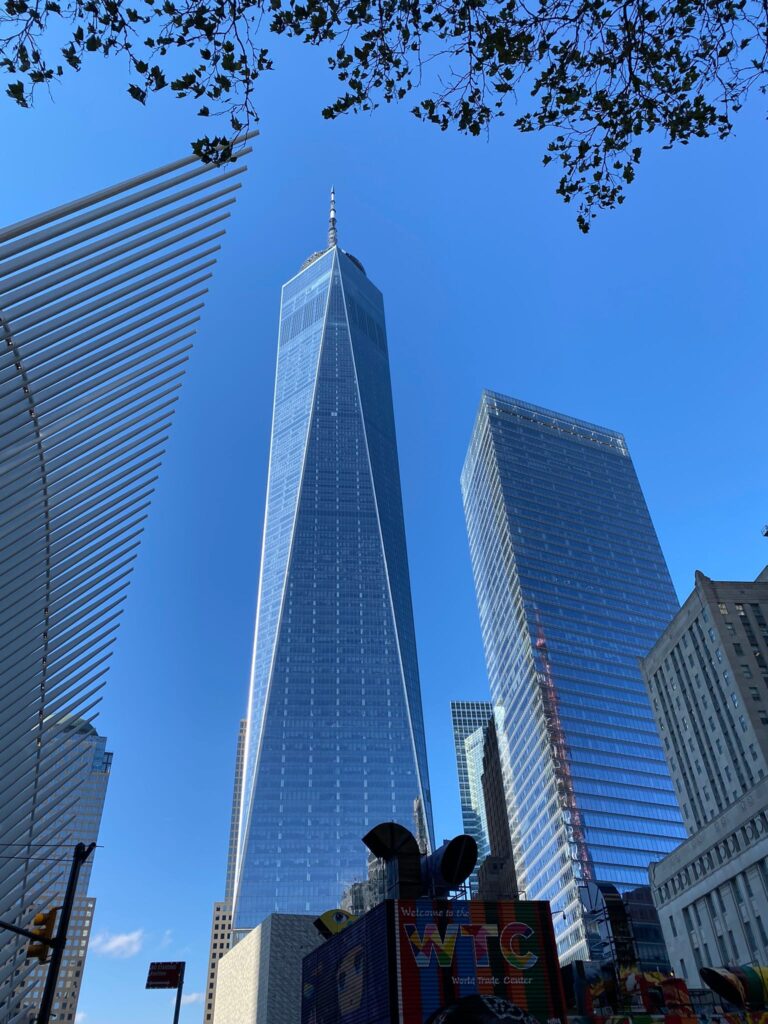
One day, feeling rather oppressed by the cold I must have caught on my first night in New York, I attended a 9/11 tour at Ground Zero. Now, I know this sounds rather incongruous. A 9/11 tour? What next, the Holocaust funfair? But it wasn’t cheap or gimmicky; it was an outdoor walking tour conducted by a New Yorker named Brian with a personal connection to that terrible day. From St Paul’s Chapel (The Little Chapel That Stood and the oldest church building in Manhattan, where George Washington prayed on his Inauguration Day in 1789) through the Oculus Transportation Hub at the World Trade Center to Freedom Tower and the 9/11 Memorial, this young man was both funny and profound as he told the story of that day and his various connections to it. If you ever have a chance to go on one of these tours, I recommend it, even if it is wretchedly chilly and you are suffering from a vile cold.
The 9/11 Memorial itself is quite something. You’ve seen the images: where the towers once stood there are now huge black square holes in the ground, water running down the inner walls into a smaller, deeper hole below, the names of all who died on September 11 and in the 1993 bombing of the World Trade Center incised on the upper edges of the pits (these names were very carefully arranged to place people who had some sort of connection, however distant, near to each other).
But, as with everything in New York, second-hand images are insufficient: you have to actually experience it. It’s peaceful and quiet at Ground Zero and very difficult to assimilate the fact that you are standing in the exact spot where the towers blazed and collapsed, where burning bodies came hurtling down from the sky, and where an evil, toxic smoke engulfed and choked the surrounding area.
But memories of death and terror are antithetical to the spirit of the Memorial, which is intended to be a place of life and energy and meeting, a peaceful spot in the city that never sleeps, where you can sit and read or reflect or just sit. Brian told us that his uncle, who died on September 11, would have wanted people to be smoking cigars and partying at Ground Zero. He also told us that he’d once witnessed a couple leaning against the edge of one of the pits, kissing, and also (I presume but cannot be certain that this was on another occasion) someone dressed as the Joker paying his respects to the deceased. Meanwhile, lines of trees are everywhere at Ground Zero, and there is one very special tree which was recovered from the carnage of September 11 and nursed until it stood tall and green and defiant once more.
Yes, that seems to be the spirit of New York: even among the wreckage and death and horror wrought by religious fascism, there is life and love and resilience and eccentricity. Life and love against death and terror—this is the fundamental thing.
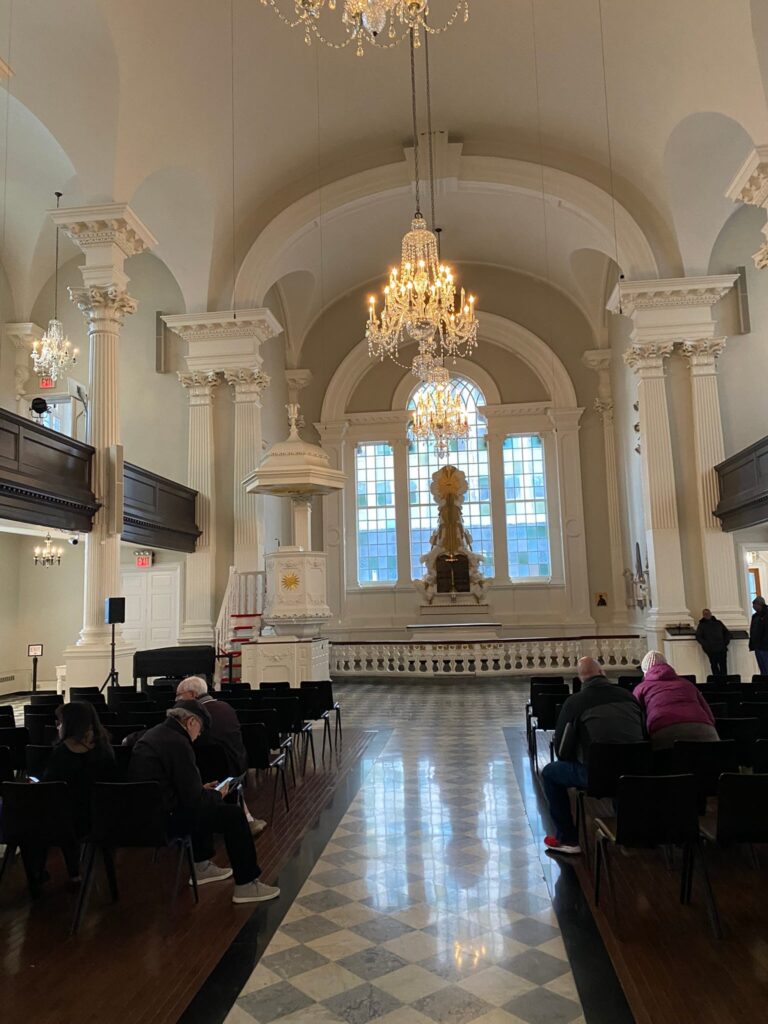
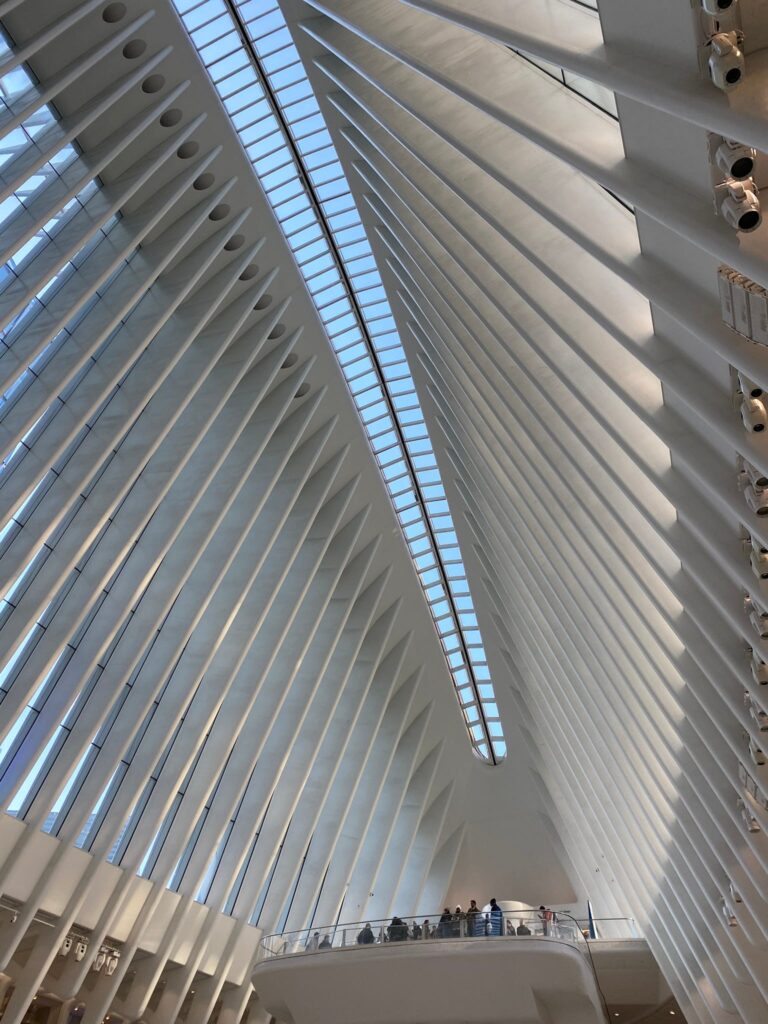
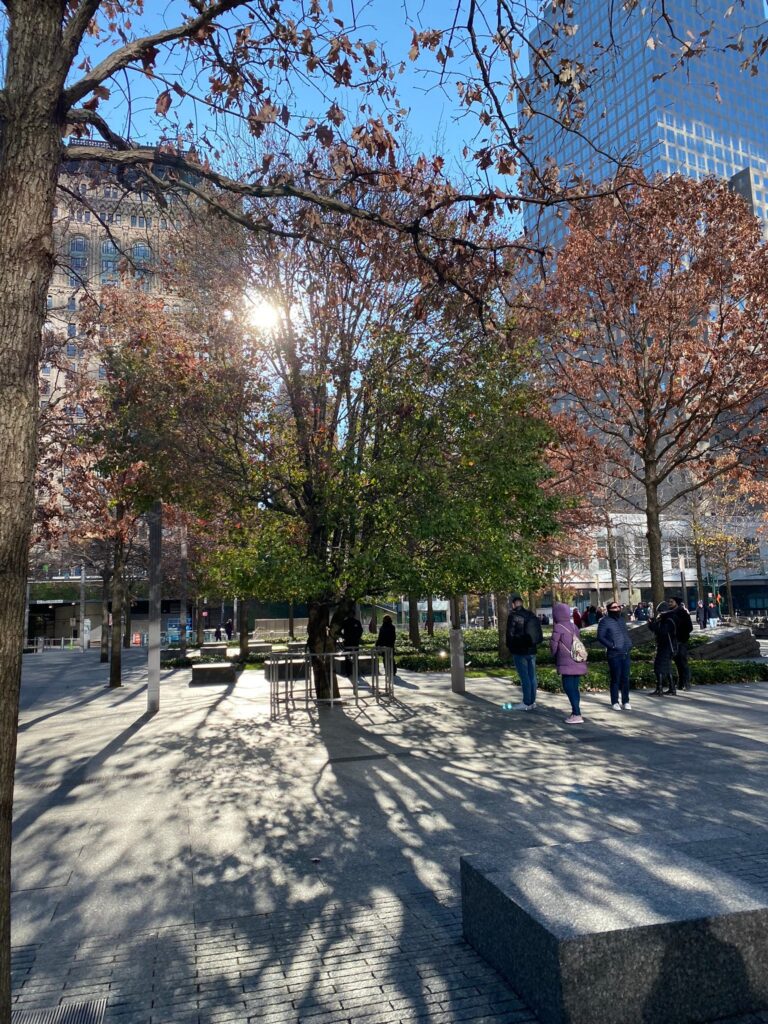
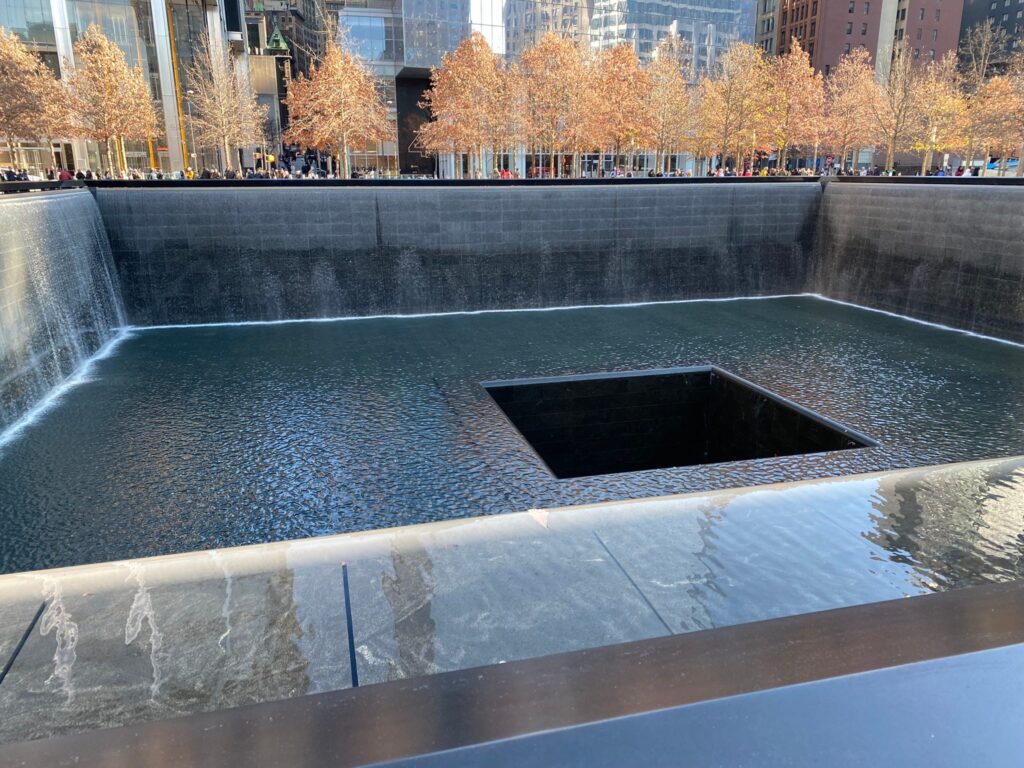
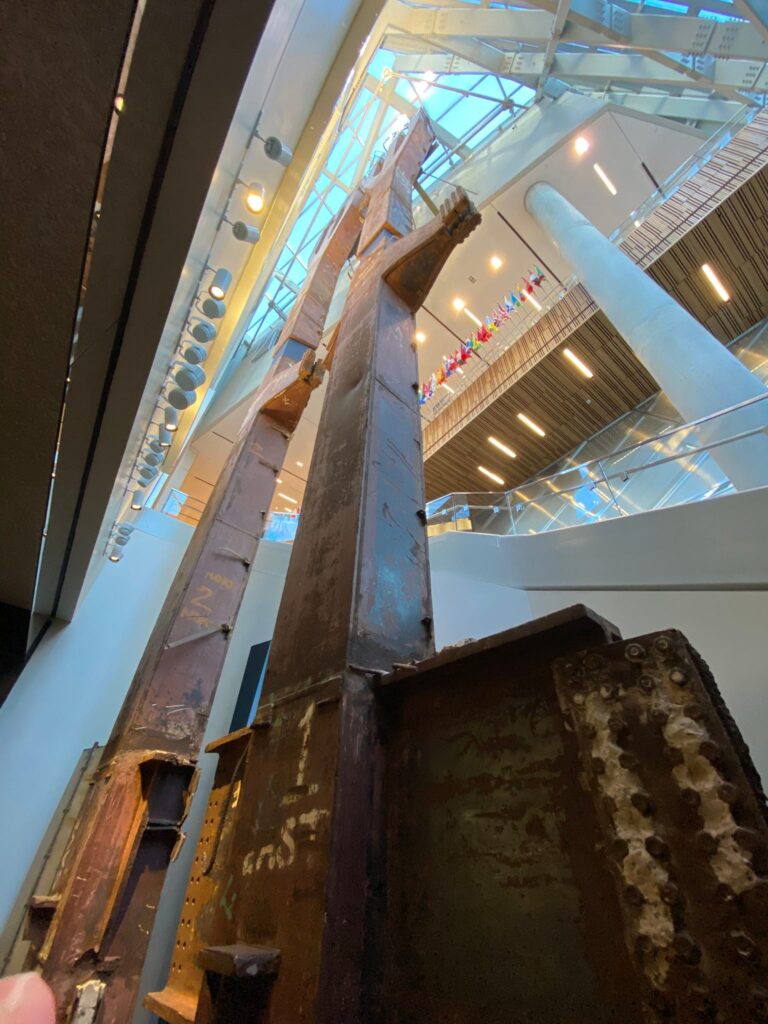
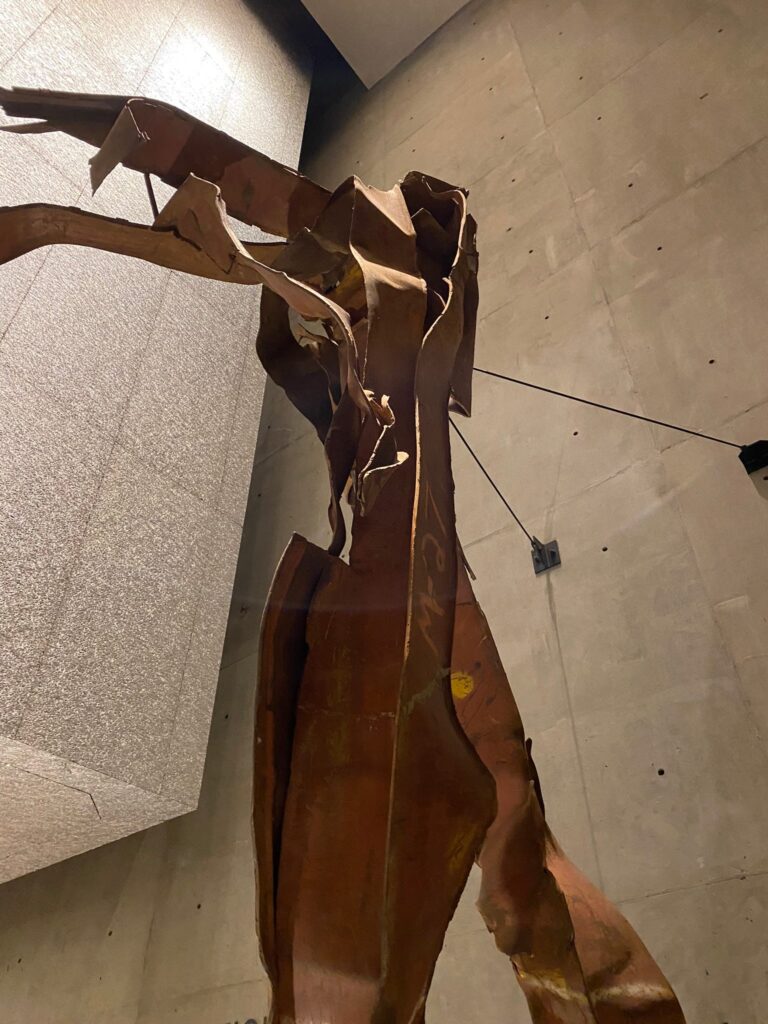
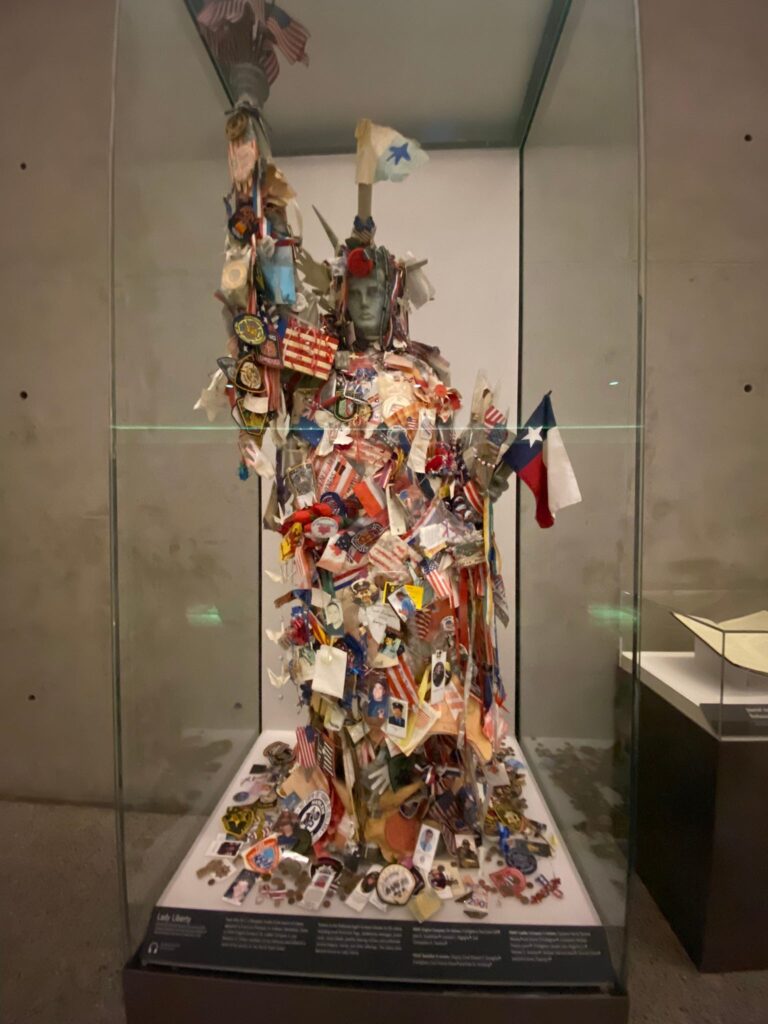
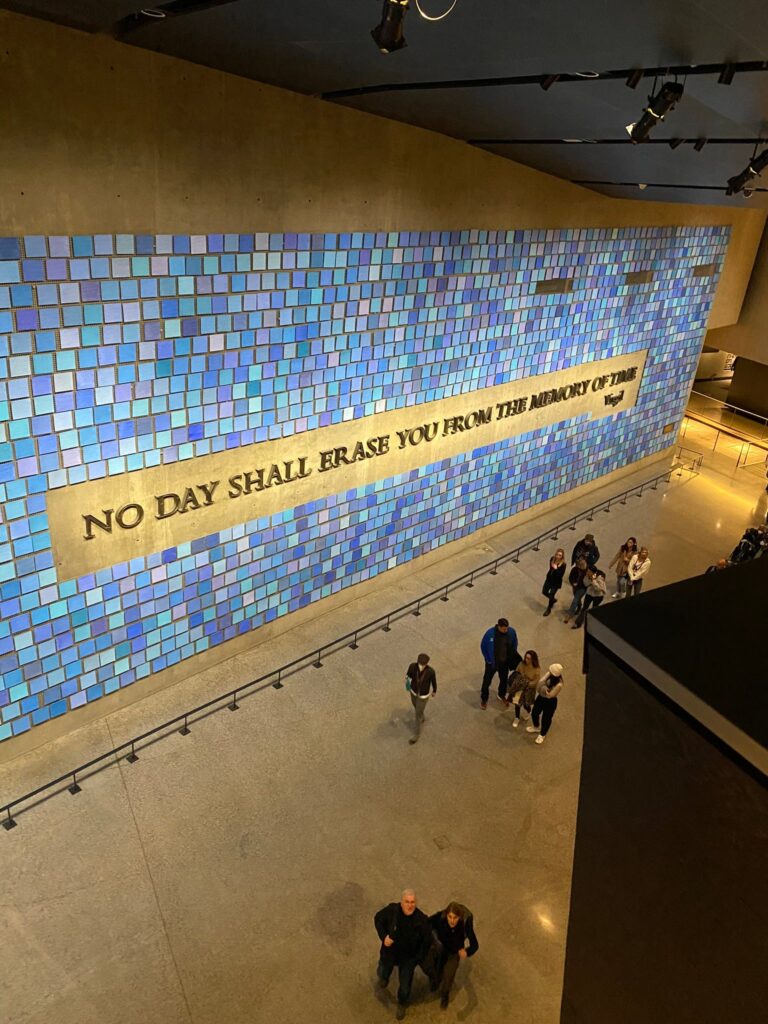
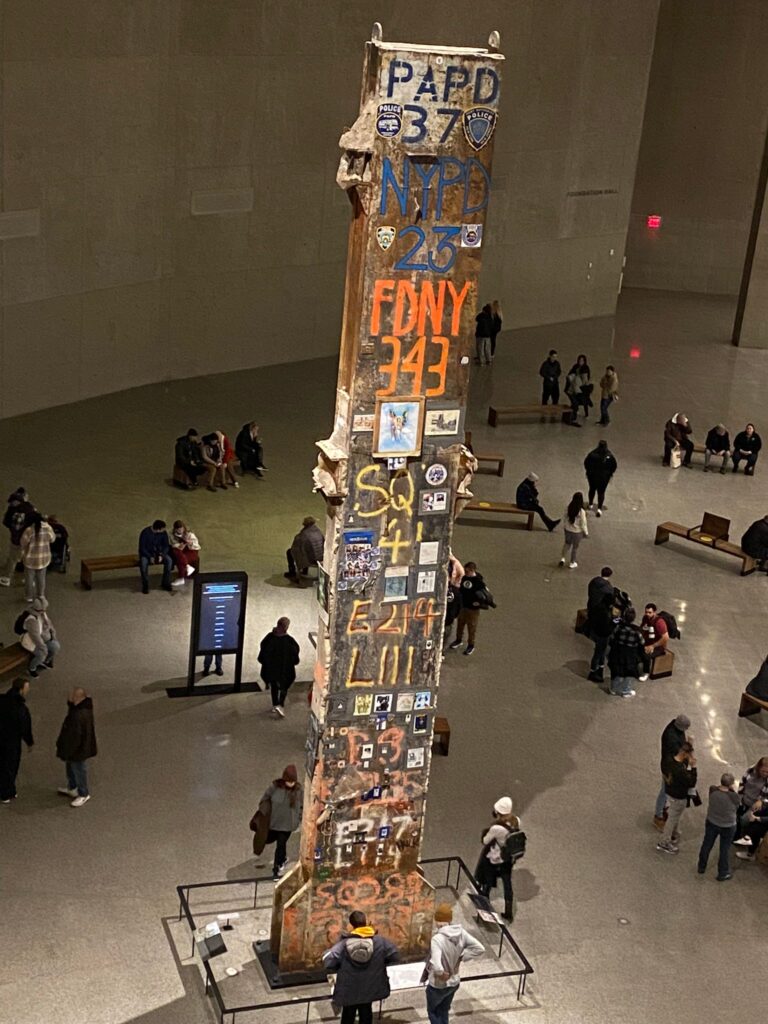
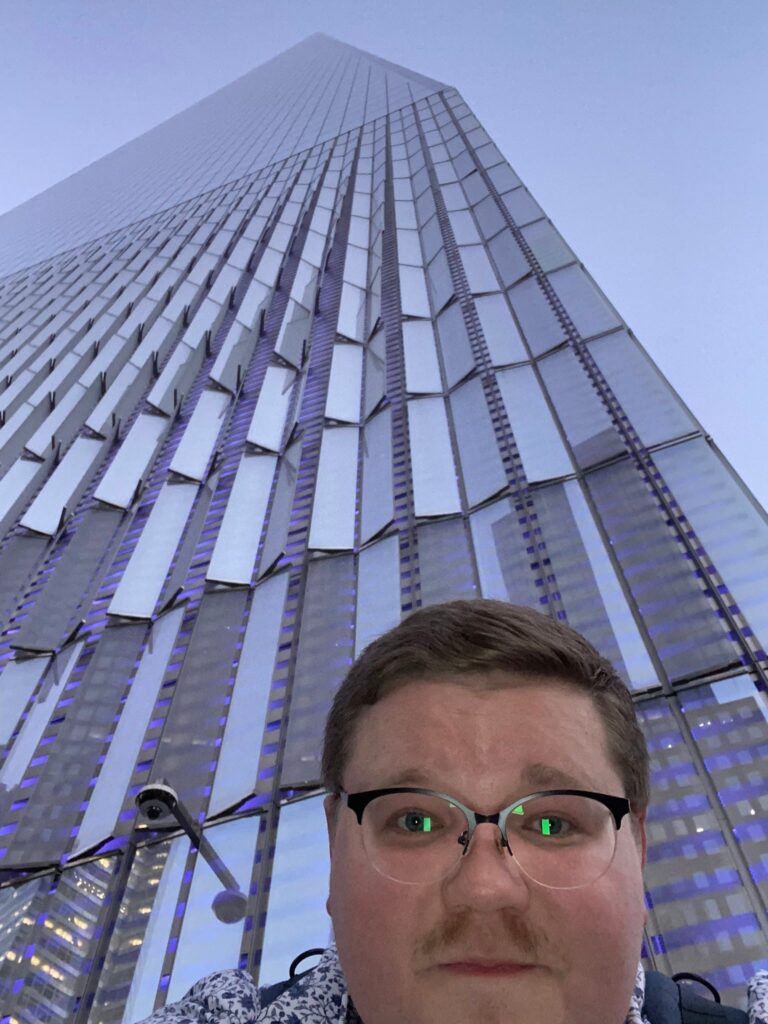
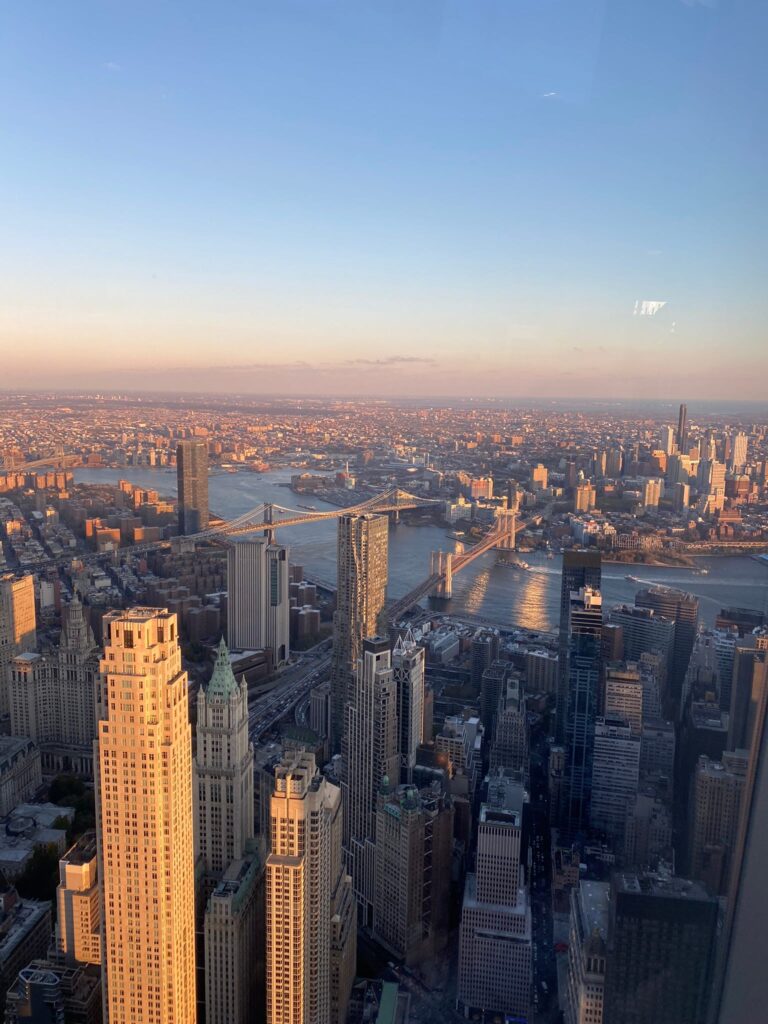
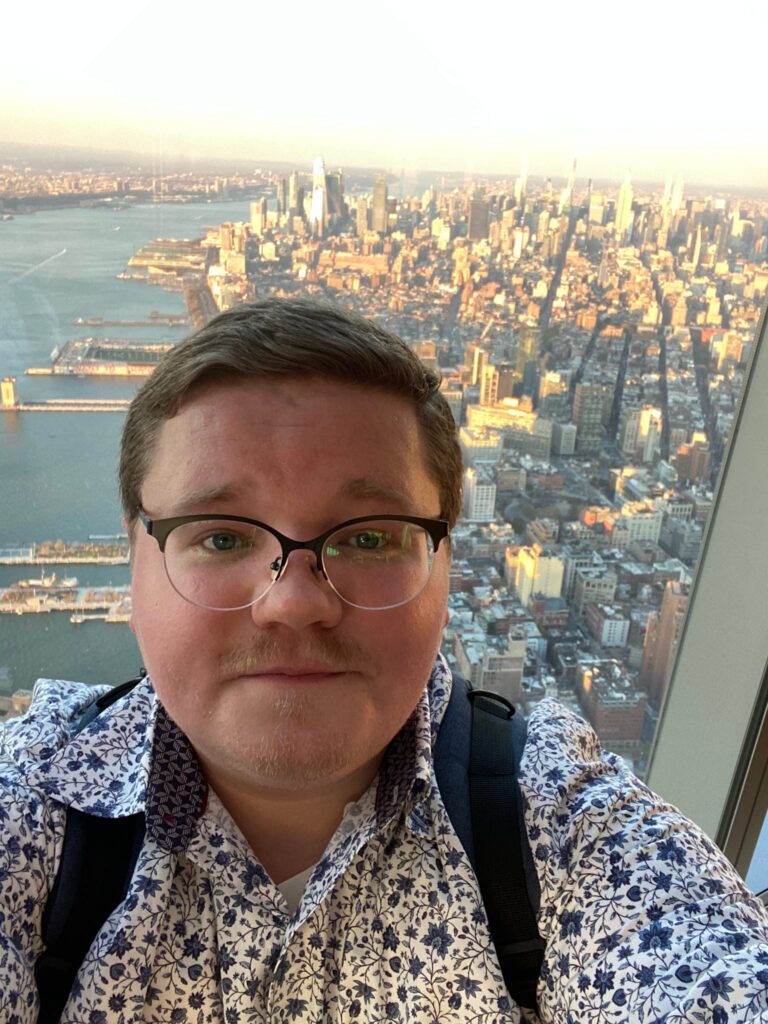
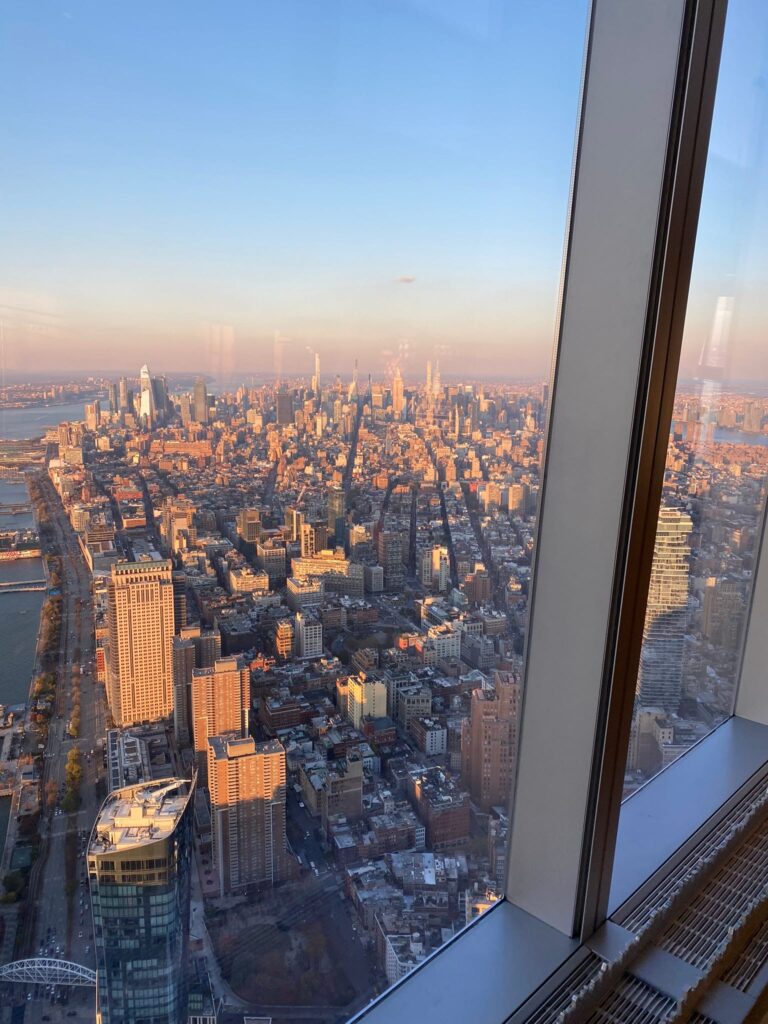
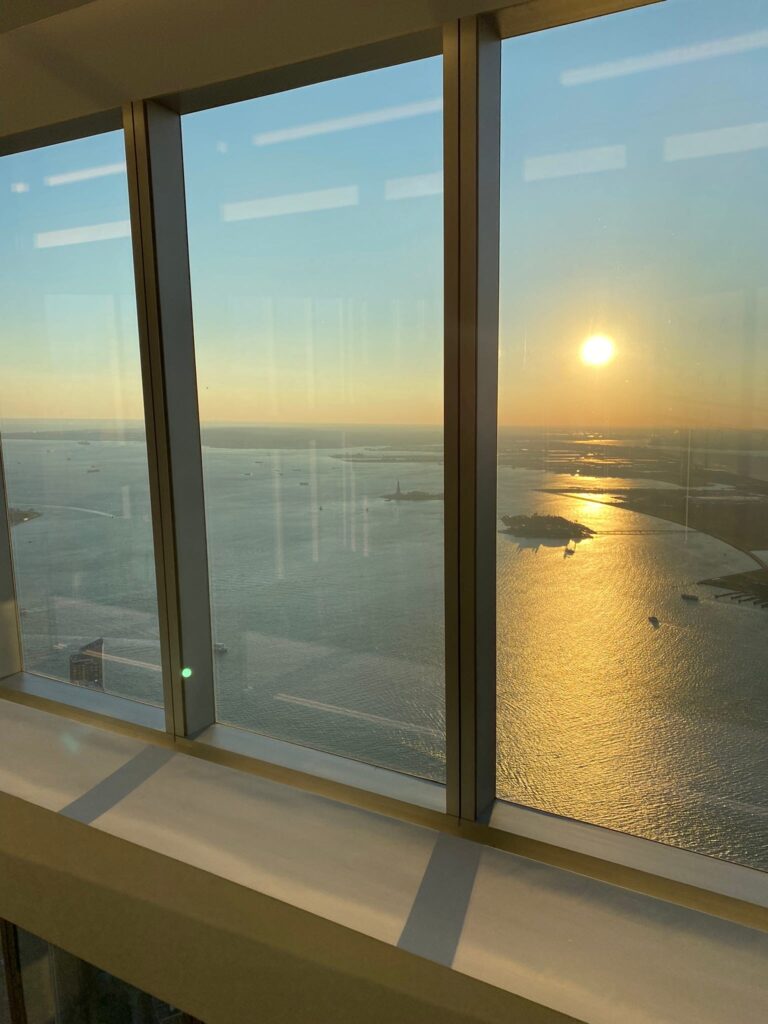
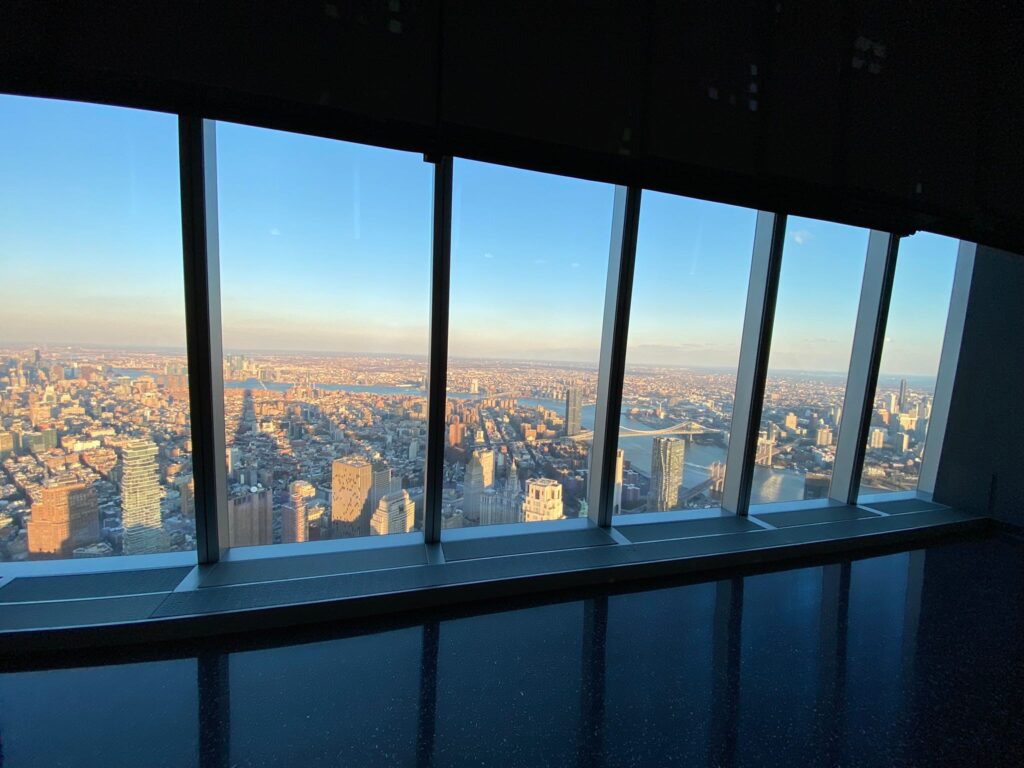
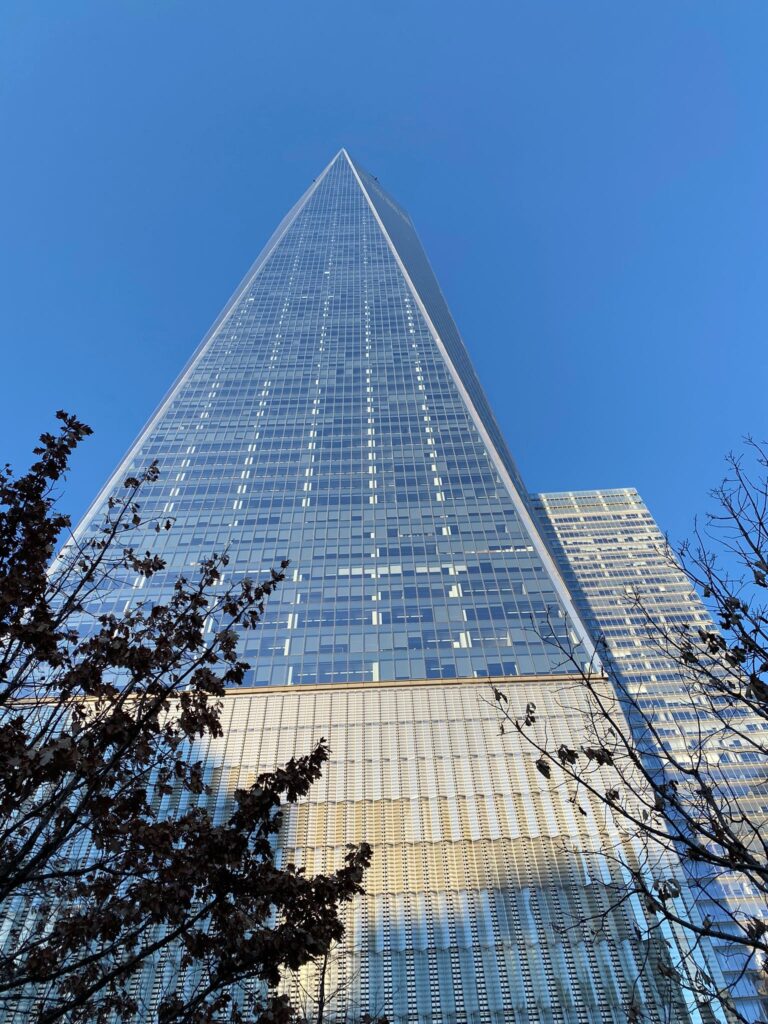
After the tour and the Memorial, I perused the 9/11 Museum, which contains, with its many exhibits, a tasteful account of New York’s darkest day and a moving memorial to the dead. Then, to One World Trade Center, or Freedom Tower, the 1,776 feet tall replacement for the twins. It’s another grand sight, an elegant feat of architecture and engineering. I went up to the One World Observatory, apparently the highest observation deck in New York, for yet another spectacular view of Manhattan from the azure.





.png)
Your email address will not be published. Comments are subject to our Community Guidelines. Required fields are marked *
Donate