

The British radical right consists of two main strands: the Reform and Restore parties, led by Nigel Farage and Rupert Lowe, respectively. Both emerged from the disillusionment with the Cameronite Conservative Party and long-growing resentment at the legacy Tony Blair had bestowed on British politics in the early 21st century.
Reform gained 1,453 councillors across England in the most recent local elections. This massive gain is to be tallied alongside their eight MPs and 270,000 members. Their MPs include two prominent defectors from the Tories, Suella Braverman and Robert Jenrick. Both had previously either fought to become the leader of the Tory party or positioned themselves against their Prime Minister in a bid for power. After these failures, they found themselves without a place in their own party and abandoned it for the insurgent right-wing party.
Reform’s primary appeal stems from its opposition to mass immigration. For context, net immigration by June 2023 reached 906,000, while for June 2024 it was 730,000. While these figures have significantly dropped since then, it remains in the hundreds of thousands. It is worth remembering that the Conservative government of David Cameron promised to drop these figures to the tens of thousands, as existed in the 1980s and 1990s, as per ONS figures.
Immigration, however, is a complicated question, often misunderstood. The people coming in are not, for the most part, masses of asylum seekers, refugees, or foreign criminals, as portrayed across much of the media. Most of those who have come to the UK are legal immigrants, consisting of asylum seekers and refugees (Ukrainian refugees since Russia’s invasion and Syrian refugees from the civil war, for instance), students, NHS workers, and other skilled and semi-skilled workers, plus other groups. The government permits this sort of immigration. (And, not incidentally, asylum seekers and refugees are a minority of this type of immigration.)
In this sense, the argument that immigration is ‘out of control’ or ‘unmanaged’ is a distortion. It is not particularly easy for masses of people to come here illegally without being stopped or monitored. The only exceptions are those coming on the so-called ‘small boats’, who form a minority of those coming to the UK. Therefore, the argument needs to rest on how much immigration we want, what its benefits and costs are, and what we think the appropriate scale and timeframe for immigration and assimilation are. None of this is seriously engaged with in our public discourse. The arguments are mostly truncated, emotionally charged, and misleading.
In this political environment, fostered over several decades, Reform emerged and presented a simple and emotive case: immigration is a net drain on resources, and it is tearing apart the fabric of society. Many people are unsettled by contemporary Britain, with high levels of immigration, petty crimes left unprosecuted, and the demographic make-up of the country changing. These are the people who declare, ‘I want my country back’. Such feelings are a response both to demographic insecurity in the literal sense of there being fewer white Britons as a percentage of the population, and to the feeling of generalised helplessness and loss of control. This is a crucial part of why the Brexit campaign’s ‘Take Back Control’ slogan resonated.
One of Reform’s policies to address this explosion of anxiety was announced in early May: the construction of detention centres for illegal immigrants, to be built in areas with Green-controlled councils and constituencies, while Reform-controlled councils and constituencies would be free of them. It is unlikely that this policy could be practically enforced, and it is unclear if it would even be legal. More importantly, however, it represents another fatal degradation of our politics: the public is invited to vote for a policy and, in doing so, can be exempted from having to accept the consequences of it.
If these detention centres are cruel in their treatment of people, badly run, or otherwise ineffective, no voter who had cast their support for them will know, as the centres will not be in their constituency. Moreover, how are we to know that Reform will not award contracts for the construction of these detention centres, which would likely be lucrative, to business partners, allies, and donors? The very policy invites corruption and cruelty (and Farage’s own allegedly dodgy dealings do not inspire confidence, not to mention the confirmed corruption of other Reform figures). If Reform is willing to cheapen the democratic process, there is no reason to think they won’t further degrade and corrupt other, less visible processes as well.
Currently, Reform represents the most popular version of the British radical right, emerging specifically as a result of the failures of the Conservative Party in its fourteen years in power, both in its inability to manage immigration and in its impoverishment of the country. However, as noted, another fracture has now formed. The Restore Party is seeking to outflank Reform from the right, presenting itself as the true, anti-establishment right-wing party, the one which will carry out the radical actions of which Reform is incapable.
Restore Britain was launched as a political party in February 2026, eight months after its founding as a movement and pressure group in the summer of 2025. The primary aim of the Restore party, as declared by party leader Rupert Lowe, is ‘Net negative immigration – vastly more people must leave than arrive, for many years.’ Responding sarcastically online to ‘blatant misinformation’ that Restore would deport a million people over five years, Lowe subsequently wrote: ‘We’ll deport far more than that’. This policy, also known as remigration by groups such as the Homeland Party (which emerged from the explicitly neo-Nazi Patriotic Alternative), or simply mass deportations, asserts that mass immigration has made the country poorer, weakened the social bonds between people, strained the country’s social services, and led to the mass rape and trafficking of English girls and women. Lowe is also one of the members of the committee which has launched an inquiry into the grooming gangs.
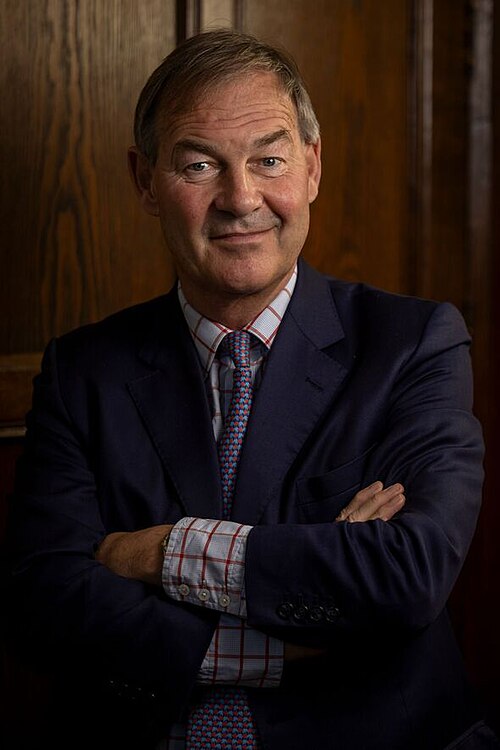
Restore, much like Reform, is not a conservative party, but a radical right-wing one. While it seeks to gain power by traditional democratic means, it does not speak in the conservative language of preservation or conservation. Lowe states on the Restore website: ‘I do not believe in conserving or reforming the status quo. I do not believe in the status quo at all, and nor do the majority of the British public. We do not need more of the same – we need a democratic revolution.’ At Restore’s launch event, the party’s communications director, Charlie Downes, said much the same: ‘I think that this system itself is illegitimate. Therefore, what I think we need is a revolution.’
Historically, this sort of language was only invoked by the right when there was a deep sense of crisis and existential struggle. It echoes fascist rhetoric from the time of Franco, who used such language when talking about the dangers posed by Spanish liberals, socialists, and communists to European and Christian civilisation. As Gustac Jönsson writes: ‘Franco’s inner circle believed they had to save Spain… Franco’s terror was also characterized by an especially vicious, paranoid style. Its victims were pathologized, as though they were cancerous cells on the body politic’. Restore has a similar pathological view of foreigners, who are variously characterised as ‘invaders’, ‘third worlders’, and ‘orcs’. Designating people as orcs and invaders necessarily defines them as harmful to British society and therefore justifies mass deportations of foreigners. A sampling of Lowe’s comments reveals this chauvinistic state of mind:
- ‘Restore Britain will, without apology or fear, deport the third world orcs who break into our country, rape young women and then expect the British to tolerate their presence. There is finally a political party that will defend our home, our people, our shires.’
- ‘The time for “the truth” mate was when you were importing third world savages by the thousands and thousands. How many migrant hotels opened on your watch?’ Lowe’s question to Robert Jenrick online.
- ‘Between 2010 and 2024, the Conservative Party failed our country in some of the most damaging ways imaginable. Britain doesn’t need to be conserved or reformed, it needs to be restored.’
- ‘I absolutely detest what mass immigration has done to our town centres.’
- ‘Ed Davey has just said that I am “aiding and abetting” the destruction of his country. He’s right. Restore Britain is going to destroy his version of our country. And we will replace it with one that works for British men and women, and them only. It will be glorious.’ (Emphasis added)
Describing the majority of the world’s population as ‘orcs’ signifying evil, while the English (or British—officially the ideology includes all Britons, but the language is usually Anglo-centric) are simple ‘hobbits’ living peaceful lives, is racist. There is no other term for it. Downes also believes that Britishness comes down to ‘ancestry and Christian faith’; in other words, he desires an ethnically and religiously homogenous society.
Lowe’s bigotry also shows in an interview with Carl Benjamin. After discussing his appeal to the US far-right agitator Tucker Carlson for Americans to help the British right, he says, ‘We need some proper logical thought from people who care about the Anglo-Saxon alliance and who want to see the libertarian fringe of the world unite and protect freedom and the way of life that [we all arguably] take for granted’. Both Britain and America are defined as Anglo-Saxon countries and are linked to freedom. The slip in language is telling; Lowe usually refrains from explicit appeals to Anglo-Saxondom—in public, anyway. Associating a particular ethnic heritage (one which does not in fact apply to the US anymore) with ‘freedom’ reveals a lot about the way Lowe thinks.
By emphasising ethnicity and religion in these ways, by calling for a defence of an essentialised British/Christian heritage against outsiders, Restore is playing a very dangerous game. This language is all too familiar and owes much to twentieth-century fascism, whether or not the people using it are aware of the ventriloquist.
Lowe has also spoken favourably of the US administration, stating that Donald Trump, J.D. Vance, and Marco Rubio are ‘great people’ who are moving things in the right direction, and that Britain could do with their help. Yet examining the record of Trump’s second term shows a trail of criminality and destruction: the bombing of ships in the Caribbean, the kidnapping of the Venezuelan president, and the war on Iran, which has left thousands of civilians dead.
Lowe’s praise of Trump matters for another reason. In 2023 Trump was found to be civilly liable for sexual assault and defamation. His vulgar, predatory language about women is likewise well known. Lowe’s support for and admiration of Trump despite these facts undermines his purported concern for victims of sexual assault and rape.
Furthermore, an independent investigation by Jacqueline Perry KC has found that there was ‘credible evidence’ that Lowe himself, alongside two of his staff, had harassed two women. (This was during his time with Reform and was one of the reasons for his ousting from the party; he rejects the report and claims that he was hounded out for criticising Farage. It was after his ousting that he formed Restore. More on this below.) Lowe’s rhetoric, behaviour, and the types of people he admires and makes excuses for reveal the type of politician and man he is.
Like Reform, Restore has also gained recently. It claims to have 100,000 members and gained councillors in the local elections, all within a few months of being founded as a political party. What differentiates Restore from Reform, though, is that the former believes the latter is too soft in matters of culture, race, nationality, and immigration. While Lowe is more than happy to describe foreigners as ‘orcs’ and Downes ties Englishness/Britishness strictly to ethnicity, Farage says, ‘I’m not going to start drawing ethnic lines on what being English is’. Not that Farage is absolved of racism, which is amply demonstrated by his racial abuse of his fellow students while at school and his infamous ‘Breaking Point’ billboard during the Brexit campaign. Lowe is only more brazen in his language.
There exists a coterie of online right-wing figures who support Lowe and urge their followers to move from Reform to Restore. Such figures, including one-time UKIP candidate Carl Benjamin, whom we have already encountered, and Connor Tomlinson, despise Farage and Reform, seeing them as traitors to the cause of reclaiming the country. This contempt has two main sources. The first is personal. Farage kicked Lowe out of Reform last summer amid accusations of harassment (see above) and accusations that Lowe had physically threatened Reform Chairman Zia Yusuf. Lowe and his supporters believe these accusations were concocted after Lowe had publicly criticised Farage and drawn the admiration of Elon Musk. In any case, Farage’s decision to expel Lowe led to this fracturing of the radical right and the founding of Restore.
The second source of contempt is political. Reform’s inclusion of non-English minorities upsets these figures, who think foreigners should not hold public office, are prone to crime and disorder, and are demographically replacing them. They form a key part of what is called the online right. A key cog in this media ecosystem is the platform launched by Benjamin in 2020, called the Lotus Eaters, which helps to churn out more right-wing media figures, including contributors like Dan Tubb. According to Benjamin, ‘There’s different levels of online right. We’re…a sort of…intellectual elite of the online right. We’re academic scholars, we read a lot of books’. These figures are now members of Restore; they have interviewed Restore figures, and they urge their followers to vote for the new party. A few other stray figures support Restore explicitly for its racism: individuals like Hugh Anthony, an online bigot known for his emulation of Oswald Mosley, and Steve Laws, a former member of the Homeland Party who is visceral in his hatred of anyone not English. It is worth remembering that the Homeland Party was one of the first parties to popularise the idea of ‘remigration’.
Much of the steam behind parties like Restore and the growth of the online right comes from the ‘grooming gang scandal’. While Lowe seeks to draw moral force from his inquiry, he is also prone to exaggerations and lies on the subject. In an interview with Jacob Rees-Mogg, Lowe claimed that the rape gangs were in ‘virtually every town and city in the UK’. This is simply not true, with most incidents occurring in the Midlands and parts of Northern England such as Oldham, Rochdale, and Rotherham. This is not to downplay the extent and depth of the depravity inflicted on the women and girls victimised by these gangs, but it is to say that Lowe’s purpose is clearly to institute a mass panic and give the impression that such crimes will recur if a Restore government is not elected. Lowe also claimed to Rees-Mogg that ‘the rape gang issue has been going on for probably 50 years’. This is once again not true; it is another claim pulled out of thin air.
Moreover, when pressed on Tommy Robinson, Lowe claimed not to understand ‘what he has and hasn’t done wrong’. This equivocation, despite the fact that Robinson’s record of physical assault, fraud, contempt of court, and anti-Muslim bigotry is well known. It is highly unlikely Lowe is unaware of all this. A simpler explanation suffices—Lowe does not care. Criminality by someone English who is a prospective ally does not trouble him. Criminality by individuals from other ethnic or religious groups, however, is ripe for political exploitation in the service of his agenda of mass deportations.
Reform and Restore both believe that policies of racist mass deportations will fix the country. The primary differences between them are the personal animosity between the two party leaders, Restore’s belief that Reform is not really up to the hard task of saving Britain, and Restore’s more explicit ethnic focus and outright, undisguised racism. Current projections have Reform winning a parliamentary majority in 2029. If this occurs and Britain is not still ‘fixed’, what fatal moment awaits us as Restore prepares to take over and presents itself as the true right-wing party willing to overturn the status quo and do what is necessary?





Your email address will not be published. Comments are subject to our Community Guidelines. Required fields are marked *
Donate