

Introduction
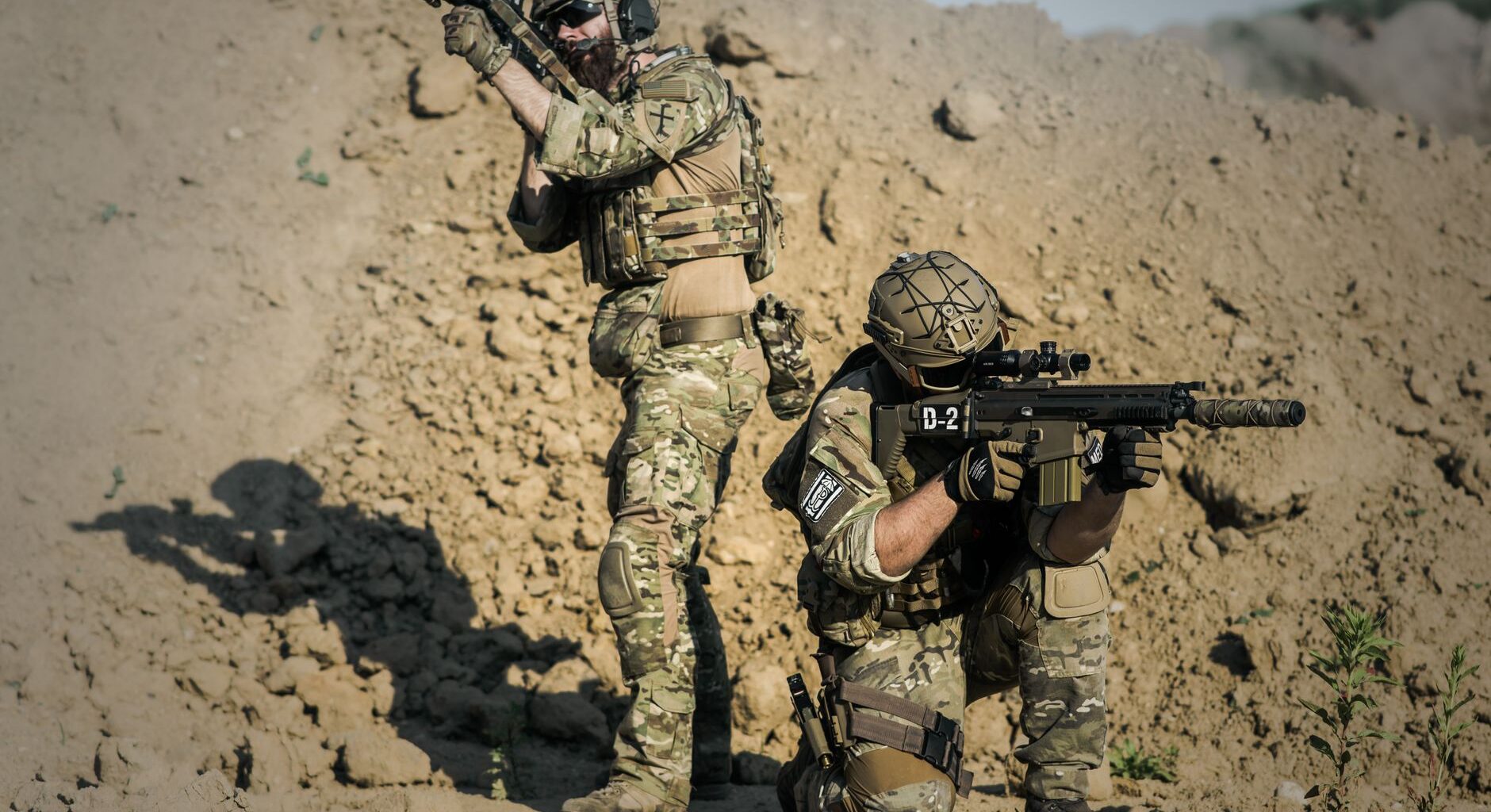
In concert with the military conflicts in both Ukraine and Iran, the calls for reinstatement of a military draft are gradually growing stronger on both sides of the Atlantic. In the UK, former military leaders like Colonel Hamish De Bretton Gordon and Sir Richard Shirreff recently argued that the UK’s current military strength is insufficient to deter Russia in the long term. De Bretton Gordon bluntly stated, ‘I can’t see how an army of just 70,000 is going to be able to deter Russia’. Shirreff went further, suggesting the government should consider a ‘selective’ form of conscription.
More recently, on 16 October, Gen Sir Roly Walker, head of the British Army, warned that Britain must be prepared to make sacrifices for an impending war. Addressing troops at the Catterick Garrison, Walker said that politicians would soon need to have ‘a frank conversation’ with the public:‘[T]hey are going to ask those citizens, for whom we are not necessarily at the front of their mind, that they too need to play a part in the defence and security of this country.’ The clear implication is that Britain’s young men, and possibly young women, must once again be prepared to become soldiers, either voluntarily or by conscription. The remainder of the British people will be expected to pay for it.
In Germany, tens of thousands of youth are active in the ‘School Strike against Conscription’ movement in over 130 cities, with slogans like ‘No to conscription, civil service and war’ and ‘The rich want war, the youth want a future’. After a school strike in Munich on 20 October, further protests against conscription have been called in multiple German cities for late October.
Meanwhile, in the US, young American men will be automatically registered for eligibility for the military draft as soon as December of this year, ending decades of self-registration. The new rule will see men registered automatically rather than being asked to do so themselves within 30 days of their 18th birthday.
When asked about the possibility of a military draft during an interview with Fox News in early March, now former White House Press Secretary Karoline Leavitt replied, ‘It’s not part of the current plan right now, but the president, again, wisely keeps his options on the table.’ Leavitt then added, ‘There’s no greater priority or responsibility to this president than, of course, protecting the American people and protecting our troops.’
While Leavitt’s comments may seem innocuous, it should be remembered that the US government has implemented a wartime draft six times in the country’s history, most recently during the Vietnam War.
In short, whether in the UK or the US, or other European countries, it is clearly not too early to initiate a serious debate about this question, not least of all by, and for, those young people who may be forced to make a life-or-death decision in the event of a military draft.
My Experience
An objective description of the history and development of the draft is certainly one way of addressing this topic. In this article, however, I would like to address those young people who, like myself many years ago, may soon be confronted with the existential question: Am I willing, if conscripted, to serve in the military or not? Am I willing to kill my fellows because political leaders decide this or that group of human beings is the ‘enemy’ of my country?
Let me make it clear that I do not claim, even now, years later, to have the ‘right answer’ to this question. It is, and will remain, an individual choice, though a choice that could mean the difference between life and death, both for oneself and the putative enemy. Thus, it is a very serious question indeed. Perhaps the most serious question any of us will ever be called upon to make.
What I can do, however, is share my own experience and thinking regarding this question in hopes that it may help others to reach a more thoughtful decision regarding the choice they, too, may be forced to make.
In my case, my initial thinking concerning this question occurred while seated around a campfire at a summer camp for Christian youth in the sandhills of Nebraska in 1957, at the age of seventeen. I was all too well aware that when I turned eighteen, I would be legally required to register for the draft. In so doing, I would be required to indicate my willingness to serve in the military if called upon to do so. Fortunately, I was also aware that I had a choice; I had the option to register as a Conscientious Objector (CO).
As I looked at the dying embers of the campfire, I recalled the words attributed to Jesus in Matthew 5:38-44:
You have heard that it was said, ‘Eye for eye, and tooth for tooth.’ But I tell you, do not resist an evil person. If anyone slaps you on the right cheek, turn to them the other cheek also. And if anyone wants to sue you and take your shirt, hand over your coat as well. If anyone forces you to go one mile, go with them two miles. Give to the one who asks you, and do not turn away from the one who wants to borrow from you. You have heard that it was said, ‘Love your neighbour and hate your enemy.’ But I tell you, love your enemies and pray for those who persecute you.
In recalling these words, I couldn’t help asking myself how it was possible to ‘love your enemies’ if you had been ordered to kill them. Inasmuch as I regarded myself as a dedicated follower of Jesus Christ at the time, the answer seemed all too apparent—I would register as a CO when I turned eighteen. However, at the time I was not yet aware of the formal teachings of my church, the United Methodist Church, regarding conscientious objection.
According to the draft law at the time, I first had to indicate whether, if granted CO status, I would serve in the military as a non-combatant, e.g. as a medic, or, if not, I would perform some kind of civilian public service. I chose the latter inasmuch as I regarded the goal of a medic to treat wounded soldiers as quickly as possible in order that they could return to their duty of killing the enemy. At the same time, I was required to personally appear before members of my local ‘draft board’ to explain the reasons for my conscientious objection, including the position of my church in this regard.
I was happy to discover that the United Methodist Church clearly affirmed ‘the right of individuals to conscientious objection and calls for the church to support those who choose this path. It encourages local congregations to provide pastoral care and assistance to conscientious objectors’. Yet, at the same time, I learned that ‘We recognize and respect the decision of those who choose to serve in the armed forces. We offer our prayerful support and pastoral care for them and their families, acknowledging their dedicated service and the sacrifices made by military personnel and veterans.’
At first glance, this seemed to be a rather ‘broad-minded’ or even tolerant stance, but I couldn’t help thinking: The Methodist Church is strongly opposed to both drinking alcohol as well as smoking, not to mention premarital sex. Yet, when it comes to the question of whether a Christian should engage in warfare that inevitably involves killing large numbers of one’s fellow humans, all made in ‘the image of God’, the Church essentially teaches, ‘We support you no matter what choice you make.’ In truth, this contradiction marked the beginning of a major turning point in my spiritual life. I wondered whether there was any religion unequivocally opposed to killing.
Not yet ready to make a clean break with Christianity, I arrived, as a short-term missionary, in Japan in 1961 to teach English at Methodist-founded Aoyama Gakuin University in Tokyo. The US government regarded teaching English as ‘promoting international friendship and understanding’, thus fulfilling my ‘alternate service duty’ as a CO. In preparation for coming to Japan I had, for the first time, read a book on Zen Buddhism written by the famous D.T. Suzuki. I was deeply moved when I read in his Zen and Japanese Culture: ‘Whatever form Buddhism takes in different countries where it flourishes, it is a religion of compassion, and in its varied history it has never been found engaged in warlike activities.’
‘Wow!’ I thought. This was the religion I’d been searching for. A religion without ‘holy wars’, a religion unequivocally dedicated to peace. It would only be many years later, after having become a fully ordained Buddhist priest in the Sōtō Zen sect, that I learned that Buddhism, not only in Japan but throughout Asia, also had a blood-soaked past, albeit one largely unknown in the West.
For example, only five months before Imperial Japan’s attack on Pearl Harbour, in June 1941, Suzuki himself had written an article in the Imperial Army officers’ journal, the Kaikō Association Report (J. Kaikō-sha kiji). By this time Japan had been engaged in war with China for four long years. While Japanese forces held most major Chinese cities, they were unable, to their great frustration, to either pacify the countryside or defeat the Nationalist and Communist forces deployed against them. The war was effectively at a stalemate, though the death toll, on both sides, continued to rise relentlessly due to ongoing Japanese attacks.
Suzuki’s contribution to the journal took its title from the well-known Zen phrase, Makujiki Kōzen (Rush Forward Without Hesitation). He wrote:
There are things about the Japanese character that are amazingly consistent with Zen. I think the most visible of these is rushing forward to the heart of things without meandering about. Once the goal has been determined, one goes directly forward to that goal without looking either to the right or to the left. One goes forward, forgetting where one is. I think this is the most essential element of the Japanese character. In this, I think, Zen is one of the strongest factors allowing the Japanese people to rush forward. . . The character of the Japanese people is to come straight to the point and pour their entire body and mind into the attack. This is the character of the Japanese people and, at the same time, the essence of Zen.
After reading this, I couldn’t help recalling the more than two million Japanese soldiers, let alone the many more millions of their victims, who died as the former endeavoured to ‘pour their entire body and mind into the attack’. Suzuki further claimed this was not only the character of the Japanese people but the very ‘essence of Zen’.
It was in the midst of the inner spiritual turmoil resulting from my discovery of Buddhist writings like these that I made a second, and even more disturbing discovery, this time about myself. That is to say, I discovered that I was not opposed to all killing of my fellow humans as I had long believed I was. This came about as a result of viewing a nine-hour-long Japanese dramatic film depicting life (and death) in wartime Manchuria, a Japanese puppet state from 1931-45.
The scene in the film that had such a major impact on me concerned Chinese prisoners of war who initially successfully escaped from an iron ore mine where they were literally being worked to death. The Japanese military police, the Japanese version of the Nazi Gestapo, eventually apprehended the runaways and brought them back to the mine. As an object lesson to other prisoner miners, they lined up ten of the escapees and began to cut off their heads one after the other with their samurai swords. As fountains of blood gushed from their carotid arteries and jugular veins, I sprang to my feet and lunged toward the screen, somehow hoping to stop the slaughter.
This was the first time I had ever acted like this in a movie theatre, and it was only then that I came to my senses. I realised that had I actually been there, armed with as little as a stone, I would have done everything I could to kill the military police as they decapitated the prisoners. I would not have hesitated for a moment even if it meant that I, too, would have been killed.
When I later reflected on this incident, I was forced to face what for me was a bitter truth. I wasn’t the pacifist I had long believed I was. This realisation was reinforced, although not as dramatically as in the movie theatre, when I subsequently visited the Nazi-run crematoria at Auschwitz in Poland. I was only slightly relieved to learn that the SS troops running this and similar camps had gone to great lengths to keep their genocidal actions secret from ordinary Germans. I was left to ponder what ordinary Germans would have done had they known what was happening at Auschwitz and similar camps. In any event, and to my deep regret, I was once again forced to recognise that I would not have hesitated to try to kill the SS guards.
Did this willingness to kill on my part break the vows to abstain from killing that I had undertaken when I first became a Buddhist priest in 1965? Yes, it unquestionably did. Had many other Buddhist priests in the past broken similar vows? Yes, I knew they had. But I thought I was different. I thought I was the ‘real deal’, but I had to admit I wasn’t.
So where did this leave me? And where does it leave young readers contemplating their own decision in this regard?
As for me personally, I can only say I still consider myself strongly opposed to war and killing, but not all war and killing. This leads to the great and as yet unresolved question when it comes to the rules and regulations concerning CO status. That is to say, at present the acquisition of CO status is dependent on opposing all wars, all killing, no matter what the reason. In other words, the applicant for CO status is not allowed to ‘pick and choose’ which war s/he will fight in and which s/he will not. It is for this reason that one of the typical questions asked by members of US draft boards to applicants for CO status was this: ‘Would you use force to defend your mother from attack?’ If you answered yes to this question, the draft board would employ this admission as grounds to deny your application since you’d indicated you weren’t opposed to all instances of the use of force.
One need only look at the US invasion of Iraq in March 2003, let alone America’s current attack on Iran, to know why it is crucial to be able to reject participation in a particular war. As was evident then, the invasion of Iraq was carried out under a set of false pretenses, i.e. that Saddam Hussein had weapons of mass destruction. Or that Saddam was connected to the September 11, 2001 terrorist attack on the US even though he wasn’t, etc. Neither the more than 100,000 Iraqis nor the 4,492 US troops killed in that invasion should have had their lives stolen from them. Had I been conscripted to fight that war, I would never have participated, no matter what the consequences.
In this connection I recall a statement made in 1935 by Marine Major General and two-time Medal of Honor recipient, Smedley Butler. Butler reflected on his military service as follows:
War is just a racket. A racket is best described, I believe, as something that is not what it seems to the majority of people. Only a small inside group knows what it is about. It is conducted for the benefit of the very few at the expense of the masses. . . I helped make Mexico, especially Tampico, safe for American oil interests in 1914. I helped make Haiti and Cuba a decent place for the National City Bank boys to collect revenues in. I helped in the raping of half a dozen Central American republics for the benefits of Wall Street. The record of racketeering is long. I helped purify Nicaragua for the international banking house of Brown Brothers in 1909-1912. I brought light to the Dominican Republic for American sugar interests in 1916. In China I helped to see to it that Standard Oil went its way unmolested. During those years, I had, as the boys in the back room would say, a swell racket. Looking back on it, I feel that I could have given Al Capone a few hints. The best he could do was to operate his racket in three districts. I operated on three continents.
Conclusion
One would like to believe that things have changed for the better since the years of Butler’s military service. Unfortunately, one only needs to recall the famous question posed about the invasion of Iraq to know that they have not: ‘How did all of that American oil get underneath Iraqi sand?’
Given this, it is more important than ever that young men (and increasingly young women) not be forced to kill and be killed in wars fought over natural resources, national power and, now, the results of global warming. This leads to the meaning of the ‘last battle’ described in the title of this article, a battle that must be fought and won if and when military conscription is reinstated in countries like the UK and US. That is to say, those drafted to serve in the military must be given the chance to agree, or disagree, to kill or be killed in the particular war their nation’s political leaders have chosen to initiate.
Will this battle be easily won? Of course, it won’t! We can expect the governments in question to oppose it tooth and nail, beginning with imprisonment and extending even to the death penalty. But consider the immense death and destruction to both self and others that will result if this battle is lost, or, worse yet, not fought.
From now on, I propose the rallying cry for all those subject to the draft should be, ‘My life, my choice!’ Nothing less will suffice to change the denial of individual moral conscience that has so long characterised the conduct of all nations. Naively, perhaps, I would like to think this would be a major step on the path to true world peace. At the same time, it would, in effect, lead to the fulfilment of Jesus’ admonition to ‘love your enemies’ and the Buddhist pledge to abstain from killing.
As Benjamin Franklin so wisely said, ‘There was never a good war, or a bad peace.’



Your email address will not be published. Comments are subject to our Community Guidelines. Required fields are marked *
Donate