

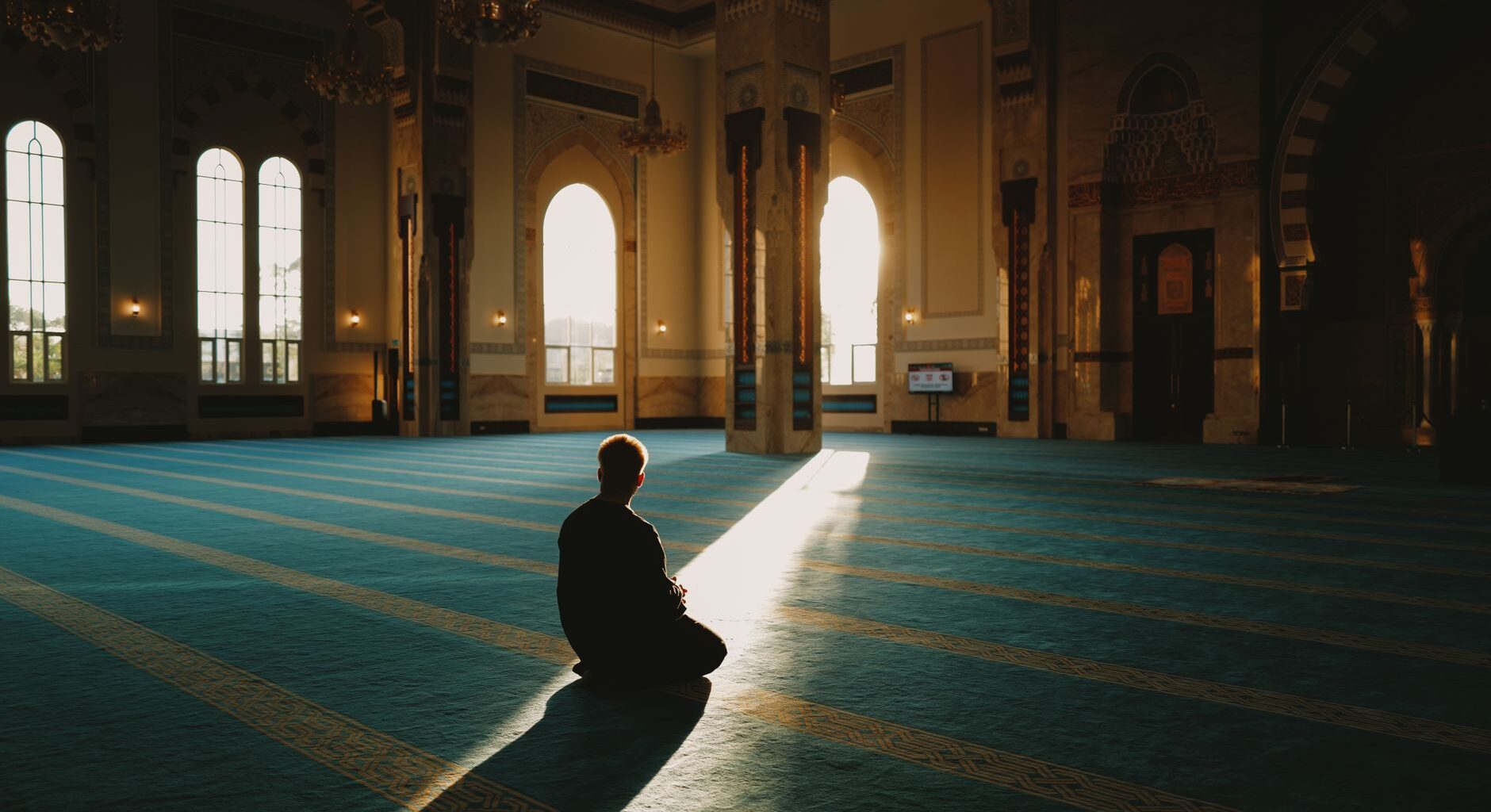
November is, apparently, ‘Islamophobia Awareness Month’—a campaign aimed at highlighting anti-Muslim hatred, discrimination, and prejudice. Launched in 2012, the campaign seeks to collaborate with Police and Crime Commissioners (PCCs), local councils, Parliament, and educational institutions to raise awareness of ‘Islamophobia’ and address it.
This might sound innocent, laudable even. Freedom of religion and belief is a fundamental human right, a cornerstone of any secular and democratic society like Britain’s. But there are good reasons to be sceptical. One of the co-founding organisations of ‘Islamophobia Awareness Month’ is the controversial group Muslim Engagement and Development (MEND), which has faced accusations of extremist associations. Pertinently, in March 2024, then-Communities Secretary Michael Gove named MEND in Parliament as an organisation that ‘[gives] rise to concern for their Islamist orientation and views’.
Then there is the term ‘Islamophobia’ itself. As should be clear by now, ‘Islamophobia’ is a term used to reclassify legitimate discussions and critiques of Islam as racism or ‘hate speech’; it has little to do with protecting Muslims from discrimination and more to do with safeguarding the sensitive feelings of extremist individuals within the Muslim community. Accusations of ‘Islamophobia’ are more often accusations of blasphemy than of bigotry. It seems, then, that advocates for ‘Islamophobia Awareness Month’ are more concerned with protecting orthodox Islamic beliefs from scrutiny than with fighting anti-Muslim hatred.
The publicity afforded to campaigns against ‘Islamophobia’ is all the more worrying considering that Britain is very close to having a backdoor Islamic blasphemy law, thanks to the government’s recent adoption of a non-statutory definition of ‘anti-Muslim hostility’.
Although it is good that the definition has dropped the dubious term ‘Islamophobia’, and that it is narrower than the previously proposed definition, its elasticity will still have a chilling effect on free speech around Islam: namely, the right to criticise, debate, and mock Islam as a set of dogmatic beliefs. The definition has already been taken up by various public sector bodies, while others continue to rely on the even more problematic previously proposed definition of ‘Islamophobia’. Thus, the Labour government is perilously close to reinstating the blasphemy laws which an earlier Labour government abolished just 18 years ago.
In an alarming instance, just days after the definition was adopted, a sitting MP, Shadow Justice Secretary Nick Timothy, publicly criticised a mass Muslim public prayer event held in Trafalgar Square. In response to his comments, he was branded an ‘Islamophobe’, reported to the Parliamentary Commissioner for Standards, and then-Prime Minister Sir Keir Starmer even called for him to be sacked. This reaction underlines the potential repercussions individuals face for expressing dissenting views on matters related to Islam, whether or not one agrees with Timothy in this specific instance.
This Islamophobia Awareness Month, let us be aware, and in no doubt, that the government’s endorsement of this definition is a direct threat to the secular and democratic values that this country claims to stand for. Bypassing Parliament and the crucial democratic process to establish Islam as a privileged religion in Britain is incompatible with those values.
Many Islamic beliefs that are discriminatory, misogynistic, and violent are taught in mosques and by preachers every day—not just by ‘extremists’. It is a simple fact that Islamic texts and many imams often express hateful views of Jews, gay people, and women. It is also a fact that many preachers openly express hostility towards non-Muslims and the Western world, calling it ‘Dar al-Harb’, which means ‘Abode of War ’, and advocating for Jihad Fi Sabilillah (Jihad for the sake of Allah). Such beliefs are not radical interpretations of Islam; they are taught as standard religious teachings to ordinary Muslims across the world.
In Britain, some mosques have been exposed for promoting violence against women and girls. Such mosques are often registered charities, granted this privileged status because they fulfil the ‘advancement of religion’ clause in charity law. As Megan Manson wrote last year in the Freethinker, ‘misogyny is undeniably present in too many religious charities—and is, in effect, being subsidised by public funds via tax breaks and sometimes Gift Aid.’
Criticising such ‘advice’ is surely ‘Islamophobic’. It is, after all, rooted in Islamic theology. So how can such toxic beliefs be confronted head-on, as they must be? Talk of combating ‘Islamophobia’ and vague definitions of ‘anti-Muslim hostility’ too often come at the expense of vulnerable people on the receiving end of such misogynistic rhetoric. And yet we are asked to dedicate a whole month to affirming the term ‘Islamophobia’, which turns any criticism of Islam into blasphemy and jeopardises the safety of those who dare to speak out against it. And this is just one particularly glaring example of where ‘Islamophobia’ leads.
I believe it is time to admit that we, as a society, have become complacent. Engaging in serious discussion about Islam merely requires recognising a simple fact: that, like any major faith, it encompasses both inspiring and troubling dimensions.
All we need to do is treat Islam like any other ideology or set of religious beliefs that are not compatible with our secular democratic values. We must distinguish between Islam and Muslims. We must not indulge religious zealots who believe that Islam should hold a privileged status in our society and should never be subject to scrutiny. We should not infantilise Muslims with ‘awareness months’ which suggest they cannot handle criticism of their beliefs and must be shielded from disagreement or even mockery.
Anti-Muslim bigotry is real. However, the important distinction in discussions about ‘Islamophobia’ and ‘anti-Muslim hostility’ lies in distinguishing between hatred targeted against Muslims as people and legitimate criticism of Islam as doctrine and practice. We should be dedicating every hour of the day, every month, to challenging hatred and bigotry against people, including the vileness of anti-Muslim bigotry.
But that is entirely different to accepting ambiguous terms and definitions pushed by nefarious elements seeking to impose de facto Islamic blasphemy laws. Britain abolished official blasphemy laws back in 2008. Those who cannot accept this reality need to get over it. The rest of us must fight to stop them from re-establishing them under a new guise. That is what Islamophobia Awareness Month means to me.




Your email address will not be published. Comments are subject to our Community Guidelines. Required fields are marked *
Donate