

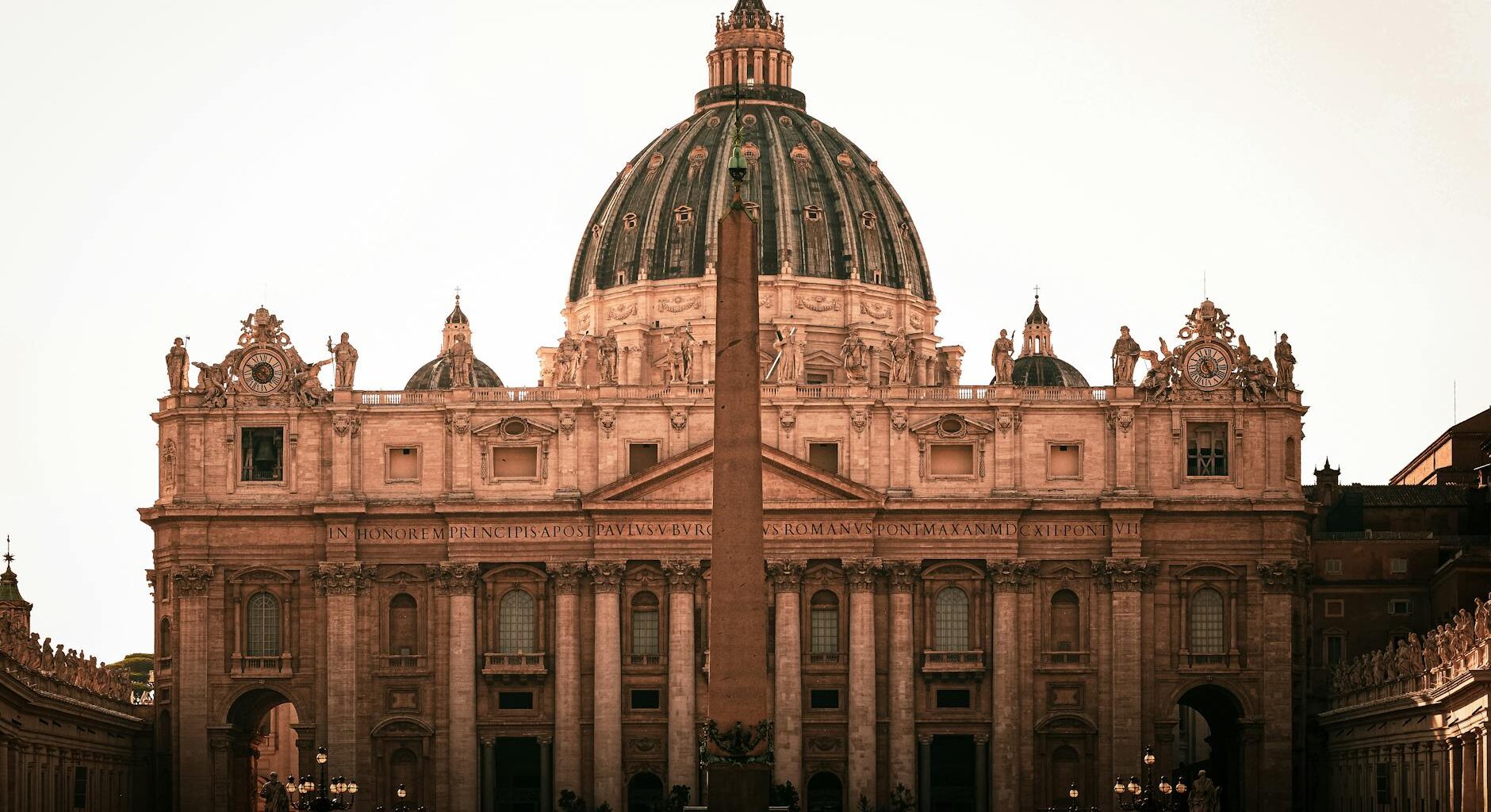
Francesco Zanardi was 11 years old when a Catholic priest in northern Italy started sexually abusing him, an ordeal which lasted for more than five years. As an adult, Zanardi founded Rete L’Abuso, a network exposing clerical abuse and demanding accountability from the Church. But despite his campaigning, highlighting over 1,250 alleged cases and more than 1,000 accused priests, the Catholic Church in Italy remains immune from legal accountability. As Zanardi has explained, ‘The Church hasn’t referred a single case to judicial authorities in Italy. On the contrary, the Bishops’ Conference [i.e. the Italian Bishops’ Conference, the permanent union of Italian bishops] has expressly stated that cases filed via Church complaint centres will not be referred to the judicial authorities.’ Indeed, such cases are handled by the Church itself, and the Bishops’ Conference has stated that there is no legal obligation in Italy to report suspected cases.
In rejecting any obligation to report abuse, Italy is at odds with legal norms increasingly accepted in much of the world. Even the UK, which has lagged behind, has now accepted the principle of mandatory reporting. Italy, however, has become a haven for clerical sex abusers. This is because, under its constitution, religion has far too much power. We tend to assume that western Europe is mostly enlightened, democratic, and secular. But the Italian Constitution gives outsized power to religion, especially the Catholic Church. The reasons for this are historical.
In the nineteenth century, the arch-reactionary Pius IX, pope from 1846 to 1878, set himself up as the sworn enemy of liberal democracy and rejected any secular authority over the Church. In an 1864 encyclical, Quanta cura, he condemned the ‘wicked…inventions of innovators [who] dare with signal impudence to subject to the will of the civil authority the supreme authority of the Church and of this Apostolic See given to her by Christ Himself, and to deny all those rights of the same Church and See which concern matters of the external order.’ In 1870, he proclaimed the doctrine of papal infallibility, which the Catholic historian Lord Acton saw as a ‘conspiracy to establish a power which would be the most formidable enemy of liberty as well of science throughout the world’. (Lord Acton was later to observe, in the context of papal crimes, that ‘Power tends to corrupt, and absolute power corrupts absolutely’.)
Not long after he declared his own infallibility, Pius IX got his comeuppance with the completion of Italian unification in 1870-71, during which the Italian army occupied, and thus ended, the Papal States. The Pope himself was expelled from the Quirinal Palace in Rome (he refused to hand over the keys, so the gates needed to be forced open). But the question of the Church’s temporal power in Italy (the ‘Roman Question’) remained unresolved.
As Geoffrey Robertson KC observed in his 2010 book The Case of the Pope, the new nation’s leaders ‘tried to conciliate rather than extirpate’ the papacy. Their conciliatory stance was not reciprocated, with Pius refusing to accept the loss of the Papal States, and in the first few decades after 1870, the papacy did everything it could to undermine the Italian state’s legitimacy. However, with the rise of communism, the papacy found a kindred spirit in Mussolini, who wanted the Church’s endorsement of his dictatorship. Mussolini sought to resolve the Roman Question through the 1929 Lateran Pacts between the papacy and the fascist dictator.
The ‘Concordat’ section of the Pacts, which dealt with church/state relations, assured ‘the Catholic Church of the free exercise of her spiritual power, the free and public exercise of worship, and of jurisdiction in Ecclesiastical matters’ (Article 1) and provided that ‘Ecclesiastics cannot be required by magistrates or other authorities to give information concerning persons or matters which have come to their knowledge by reason of their sacred ministry’ (Article 7).
Despite the absurdity of the Holy See’s claim to statehood, which Robertson brilliantly dissects in his book, the Pacts had—and importantly still have—the status of an international treaty between two sovereign states, Italy and the Holy See. The Lateran Treaty is associated with Mussolini, but it remains part of the Italian Constitution to this day. Article 7 of the ‘Fundamental Principles’ section of the 1948 Italian Constitution provides that ‘The State and the Catholic Church are independent and sovereign, each within its own sphere. Their relations are regulated by the Lateran pacts. Amendments to such Pacts which are accepted by both parties shall not require the procedure of constitutional amendments’.
The words ‘independent and sovereign’ mean that the Catholic Church and the Italian State are each regarded as equal state entities who have made an international treaty with each other and that each operates in different spheres with neither being subordinate to the other, and neither being able to interfere with each other’s sphere of competence. ‘Sphere’ includes the legal system. So Article 7 means that the Church is omnicompetent in spiritual concerns, and that canon law is equal to the law of the Italian State. Modification of the relationship between the Italian State and the Catholic Church can only take place by agreement or by constitutional amendment.
A major modification of this relationship, by agreement between the Church and the State, occurred in 1984 with the Villa Madama Agreement. Ostensibly, this created a more secular Italy by abolishing Catholicism as the state religion, but in reality it enhanced rather than diminished religious power in Italy and was described by the Italian Prime Minister at the time (the Socialist Bettino Craxi) as an agreement that ‘exalts religious freedom and the freedom of the church’.
Amongst other things, the agreement afforded minority religions the opportunity for full legal recognition through the signing of a contract (intesa) with the state. It also reiterated that ‘Ecclesiastics are not required to give magistrates or other authorities information about persons or matters of which they have become aware by reason of their ministry’. This wording goes beyond information acquired in the confessional and includes any knowledge acquired as a result of religious ministry.
In line with this, Italian criminal law explicitly protects the Church: there are some situations in Italian law where individuals have a legal obligation to report crime, but the Italian courts have made clear that this does not apply to ministers of religion if they acquired the information professionally. The fact that this agreement was signed against the backdrop of escalating investigations into and prosecutions of the Mafia in the mid-1980s—a situation in which the Italian state would have wanted more information about crimes rather than less—is a striking indication of the enduring power of the Catholic Church (and religion generally) in Italy.
In the absence of an agreement between the Italian State and the Holy See, a constitutional amendment to change the status of the Church would require a two-thirds majority in both houses of parliament or, failing that, a popular referendum. In other words, the religious power of the Catholic Church in Italy is constitutionally ‘locked in’ and virtually impossible to change without the Church’s consent. In its response to the growing clerical sex abuse crisis, the Italian Catholic Church has not been slow to point this out. In 2012, the Italian Bishops’ Conference emphasised in its child protection guidelines that under the Lateran concordat, its priests have no obligation to report suspected abuse to the police. As a result, victims say, Italy is characterised by a culture of complicity and denial which conceals the true scale of the abuse.
Italy shows what happens when the state cedes jurisdiction and influence to organised religion. It is one of the least constitutionally secular countries in western Europe. Bettino Craxi, the Italian prime minister who negotiated the Villa Madama Agreement in 1984, was later convicted of bribery and corruption and fled the country. And yet the squalid deal between the papacy and a fascist dictator, reinforced by a corrupt politician in 1984, remains in place, and victims of clerical sex abuse continue to pay the (very heavy) price.
Related reading
Image of the week: A papal plague, by Daniel James Sharp
Some Brief Reflections on the Death of a Pope, by Daniel James Sharp
Child protection and religious freedom, by Richard Scorer
The Pope’s Apology, by Ray Argyle
A national inquiry into grooming gangs is a moral and political necessity, by Richard Scorer
‘Gradually and then suddenly’: the Church of England’s slide into moral bankruptcy and the need for disestablishment, by Richard Scorer
‘This is not rocket science’: the Disestablishment of the Church of England Bill 2023, interview with Paul Scriven by Emma Park
Time for the morally deficient Church of England to be stripped of its privileges, by Stephen Evans
The shameful legacy of the archbishops of Canterbury, old and new, by Keith Porteous Wood
Image of the week: Jesus and Mo on abuse in the Church of England, the bishops’ bench, and the need for disestablishment, by Mohammed Jones
France’s rocky road to the separation of Church and state, by Keith Porteous Wood
Pétain, Vichy France and the Catholic Church, by Keith Porteous Wood





Your email address will not be published. Comments are subject to our Community Guidelines. Required fields are marked *
Donate