In this compilation of various interviews for WBAI NYC Radio, BBC 5 Live, and Times Radio, which has been edited for clarity, Maryam Namazie argues that the real struggle in Iran is not between rival powers but between authoritarianism and the people who refuse to live under it.
What is happening inside Iran now? How is the war affecting ordinary people?
Maryam Namazie: The impact on people inside Iran is already severe and will almost certainly prove far greater than what can currently be documented, because the war is ongoing and the regime-imposed internet blackout makes independent verification difficult and prevents many people from contacting family members or obtaining reliable information about nearby strikes. Information about the war is also shaped by broader media restrictions. In Iran, it is through state censorship, including death threats against those who report on the situation. Media aligned with Western governments also repeat official narratives about the conflict, while reporting in Israel and several Gulf states is subject to wartime censorship laws that criminalise the publication of material deemed harmful to military operations. These restrictions limit public visibility of the full human cost of the war.
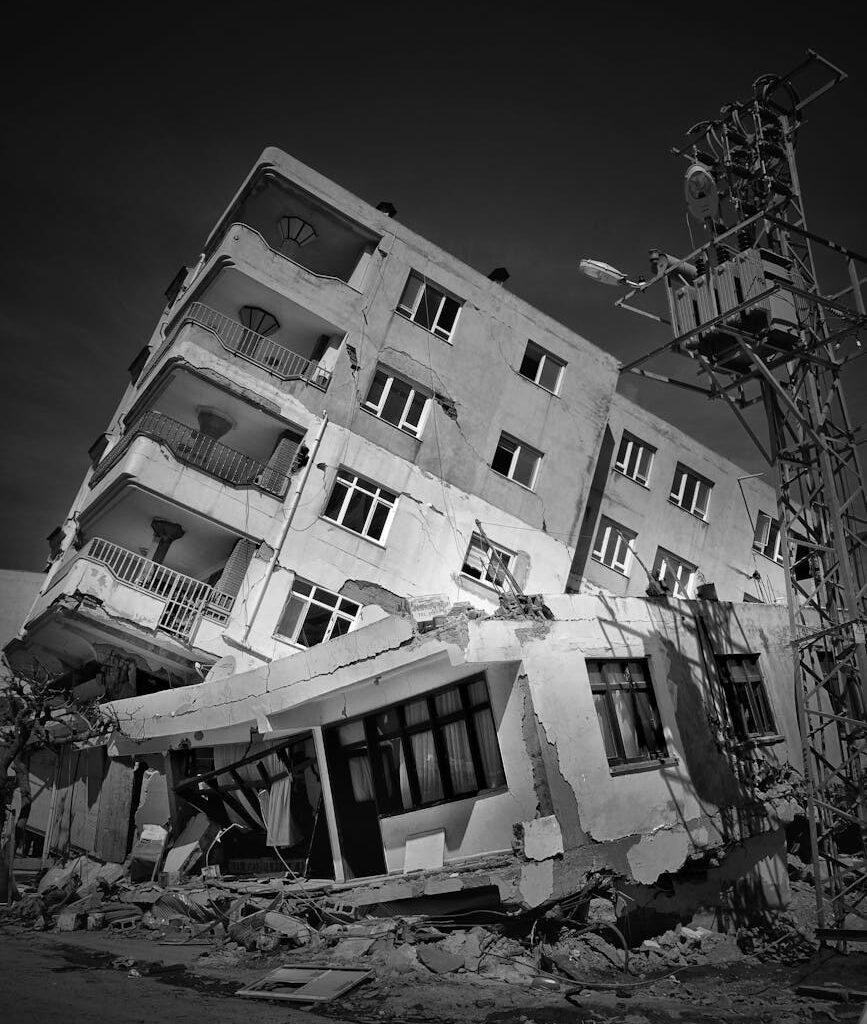
What is clear is that the conflict has spread across large parts of the country and the civilian toll is already high. The Human Rights Activists News Agency has documented more than 1,200 civilian deaths, including nearly 200 children, with thousands more injured.
One of the deadliest incidents was the strike on Shajareh Tayyebeh girls’ primary school in Minab, where more than 160 children were killed.
Political prisoners are particularly vulnerable. Human rights organisations warn about deteriorating conditions and shortages of food and water in prisons such as Evin and Qarchak.
An attack on a major petroleum refinery has also produced heavy black smoke and chemical fallout, with residents reporting black rain and growing fears about public health, long-term contamination of water supplies, and the environment.
The war is also hitting a society that had already experienced a major political uprising. During the Dey protests at the end of December and early January, Iranian rights groups reported more than 50,000 arrests and tens of thousands injured. Several thousand deaths have been confirmed, but investigative reporting and testimony from medical workers suggest the real toll may be significantly higher, with some estimates reaching up to 30,000.
At the same time, the conflict is expanding beyond Iran’s borders. The regime’s targeting of neighbouring countries and escalating Israeli attacks on Lebanon, with hundreds of civilian deaths, increase the risk of a prolonged regional war, while cities inside Iran are increasingly militarised and civilian infrastructure, including hospitals, residential areas, and schools, has been damaged.
Without basic protections such as sirens or bomb shelters for civilians, these developments are pushing the country toward a serious humanitarian catastrophe.
Some argue the real choice is between war and the Islamic Republic. How do you respond?
Maryam Namazie: That framing reduces a complex society to a geopolitical choice between external military intervention and internal repression, erasing the role of Iranian society itself.
The argument usually runs as follows: if you oppose war, you are effectively accepting the regime’s violence. But that assumes war actually produces freedom. When we look at the historical record, there is little evidence for that claim.
Claims by Benjamin Netanyahu or Donald Trump that military escalation is intended to ‘help the Iranian people’ should also be rejected. Such rhetoric functions largely as political cover for strategic geopolitical objectives. States pursue regional power, security interests, and influence, not democratic transformation in other societies. Presenting war as humanitarian assistance obscures the reality that the population living under bombardment bears the human cost of those strategic calculations.
Undoubtedly, many people welcomed the death of Ali Khamenei, given the brutality of the system he presided over. But the Islamic regime is not simply one man. The rapid appointment of his son illustrates that removing a leader does not dismantle the political system that sustains authoritarian rule.
Removing individuals through assassination is also different from justice. In societies emerging from authoritarian rule, justice normally involves public accountability, trials, and historical reckoning with crimes committed by the state. When officials are assassinated, the truth about what occurred often remains buried and victims are denied the accountability they deserve.
Recent attempts to use war as a tool of political transformation show a consistent pattern. In the last several decades, conflicts presented as projects of ‘liberation’, such as in Iraq or Afghanistan, removed rulers but also destroyed infrastructure, killed and displaced millions, and left societies struggling with instability, armed factions, and weakened institutions. War may remove rulers, but it often damages the social and institutional foundations necessary for democratic politics to emerge.
War can also strengthen authoritarian regimes internally. When countries come under attack, governments expand security powers and further suppress dissent. The Islamic regime itself consolidated power during the Iran-Iraq war in the 1980s, when opposition movements were crushed in the name of defending the ‘Islamic’ nation.
The ‘either war or regime’ binary ignores a political reality: authoritarian systems often appear immovable until they fall. The Shah’s regime in Iran in 1979 and apartheid in South Africa both looked deeply entrenched shortly before they collapsed under sustained social and political pressure.
If we look at how authoritarian systems have actually been dismantled, a different pattern appears. Apartheid in South Africa ended through decades of internal resistance, labour mobilisation, and sustained international political and economic pressure. Democratic transitions in Eastern Europe in 1989, as well as movements in countries like Chile, were driven primarily by mass social mobilisation and internal crises rather than foreign military intervention.
Iran itself has a long history of such struggles. Over the past decades, there have been repeated waves of protest, including student movements, labour strikes, and the Woman, Life, Freedom uprising in 2022. Most recently, the Dey protests at the end of December and early January 2026 were met with mass arrests and killings, demonstrating both the scale of repression and the depth of social opposition.
The real political actors in Iran are therefore not foreign militaries but the people who continue to challenge authoritarian rule despite immense risks.
The central question is not a choice between war and the regime. It is whether the social forces inside Iran that are struggling for freedom are strengthened, or whether the social ground on which those struggles depend is destroyed.
History suggests that lasting political change emerges from organised movements within society, not from bombs.
Could war weaken the regime and open space for an uprising?
Maryam Namazie: It is a common assumption that war weakens governments and therefore creates opportunities for revolt. But research on revolutions shows that uprisings depend on two things happening at the same time: a state losing control, and a society that still has the capacity to organise collectively.
Popular uprisings emerge from dense social networks: workplaces where workers can strike, universities where students mobilise, neighbourhood networks where people organise, and communication systems that allow ideas and strategies to spread. Revolutions are not spontaneous explosions; they are built through these everyday social connections. Under war conditions, people are forced to focus on survival rather than collective political action.
At the same time, war strengthens the institutions organised around coercion. Military and intelligence structures gain authority, emergency laws expand, and dissent is more easily framed as collaboration with the enemy. Destroying the networks through which people organise politically does not create the conditions for revolution.
Some analysts warn that this war could strengthen militant groups and religious nationalism and increase geopolitical rivalry. Do you see that danger?
Maryam Namazie: War reshapes the ideological environment in which politics operates, thereby further empowering religious right movements. The Islamic Republic is a theocratic state that derives legitimacy from religious authority. External attack allows it to frame the conflict as a defence of faith and nation, strengthening the ideological narratives on which it relies. At the same time, religious nationalist currents in Israel and the United States, namely powerful Christian evangelical and Jewish religious nationalists, interpret the conflict in civilisational or theological terms. When conflicts are framed this way, they become a recruiting ground for extremists who mobilise around religious identity and revenge. We have seen this dynamic before. The Iraq war, for example, helped create the conditions in which ISIS was able to recruit and expand.
Alongside these ideological dynamics, there is also a geopolitical layer. The United States and Israel pursue strategic objectives related to regional power and security, while Russia and China position themselves in ways that expand their own leverage.
These are conflicts between states, far-right religious movements, and geopolitical actors, while the populations living in the region bear the devastating consequences.
Some opposition figures abroad, including Reza Pahlavi and organisations such as the Mujahedeen-e Khalq (MEK), present themselves as alternatives to the Islamic regime. Do they represent a path forward?
Maryam Namazie: One recurring misconception in discussions about Iran is the idea that political transformation can be engineered by identifying a replacement leadership abroad and installing it as an alternative to the current regime.
In reality, democratic transitions rarely occur that way. They emerge when organised social forces within a country become capable of reshaping political institutions.
The monarchy represents a political system that Iranians already overthrew in 1979. The Pahlavi state itself was an authoritarian system built on repression. The current political project around Reza Pahlavi also centres heavily on personal leadership and nationalist symbolism rather than democratic institutions rooted in Iranian society.
The MEK presents a different problem. It operates as a highly centralised and hierarchical organisation built around a cult of leadership, with strict ideological control and enforced loyalty. Its alliance with Saddam Hussein during the Iran–Iraq war also severely damaged its legitimacy among many Iranians.
Another issue that is often overlooked is the information environment surrounding the Iranian diaspora and international media.
Inside Iran, people are exposed primarily to the narrative of the Islamic regime through state media and censorship. Outside Iran, a different distortion can occur: diaspora media amplifies a narrow segment of opposition politics, particularly monarchist narratives, far beyond their actual presence inside the country.
A recent academic study analysing around 4,500 protest videos from December and January found that slogans referring to ‘Shah’ or ‘Pahlavi’ accounted for roughly 17% of the total, while 83% were broader anti–Islamic Republic demands. Yet diaspora broadcasters amplified the monarchist narrative far beyond its presence in the protests. During the same period, Iran International devoted about 81% of its protest-related coverage to content promoting Reza Pahlavi, while BBC Persian devoted about 35%. The study also found that these outlets collectively ignored or omitted roughly 68% of protest videos circulating on social media.
The result is a dual distortion of reality. Inside Iran, the regime portrays protests as foreign conspiracies or limited disturbances. Outside Iran, parts of the diaspora media ecosystem present them as if they were primarily monarchist movements centred on a single political figure.
Complex social movements are thereby reduced to a single personality or faction rather than understood as broader struggles within Iranian society. The future of Iran will not be decided by personalities in exile but by the social forces within Iranian society that are struggling for democratic change.
What role should governments play?
Maryam Namazie: No government involved in this conflict is acting in the interests of Iranian civilians. The Islamic regime and its allies pursue their own interests, including survival, regional influence, and ideological legitimacy. Western governments also act according to strategic calculations. The real question is what policies can weaken authoritarian power without destroying the society that must eventually replace it.
A more rational approach would focus on political and legal pressure on the regime itself rather than military escalation. That means measures that target the state and its officials rather than the population: ending diplomatic relations with the regime, expelling diplomats, freezing assets held abroad by state institutions and officials responsible for repression, and pursuing legal accountability for human rights crimes through international courts.
Governments could also restrict the regime’s institutional networks abroad and end the activities of state-backed religious or cultural centres that are used for political influence or monitoring diaspora communities.
Financial pressure can also be directed more precisely. The Islamic regime controls extensive assets through state foundations and commercial networks operating internationally. Freezing these assets and restricting their financial channels would weaken the regime’s power structures without imposing collective punishment on the population.
There are also historical precedents for this kind of political pressure. During the struggle against apartheid in South Africa, for example, governments and civil society organisations used sanctions, diplomatic isolation, and international boycotts to increase the political costs of maintaining a system of racial segregation. A similar approach could be applied today in response to sex apartheid and systematic discrimination against women.
Another important step is political isolation in international institutions. For decades, the regime has maintained diplomatic legitimacy while continuing repression at home. At the same time, the international community can expand support for Iranian civil society by defending access to information, supporting independent media, protecting activists and dissidents who face threats from the regime beyond Iran’s borders, and granting asylum to those fleeing persecution.
There is rarely political will for this kind of pressure unless it is forced by sustained public mobilisation and solidarity from progressive movements internationally, as happened during the struggle against apartheid in South Africa. Without that pressure, governments revert to business as usual, where geopolitical interests and profit take precedence over people’s rights and freedoms.
For the public and democratic movements, the goal should be clear: isolate the regime politically and legally while strengthening the social forces inside Iran—women, workers, students, and civil society movements—that are struggling for freedom and democratic change.
What message would you send to democratic and feminist movements internationally?
Maryam Namazie: Do not accept the false choice between war and authoritarian rule. The primary struggle in Iran is between society and the state. Solidarity means standing with the women, workers, students, and progressive activists inside Iran who continue to challenge authoritarian rule despite immense risk.
The most meaningful solidarity with Iran therefore lies in supporting the social forces inside Iran that continue the struggle for Woman, Life, Freedom. That movement challenges the Islamic regime at its foundations because it confronts the structures of repression that organise everyday life under the system.
Beneath the bombs and the theocracy is a society that has repeatedly risen in revolt. Iran’s future will not be determined by war or by rulers claiming power from above, but by the people who refuse to live under authoritarian rule.
Related reading
Free Betty Lachgar! A joint letter from the Free Betty Coalition, by Daniel James Sharp
Women’s Blasphemy and the State, by Maryam Namazie
Freedom of expression lives where offence begins: In defence of Ibtissame Betty Lachgar, by Maryam Namazie
Feminism and religion are incompatible, by Maryam Namazie
No Hijab Day, 1 February: Confronting Misogyny, by Maryam Namazie
It is time to recognize sex apartheid as a crime against humanity, by Maryam Namazie
Abortion and Bodily Autonomy: Restriction, Repression, and Feminist Fightback, by Maryam Namazie
For Mahsa Jina Amini and Woman, Life, Freedom: Summoning an Age of Humanity in an Age of Hate, by Maryam Namazie
Image of the week: ‘Allah is lesbian’ (#FreeBetty), by Daniel James Sharp
Verses of Life: A Review of ‘Woman Life Freedom: Poems for the Iranian Revolution’, edited by Bänoo Zan and Cy Strom, by Daniel James Sharp
The ‘Women’s Revolution’: from two activists in Iran, by Rastine Mortad and Sadaf Sepiddasht
The Silent Revolution Against Religious Oppression in Iran, by Siavash Shahabi
‘Words are the only victors’ – Salman Rushdie’s ‘Victory City’, reviewed, by Daniel James Sharp
Image of the week: celebrating the death of Ebrahim Raisi, the Butcher of Tehran, by Daniel James Sharp
The hijab is the wrong symbol to represent women, by Khadija Khan
Iran and the UN’s betrayal of human rights, by Khadija Khan
Rap versus theocracy: Toomaj Salehi and the fight for a free Iran, by Noel Yaxley
Afghan Tourism or Taliban Whitewashing? by Zara Kay
A Small Light: Acts of Resistance in Afghanistan, by Zwan Mahmod
The Taliban’s unceasing war on Afghan women, by Khadija Khan
Secularism is a feminist issue, by Megan Manson
What the Muslim world can learn from Tunisia, by Kunwar Khuldune Shahid
From the streets to social change: examining the evolution of Pakistan’s Aurat March, by Tehreem Azeem


Your email address will not be published. Comments are subject to our Community Guidelines. Required fields are marked *
Donate