
Originally published on the National Secular Society website on 25 March 2026 and republished here with permission.
Britain today is both more religiously diverse and nonreligious than ever before. Migration, generational change and shifting social attitudes have transformed how people view religion, identity and belonging. Yet while society has evolved, too many of our institutions remain frozen in time.
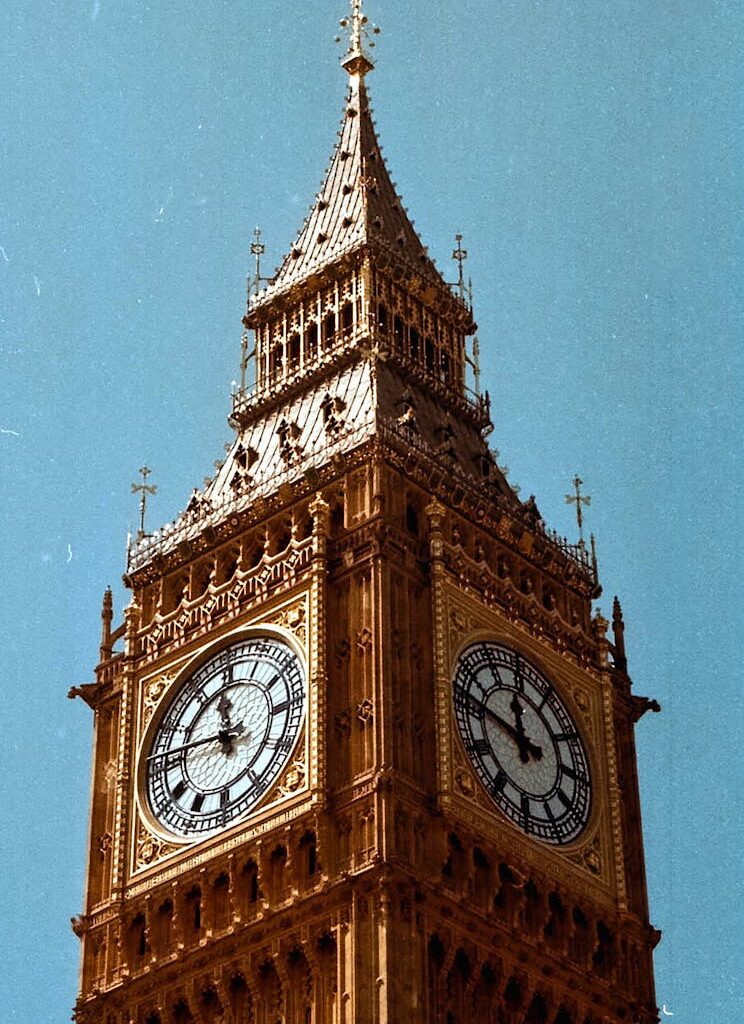
The United Kingdom is not a secular state. Bishops still get automatic seats in Parliament. The head of state serves as Supreme Governor of the Church of England. Around a third of state-funded schools have a religious character, and many can select their pupils by religion. Christian worship is imposed in schools and in Parliament. Religious organisations qualify for charitable status simply for advancing their religion.
These arrangements belong to a different Britain – one in which Christianity was assumed to be a shared cultural framework. That assumption no longer holds.
New research from More in Common, commissioned by the National Secular Society, offers one of the clearest pictures yet of how the public understands this changing landscape. The findings are striking.
Britons are neither anti-religious nor instinctively deferential towards faith.
They are, instead, quietly but firmly secularist in instinct. Most people respect religion as a personal source of meaning and community. But they are uneasy when religious institutions exercise political power, enjoy special privileges, or seek to restrict or encroach on the rights of others.
Nearly two thirds of Britons say religion is not important in their own lives. Religion is now more likely to be seen as a force for harm than for good. Yet few want religion banished from public life altogether. What they want is balance: a society in which people of all religions and none live together as equal citizens.
That instinct, often unspoken, is secularist.
One of the most revealing aspects of the research is how little people know about the constitutional privileges still afforded to religion. Fewer than one in ten Britons are fully aware of the established Church’s privileged role across Parliament, education and the constitution. When these arrangements are explained, support diminishes.
Two thirds oppose the automatic seats reserved for Church of England bishops in the House of Lords. That opposition cuts across age, class, politics and belief. Even many Christians struggle to justify why unelected religious leaders should have guaranteed legislative power in a modern democracy.
Fairness matters to people. And once unequal treatment is made visible, it becomes difficult to defend.
Education tells a similar story. Faith schools are often framed as a matter of parental choice. But the public is far more ambivalent. Many worry that selecting children by religion entrenches division and undermines social cohesion. Sixty-one per cent oppose faith-based selection in state schools. In a country that values fairness and is committed to strengthening social cohesion, separating children along religious lines is an own goal.
If that is the public mood on institutional privilege, it becomes sharper still when basic rights are at stake.
Across a range of issues, Britons draw clear boundaries. They are tolerant, but not without limits. Practices perceived to infringe the rights of women, gay people or children, or to undermine equality before the law, meet firm resistance.
There is deep discomfort with religious courts operating alongside the legal system. Strong majorities oppose practices seen as misogynistic.
And 61% say the circumcision of boys for religious reasons should not be permitted – a striking indication of how far concern about children’s rights now extends into territory too long considered untouchable.
This is not intolerance. It is the assertion of shared civic values.
And yet, alongside this clarity, the research reveals something more troubling: a fraying commitment to one of the central pillars of the liberal tradition – free speech.
While 89% of Britons say free speech is important, only 55% believe it should remain legal to criticise religion even if it causes offence. More than a third support legal consequences for damaging a religious text. One can only hope that many are confusing what they would personally refrain from with what the law should forbid.
Because if the law begins to shield ideas, religious or otherwise, from criticism or offence, we do not strengthen social cohesion. We weaken it.
A society that cannot openly question and criticise beliefs is not a harmonious one. It is a fragile one.
Here, too, secularism has something vital to offer. Properly understood, it is not hostility to religion but a framework for managing religious diversity. It protects freedom of religion or belief precisely by ensuring the state does not favour one worldview over another – and by safeguarding the freedom to question, criticise and dissent.
This is what allows pluralism to function without descending into conflict.
Britain’s relative success as a diverse society has depended on shared rules applied equally to all. Secularism underpins that settlement. It creates a common civic space where disagreements – including profound ones – can be negotiated without becoming sectarian.
Without that framework, identity hardens. Politics fragments. Grievance grows.
We do not need to look far to see the alternative. Across the world, religious nationalism and identity politics are on the rise. Recent tensions in the UK – from sectarian undercurrents to international conflicts echoing on British streets — are reminders that cohesion cannot be taken for granted.
And yet there is a challenge for those of us arguing for reform.
The word “secularism” itself remains widely misunderstood. Only a minority of Britons can define it accurately. Too often it is caricatured as anti-religious, when in fact it merely guarantees that no one’s beliefs – religious or otherwise – are privileged over anyone else’s.
That misunderstanding serves the status quo. But it serves neither believers nor nonbelievers.
Modernising Britain’s constitutional relationship with religion does not require jettisoning every long-standing tradition. But it does mean serious reform to remove elements that privilege religion, while preserving freedom of belief for all.
That means asking straightforward questions. Why should bishops sit in Parliament as of right? Why should parliamentary sittings begin with Christian prayer? Why should state-funded faith schools enjoy exemptions from equality law to enable them to select by religion? Why should advancing religion, in itself, qualify for charitable status?
These are no longer radical questions. They are common-sense ones.
In an increasingly diverse and sometimes divided society, secularism is not a niche ideological project. It is a practical necessity. It is how we ensure that differences do not become divisions – and that rights do not depend on belief.
Britain has changed. Our institutions need to catch up.
If we want to strengthen social cohesion and renew our commitment to liberal values, the answer is not to assert so called ‘Christian values’, appease religious sensitivities or limit free expression. It is to build a state that belongs equally to all of us.
The recent trend to reassert Britain as a Christian nation is not merely a defence of heritage; it is a pernicious attempt to impose one faith as the defining authority in public life. A political project that risks dividing citizens along religious lines. In a country where millions follow other faiths – or increasingly none at all – such an approach cannot unify. You can’t build a national identity or cohesive society based on one religion in a country of many.
Both Christian nationalism and Islamic fundamentalism pull us away from a shared civic identity and toward division. If we want a society that belongs to everyone, it’s time to end religious privilege and take secularism seriously.



Your email address will not be published. Comments are subject to our Community Guidelines. Required fields are marked *
Donate